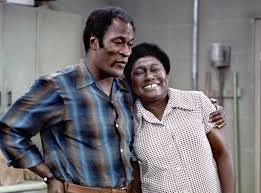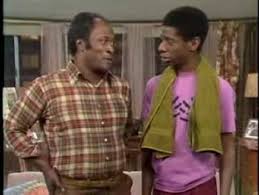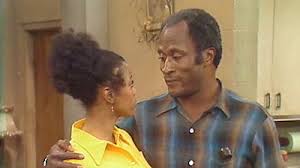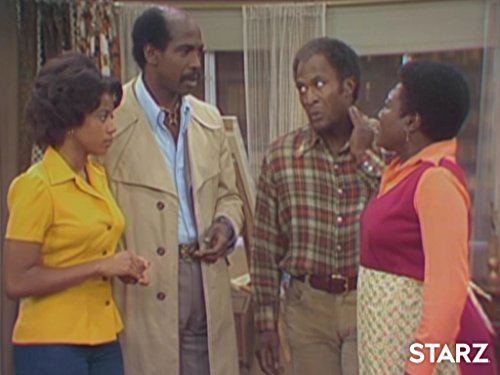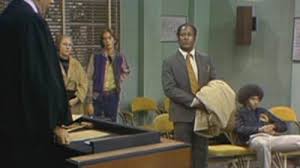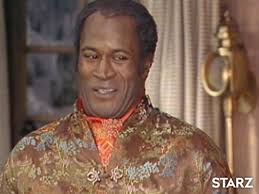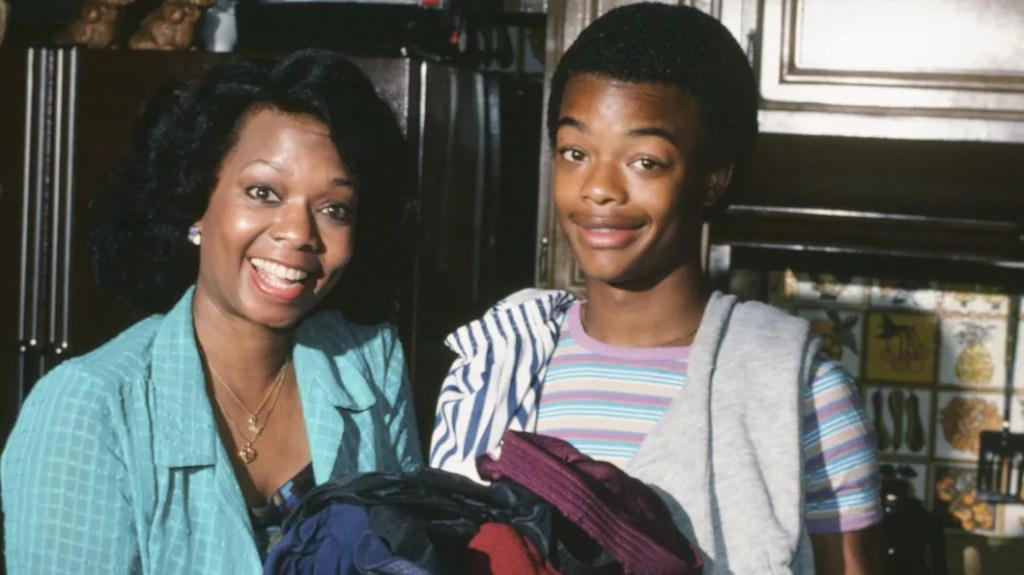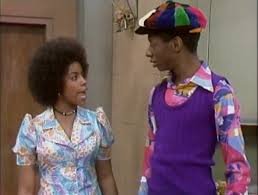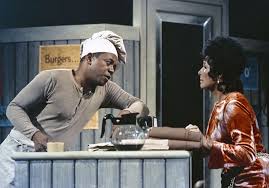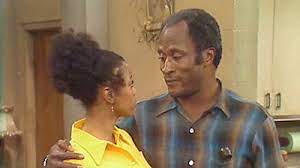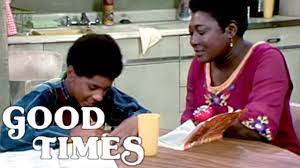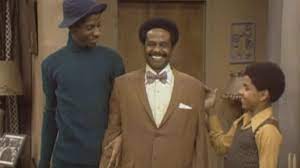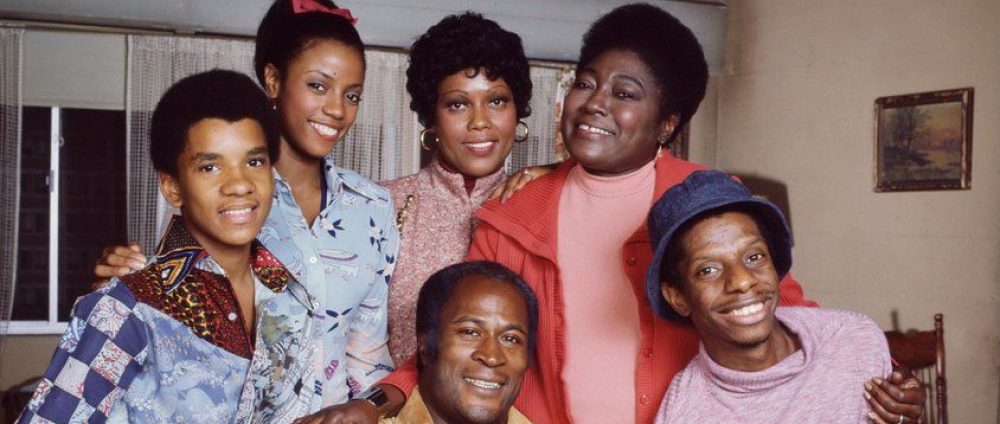
“The Kitchen and the Bedroom, Florida – The Kitchen and the Bedoom!” Season Two, Episode One: Florida Flips (September 10, 1974)

Michael – who J.J. once informed us “does most of the reading in the family” – opens the first episode of Season Two by asking Thelma, “Why do they call it ‘MEN-O-PAUSE’?” He’s certain that, because of the way his mother has been “yelling, screaming, and acting up the last few days,” she must have it. Although Thelma assures him that Florida is not experiencing menopause, she certainly has been in a fury lately – and Florida herself gives a demonstration when she slams the door to her bedroom, shouts at the children, and gets into an argument with James.
“Sleeping with Florida is like being in a phone booth with Joe Frazier.”

Encountering Florida in the hallway, Willona observes that her friend is “not satisfied with herself all of a sudden” and that her day-to-day life is an “empty existence” where she tries to stretch two hours of housework into one “great, big nothing of a day.” Willona suggests that Florida accompany her to what was known in the 1970s as a “consciousness-raising group,” where participants opened up to share thoughts and feelings they might not otherwise discuss in their daily lives. But Florida is reluctant to join in, and becomes offended when the women get a little too close to the truth: “My family depends on me,” she insists, “and I don’t need a bunch of cackling hens, with nothing else to do, except try to say what is bothering me, ‘cause nothing is bothering me. Nothing is bothering me!

James is delighted at Florida’s return. At first.

Relieved to return home to the comfort of her family, Florida is welcomed by her gratified children and husband, who’d been wondering where she was. James is kind and conciliatory – until he learns that she’s been to one of those “crazy ladies meetings.” After first insisting that she sit down and relax, he does an about-face, demanding that she start dinner and sharing a long-held family belief: “I’m going to tell you something my Uncle Ed used to say, and maybe he was right. There’s only two places a woman belongs – the kitchen and the bedroom, Florida, the kitchen and the bedroom!”

James’s outburst shows Florida that despite her unwillingness to admit it, Willona and the women from the group were “right on” about what has been keeping her so upset. There’s nothing wrong with being a wife and a mother, she explains, but she has nothing to talk about except her husband and her children. “There’s a whole world out there, and I’m not a part of it. I want to be somebody, too!” James and Florida reach an understanding about what she truly needs and wants for her life, and the episode concludes with Florida leafing through a catalog of courses for night school.
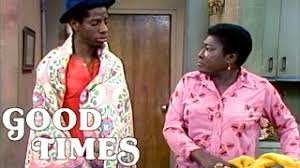
Washing clothes and making oatmeal is not as fulfilling as Florida would like it to be.

This episode is really quite astonishing, given its candid look at the very real issues faced by wives and mothers – not just Florida’s experience of feeling unfulfilled as a stay-at-home mom, but the problems of women from other walks of life as well. In the support group, for instance, one of the women complains that her husband “has his nose out of joint” because she has a higher salary than he does, and another openly discusses spousal abuse (it’s handled with humor, but it’s addressed nonetheless).

We also again get a glimpse of James’s inclination toward male chauvinism, obstinacy, and insensitivity. In talking with Willona, he insists that the “only trouble with [Florida] is she’s spoiled . . . I’m gonna put that lady in her place.” And during an argument with Florida, he is overly forceful, bordering on violent, as he tells her she should be counting her blessings instead of complaining: “Ain’t you got nice kids and an understanding husband? Damn right, so I don’t want to hear no more of your lip or I’ll button it, you hear?” But as we so often see with James, no matter how extreme his views, he’s never so far gone that he can’t listen to reason and modify his stance. And we see that in this episode as well, where, beneath the bluster, he shows his own vulnerability and uncertainties, and is more than willing to grow alongside his wife.

Pop Culture Connections

Joe Frazier
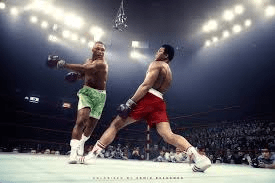
Frazier and Ali.

Near the episode’s opening, James complains that lately, sleeping with Florida is like “being in a phone booth with Joe Frazier.” Frazier was a heavyweight boxer whose most famous bouts were against Muhammad Ali. The two fought in three matches: The Fight of the Century in 1971, Super Fight II in January 1974 (about nine months before this episode first aired), and The Thrilla in Manila in October 1975. Frazier won the first fight, and Ali was victorious in the next two. Frazier only fought a few more times after his defeat in Manila and he later became a boxing trainer. He died of liver cancer in November 2011 at the age of 67, just a few months after he was diagnosed with the disease. After Frazier’s death, Ali said he would always remember him with respect and admiration, adding: “The world has lost a great champion.”

The Proud Bird With the Slow Tail

While talking to Willona in the hallway, Florida repeatedly presses the button for the elevator. When the door opens at last, she remarks, “Well, whaddya know? The proud bird with the slow tail finally rolled in.” This line is a reference to an advertising slogan by Continental Airlines which, in the 1960s, painted the tails of its airplanes gold and adapted the tagline, “The Proud Bird with the Golden Tail.” One of the company’s commercials be seen below, with employees singing the catchy jingle, “We really move our tails for you.”

“Mighty White of You”

Willona contends that Florida is upset and on edge because she doesn’t have enough to do. In response, James says that Florida has plenty to occupy her time, adding that he lets Florida do all the washing, cleaning, shopping, sewing, and so on, because he’s not “the kind of man that interferes with a woman’s pleasure.” To this, Willona rejoins, “That’s mighty white of you” – which, incidentally, elicits a rather shocked response from the studio audience. This phrase was historically used to indicate that a person was behaving in a manner that was especially generous, honorable, or compassionate. At its root, however, it espouses the racial stereotype that being “white” denotes something positive or virtuous. Willona’s use of the phrase to James was clearly meant in a facetious manner.

Guest Stars:

Cora: Rosanna Carter

That’s Rosanna Carter in the purple.

The leader of the women’s support group is played by Rosanna Carter, who happens to be the older sister of Esther Rolle. She was born in the Bahamas on September 30, 1918, one of 18 children of Bahamian immigrants Jonathan Rolle, a vegetable farmer, and his homemaker wife, Elizabeth. Like her sister, she displayed a talent for acting and was a member of The Lafayette Players, a dramatic stock company comprised solely of Black performers. The members of the company included Charles Gilpin, who originated the title role of The Emperor Jones on Broadway, and Dooley Wilson, who would later gain fame as Humprhey Bogart’s piano-playing right-hand in Casablanca (1942). She was also a member of the Negro Ensemble Company and was seen in several Broadway productions.

Carter’s role as Cora on Good Times was one of her first appearances on television. That same year, she was injured when her automobile was hit from behind by a police car at an intersection and she, in turn, hit a parked bus. Seven years after the accident, she was awarded $1 million for the injuries she sustained, as well as for lost wages, medical expenses, and impairment of earning capacity. (“I suffered a great deal,” Carter said after the award was announced. “I’m just so appreciative of the support from my colleagues which helped to keep my spirits up.”) She would go to appear in television programs including I’ll Fly Away, for which she landed an Emmy nomination for Outstanding Guest Series in a Drama (she lost to Elaine Stritch), and in such films as Night of the Juggler (1980), The Brother From Another Planet (1984), and She-Devil (1989).

Carter died on December 30, 2016 (my birthday), in Pompano Beach, Florida. She was 96 years old.

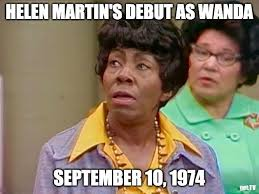
Wanda: Helen Martin
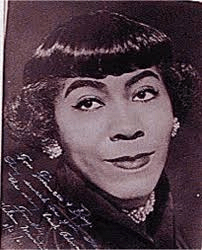
Martin started her career on the stage.

Born on July 23, 1909, Helen Martin was a native of St. Louis but was raised in Nashville; her parents hoped she’d become a concert pianist and she attended Fisk University (my mother’s alma mater!) for two years, but she left the school to pursue her own interests in acting. “Some people want to be doctors or psychiatrists,” she told Ebony magazine in 1988. “All I knew is that I wanted to be in show business. Always did.” Martin had a variety of experiences on the stage – she performed with troupes including the Rose McClendon Players and the American Negro Theater, and made her Broadway debut in 1937 in Orchids Preferred. A few years later, she appeared in Native Son, produced by Orson Welles and John Houseman; she portrayed the sister of the main character, Bigger Thomas, played by Canada Lee. She was also in the Broadway productions of Raisin, in a cast that also included Good Times’ Ralph Carter, and both Purlie Victorious, written by Ossie Davis, and its musical adaptation, Purlie.
Martin made her big screen debut in 1955 in Phenix City Story, a hard-hitting film noir about the real-life Alabama town that was known as Sin City, U.S.A. and was notorious for its proliferation of gambling, prostitution, and organized crime. She was also in a few more films, like Cotton Comes to Harlem (1970), before beginning her prolific television career. Her many credits included the popular 1977 mini-series Roots; Maude, on which Esther Rolle originated her role as Florida Evans; Baby, I’m Back, a short-lived sitcom starring Demond Wilson; and 227, where Martin had a recurring role as Pearl Shay. During the 1980s and 1990s, she could be seen in such films as Hollywood Shuffle (1987), where she played the grandmother of Robert Townsend, the writer, director, producer, and star of the film; Don’t Be a Menace to South Central While Drinking Your Juice in the Hood (1996), a spoof of the “hood” films of the 1990s; and Bulworth (1998), which starred Warren Beatty and Halle Berry.

Martin continued to work up until the end of her life; she died on March 25, 2000, at the age of 90. Her final screen appearance was in a TV movie called Something to Sing About, which aired a few months after her death.

Sylvia Ann Soares: Bernadine

Soares plays Bernadine, a member of the women’s support group (she’s the one with the soft afro who complains that her husband “has his nose out of joint” because she has a higher salary than he does).mThe second generation of Cape Verdean immigrants, Soares was born on November 23, 1941, in Cranston, Rhode Island, and graduated from Hope High School in Providence (the same high school attended by Ben Powers, who would later join the Good Times cast as Thelma’s husband, Keith). For two years, she attended Lincoln University, an Historically Black College and University (HBCU) located in Jefferson City, Missouri.
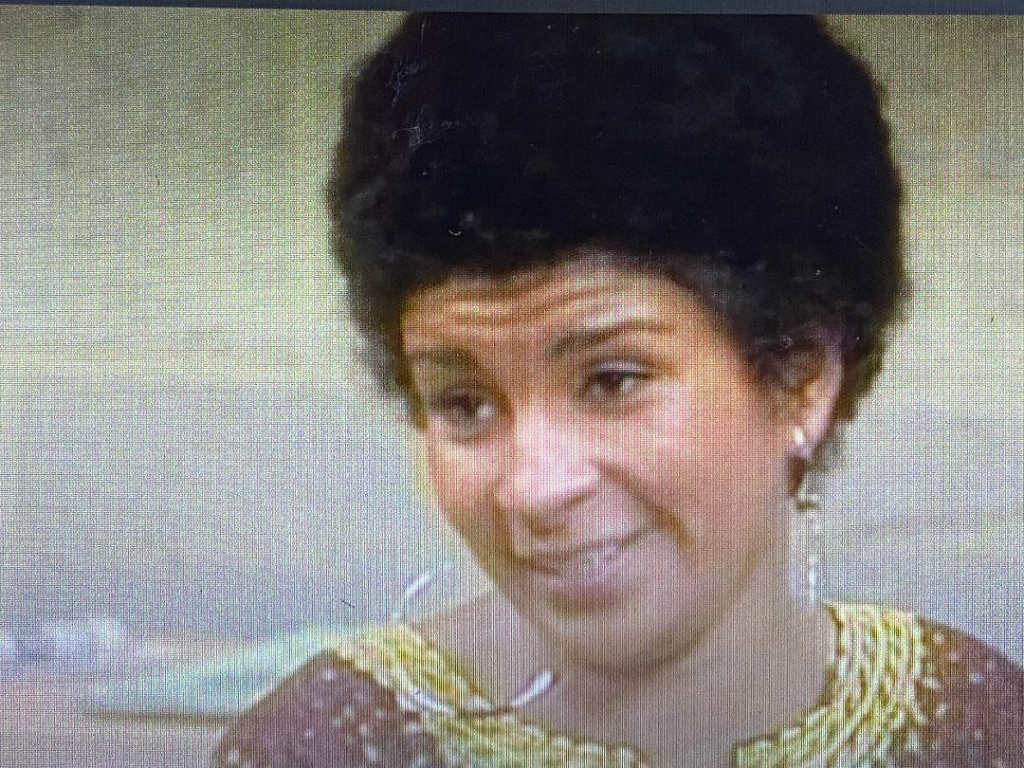
Sylvia Soares as Bernandine.

After leaving Lincoln, Soares became one of the first members of the newly formed Trinity Repertory Company and went on to perform with a variety of regional theater companies. She played the Madame in Ed Bullins’s The Gentleman Caller, a one-act play in Woodie King, Jr.’s anthology, A Black Quartet; performed in the Negro Ensemble Company’s Works in Prorgress that included playing in Sonia Sanchez’s Sister Sonji; appeared in Richard Wesley’s Black Terror at the Public Theatre; and was featured as Lady Capulet in Romeo and Juliet at the L.A. Shakespeare Festival. National tours included the first Black Pulitzer Prize play, No Place to Be Somebody, and the first tour of NEC’s Tony Award-winning play, The River Niger. Her small screen debut was her appearance on the CBS-TV series, Kojak, followed by Good Times and guest spots on numerous other series, including Baretta, Police Story, and The Rookies.

A favorite role of Soares’s came on the 1985 American Playhouse historical drama, Three Sovereigns for Sarah, about three sisters who went on trial for witchcraft in Salem, Massachusetts. Soares played Tituba, the real-life Caribbean Indian slave who was one of the first to be accused of being a witch. Soares later earned her Bachelor of Arts degree in Theater Studies from Brown University in 1995.

In recent years, Soares has performed in a variety of productions in Rhode Island, where she resides, including an oral history on the Local ILA #1329 Longshoremen, of which her father served as president for 16 years. She also wrote, directed, and starred in Plantation Complex: A Harvesting of Souls, a play about slavery in Rhode Island; wrote A Coupla Miles of Hell, about racism and injustice in an 1950s Providence, Rhode Island, neighborhood not far from her present home; and presented RI Ambassador of Jazz — Deacon of Dixie, the story of her paternal uncle Eddie Soares, a 1920s jazz pianist. In addition, after extensive research, she performed numerous one-woman shows on Nancy Elizabeth Prophet, an African American Narragansett-Pequot sculptor who, in 1918, became the first graduate of color from the Rhode Island School of Design. A clip from one of her performances as Nancy Elizabeth Prophet can be found below:

As of this writing, the 83-year-old activist-artist continues to share her varied and multiple talents. Quoting the diary of Nancy Elizabeth Prophet, she says, “I stop only when I drop,” adding that her journey “is a testimony that neither ethnicity, gender, nor age are barriers to accomplishing artistic feats.”

Other Stuff:

One of my favorite laughs in the episode comes when Florida is squabbling with James, insisting that she’s “happy, very happy” as she aggressively sets the breakfast table. J.J. observes, “If she gets any happier, she’s gonna break every dish in the house.” Another line that’s good for a guaranteed laugh is served up by Wanda during the women’s support group session. It’s almost spoken as an aside, and I always wonder if it was part of the script. It comes after Wanda asks Florida how often she has “relations.” Florida responds that it’s none of her business, adding a second later, “And plenty!” Beneath the laughs of the studio audience, you can hear Wanda say, “Uppity, ain’t she?” Gets me every time.
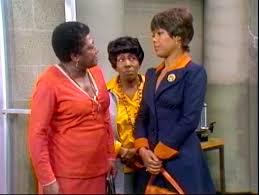
“Uppity, ain’t she?”

This episode marked the first time Helen Martin appeared as Wanda; she would go on to make six more appearances on the show as this character. In this episode, she played one of the women in the support group visited by Willona and Florida.

Speaking of Wanda, she offers a stance during the women’s group scene that would be considered politically incorrect and would never appear on a television show today. With a laugh, she tells the other women, “If my husband didn’t beat me up on Friday, I wouldn’t know the next day was Saturday.” Yikes.

The next episode: J.J. Becomes a Man, Part I . . .
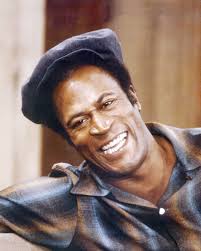
Rest in Peace, John Amos

I was returning home after spending six glorious days in the Dominican Republic with a group of friends (who are like my family) that I’ve known since we met in the 1980s at Spelman College and Morehouse College. I was sitting at my gate at New York’s JFK airport, awaiting the boarding call and saving two seats for my travelling companions when I decided to pass the time on Twitter. The first post I saw was the announcement of the passing of John Amos at the age of 84.

You’d have thought, from my reaction, that it was my own father that I’d lost.

John Amos was known for such roles as Gordy on The Mary Tyler Moore Show, Admiral Percy Fitzwallace (how’s that for a name?) on The West Wing, Kunta Kinte on the 1970s mini-series Roots, and Cleo McDowell in Coming to America, but for me, he was and will always be James Evans on Good Times.

As I wrote when I first started this blog, I love Good Times. I own the series on DVD, I still watch the show daily, and I plan to eventually cover every episode on the pages of this blog. But I can’t deny that I generally focus my daily viewing on the first three seasons – and that’s solely because John Amos left the show at the end of season three. It goes without saying that Good Times wasn’t the same without him.

James Evans could be stubborn as a mule and inflexible as a wooden ruler, but he was a loving husband and a caring father who learned from his mistakes and wasn’t averse to admitting when he was wrong. He was compassionate and hardworking, sensitive and wise. He was affectionate, but he wouldn’t hestitate to go for his belt if the circumstance warranted it.

He was the kind of dad I wish I could have had.

As the actor who brought James to life and made him so beloved, John Amos was perfectly cast. He was equally adept at being funny, touching, and fearsome, and projected a natural authenticity that made him unforgettable as a father figure.

I am celebrating John Amos and James Evans today by watching my top five favorite Good Times episodes in which he’s featured. Here’s a bit about each of these, and why I love them so.

Sex and the Evans Family

As I wrote in a previous blog post, “Sex and the Evans Family” is my all-time favorite episode. It centers on the discovery of a book in the Evans household, titled “Sexual Behavior in the Ghetto.” Florida is appalled to find the publication in her home and blames J.J. for bringing it into the house; when he believes this contention, James is unconcerned and almost proud (“You dog, you,” he amusingly labels his son). But it’s a whole ‘nother story when James learns that Thelma is the responsible party.

John Amos’s abrupt transformation in this episode from delight to dismay is masterful. He also does a lovely job in conveying the special kind of love that fathers have for their daughters, injecting his performance with both poignancy and relatability.

The Check-Up

Because of his frequent headaches and hair-trigger temper, James’s family is concerned that he may be suffering from hypertension (“Or,” Florida translates, “as we plain folks say, ‘high blood pressure.'”). When James is finally convinced to get a check-up, he learns that he’s in good health, but he gets some important tips from the doctor.

Amos does a superb job in depicting James’s frustration and anger in this episode, especially in the scene where he insists that he’s not “nervous, sick, or upset.” He emphasizes this declaration by throwing a chair against the wall, demolishing it, then slamming the door to his bedroom with such force that it’s a wonder it stayed on the hinges. I’ve watched this scene countless times, and I still feel like I’m holding my breath, waiting for the worst to be over.

Thelma’s Young Man

Thelma has been receiving calls and going out on dates, but no one has met the young man who’s the object of her interest. When they finally do meet him, James is none too pleased to learn that Thelma’s “young man” is 42 years old.

Once again, Amos exhibits his versatility, showing his skill in comedy as well as dramatics. His reaction to learning the age of Thelma’s boyfriend is hilarious, as is his questioning Thelma about her reasons for wanting a quick wedding. And when he sits down with the boyfriend for a serious one-on-one, he makes us feel every bit of his combined vexation and concern.

J.J. and the Gang: Part 2

J.J. is reluctantly recruited into a gang run by a tough neighborhood dude by the name of “Mad Dog.” Although he tries everything to get out of participating in a rumble with a rival gang, J.J. is forced to go along and he’s shot by Mad Dog after the gang members encounter James and Florida in the street. The conclusion of the two-parter centers on James’s determination to see Mad Dog brought to justice for his crime.

Most of James’s actions and behaviors in this “very special episode” aren’t really played for laughs, although he does tote around a pocket full of prezels meant to represent Mad Dog’s trigger finger, and generates a giggle every time he snaps one in two. Instead, we’re treated to James’s struggle between his desire to avenge his son and his compassion for the fatherless young man who fired the gun. Amos himself considered this episode to be one of his most impactful.

The Weekend

To celebrate their 20-year wedding anniversary, James surprises Florida with a weekend in a mountain cabin. There’s not much of a plot; the action mainly deals with Florida’s worrying about leaving the children alone, and the sexy calendar girl, Gloria, who shows up at the cabin, having mistaken the date of her planned rendezvous with the owner.

Amos really shows his comedy chops here; he’s particularly funny after Gloria arrives – her seductive aura briefly throws him for a loop – and he’s even more nonplussed when Florida returns to the cabin after making a phone call, literally stuttering and stumbling over his words. And he balances this hilarity at the end of the episode, when his tender, romantic side emerges and we know, beyond question, what Florida sees in James.

It has always been a pleasure and a privilege to watch John Amos on Good Times. He brought so much to the show – so much humor, so much warmth, so much love. It’s no wonder that his absence was felt so acutely when he left the show. Fortunately for us, we can insert a DVD or turn on a cable channel, and see Amos’s James Evans whenever we want a laugh, or a cry, or even just an enthusiastic “right on!”

And for that, I’ll always be grateful.

What are some of your favorite John Amos episodes on Good Times? Let me know in the comments below!

Rest in Peace, Betty Bridges

The late Carl Weathers played Charlene’s husband.

If you’re a fan of Good Times — and, of course, you are! — you’ll remember the episode from Season 2 called The Nude, where J.J. is commissioned to paint a portrait of Charlene Brooks, a neighboring tenant known as “The Wiggler.” The actress playing Charlene was Betty Bridges, who enjoyed a 40-year film and television career; her appearance on Good Times was one of her first.

Betty Bridges and her son, Todd.

A native of Dallas, Betty was the mother of three children, including actor Todd Bridges, who started his career as a child actor and shot to superstardom with his role on the popular television series Diff’rent Strokes.

I’m sad to share that Betty Bridges died on August 27, 2024, at Todd’s home in Phoenix, where she had been in hospice care. She was 83 years old.

RIP, Betty Bridges.

After appearing on Good Times, Betty was seen on a wide variety of productions; she was seen in the 1998 film A Night at the Roxbury and her many small screen credits included Charlie’s Angels, NYPD Blue, Beverly Hills 90210, and Sister, Sister, as well as two appearances on Diff’rent Strokes. Her last performance was in 2014, on the comedy series Two Broke Girls.

My earnest condolences to the Bridges family. Betty’s appearance on Good Times was a standout. She won’t be forgotten.

“I Love You for Your Skin’s Pure Sheen, For Your Two Sweet Lips, With Teeth In Between.” Season One, Episode Thirteen: My Son, the Lover (May 10, 1974)

“Oooh whee, you mighty sharp!”

The plot for this episode kicks off when J.J. delightedly informs his family that “Marcy Jones is crazy about [him],” and shares that she has asked him to paint her portrait. We learn that Marcy, a fellow student at J.J.’s high school, won the class beauty contest that year, and is the most popular girl in school – leading Thelma to question why she would be interested in J.J. “Simple,” J.J. explains. “When you’re on the top of the heap, all you notice is the top of the other heap.”

Despite his typical bravado, J.J. is bowled over when Marcy arrives at his apartment; he initially stares at her in stunned silence with his mouth literally hanging open, stammers over his words, and offers an inane introduction to his parents (“This one’s my mother, and this one’s my father”). He even absent-mindedly tries to follow Marcy into Thelma’s bedroom when she goes to change her clothes for the portrait.

“Hey, J.J.! You got on my perfume!”

As for Marcy, she’s uber-flattering to James, and claims to “talk in school all the time” to Thelma (when Thelma has already told her parents that Marcy never even speaks to her). James is impressed by Marcy’s “sweet, well-behaved, and respectful” nature, but both Florida and Thelma are spotting some very colorful red flags. It turns out that the women were correct to be suspicious; after J.J. finishes the portrait of Marcy, recites a poem he’s written especially for her, and prepares to ask her to go steady, Marcy reveals that she has a boyfriend and that the painting is intended as a graduation present for him. J.J. is understandably crushed, and vows that he’s “finished with women.” Seconds later, though, he gets a telephone call from another girl and before you know it, he’s reciting the poem he wrote “especially for her.”

This episode underscores the accuracy of Florida’s wisdom and intuition, demonstrating how easily the Evans men could be swayed by sweet talk and fawning. Marcy calls J.J. charming and compliments his “mighty sharp” outfit, and tells James that he looks too young to be J.J.’s father – and they’re both grinning like a couple of Cheshire cats, ready to hand her the world just for the asking. But Florida has Marcy’s number from the get-go.

“It’s not the end of the world.“

We also get to see a rare glimpse of sisterly support from Thelma. When J.J. learns that Marcy has a boyfriend, Thelma looks at her brother with sympathy, telling him “it’s not the end of the world.” She even gives him a loving – if brief – pat on the shoulder. It’s nice to see.

By the way, the episode also contains a couple of those (many) Good Times moments that make me laugh no matter how many times I see them. One is when J.J. wants his parents to leave the apartment so he can enjoy some “privacy” with Marcy. James is all for the idea, until he remembers the outcome of such a request when he and Florida were dating. John Amos’s comedic response is priceless. Another moment comes when J.J. recites his “How Do I Love Thee” poem to Marcy, as James, Florida, and Thelma listen from the kitchen table nearby. When J.J. reads the line that serves as the title for this post, about the “two sweet lips with teeth in between,” James is so overcome with mirth that he gets up from the table and collapses in laughter at the kitchen sink. It’s a hoot, and gets me every time.

Pop Culture Connections

The Flip Wilson Show

Flip Wilson with one of his show’s countless superstar guests, Lena Horne.

At the start of the episode, Thelma is certain that J.J. has taken her missing face cream, but she learns that the culprit was her father. James confesses that he ran out of plumber’s grease, so he used her face cream to connect two pipes under the kitchen sink. “Don’t worry, baby,” James assures her. “First thing in the morning, I’ll go down to the store and buy you a nice, big jar of plumber’s grease.” When Thelma questions her father’s statement, Florida tells her that James has recently heard that “Flip Wilson won’t be back next year, so he’s bucking for the job.”

Florida is referring to The Flip Wilson Show, a popular variety show headed by Black stand-up comedian and actor Flip Wilson. The show first aired on NBC-TV in September 1970 and was cancelled near the end of the 1973-74 season (reportedly due to a decline in ratings for variety shows, and because Wilson’s frequent requests for pay hikes caused the show to exceed its budget). The last episode of the series was in June 1974, about a month after this Good Times episode aired.

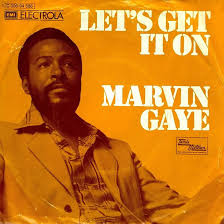
Let’s Get It On

Gaye’s song was a hit!

Willona pays a visit to the family and asks what is happening with J.J. – she shares that she spoke to him in the hallway, but J.J. just walked by her singing, “Let’s Get It On.” Willona is referencing the song by singer Marvin Gaye, which was released as a single in June 1973, and was the title track on the album of the same name that was released in August 1973. The sexually suggestive tune was one of Gaye’s most successful singles, reaching number one on the Billboard Pop Singles chart three months after its release.

“Thanks, I Needed That!”

In preparation for Diane’s arrival, J.J. shaves and puts on after-shave lotion, which he’s seen patting on his face as he emerges from the bathroom. He then briskly slaps his own cheek and says, “Thanks, I needed that!” This is a reference to a series of well-known commercials advertising Skin Bracer after-shave by Mennen which, according to the advertisements, “wakes you up like a cold slap in the face.” One of the commercials is below. (Incidentally, the narrator of the commercial is actor Adolph Caesar, who you might know from his Oscar-nominated performance in the 1984 film A Soldier’s Story.)

Wrigley Field

J.J. wants his family to vacate the apartment so he can be alone with Marcy; when they refuse, he gripes that he “might as well pop the question at Wrigley Field.” Wrigley Field is the baseball stadium on the north side of Chicago that is the home of the Chicago Cubs. It was opened on April 23, 1914.

Guest Star:

Marcy: Ta-Tanisha

Ta-Tanisha in her Room 222 days.

Born Shirley Cummings in the Bronx, New York, on January 15, 1953, Ta-Tanisha later moved with her family to Detroit, Michigan, and then to Los Angeles. In 1969, she made her television debut on an episode of The Mod Squad, and the following year, she appeared as a high school student in her first film, Halls of Anger, starring Calvin Lockhart. In the early 1970s, Ta-Tanisha studied theater at the Performing Arts Society of Los Angeles and performed in several plays, including A Raisin in the Sun. She also began appearing in a variety of television series, including Mission: Impossible (which earned her a nomination for an NAACP Image Award), Mannix, and The Partridge Family; had a small role in the popular 1973 film, The Sting; and was a cast member for two years on the television series Room 222. She continued to work steadily throughout the 1970s and 1980s, mostly guest spots on TV series or in made-for-TV movies.

Ta-Tanisha has been married since the early 1970s to actor Lee Weaver, who has appeared in a wide variety of television shows, from I Spy to Grace and Frankie, and in such films as Heaven Can Wait (1978) and The 40-Year-Old Virgin (2005).

Other Stuff:

This episode contains the first reference to the fact that James grew up on a farm in Mississippi.

Ja’Net Dubois in the Broadway production of Golden Boy, with Stammy Davis, Jr., and Johnny Brown.

In the scene where Willona tells Florida that J.J. walked by her singing the Marvin Gaye song, Ja’Net Dubois actually sings the song’s title, revealing that she had a lovely singing voice. Dubois began her career on the stage and appeared from 1964 to 1966 in the Broadway musical Golden Boy, starring Sammy Davis, Jr., and Lola Falana (as well as Johnny Brown, who would join the Good Times cast as Nathan Bookman in the second season of the series). Also, she released several albums, including Queen of the Highway in 1980, and she co-wrote and sang the theme song for the long-running sitcom The Jeffersons.

Another mention regarding the ages of the main characters comes up in this episode. In Episode Five, Michael Gets Suspended, it’s implied that Willona and Florida are not the same age, because Willona jokingly threatens to reveal Florida’s age to her children. But in this episode, Willona reminisces about a boyfriend Florida had when she and Florida were 17 years old. The age question will be completely blown apart in an early second-season episode, so stay tuned for that.

This episode marked the first of three appearances that Ta-Tanisha would make on the show.

I don’t know who painted this, but I don’t think it was Ernie Barnes. Anybody out there have a clue?

I wasn’t able to find out the name of the real-life artist who painted the portrait of Marcy, but it’s not likely that it was the painter of most of the artwork by J.J. on the series, Ernie Barnes.

Florida has a line where she tells Willona that J.J. is “gussying up” for Marcy. This term always stands out to me because who says – or has ever said – “gussying up” in the Black community???

The next episode: Florida Flips . . .

Good Times: Black Again – Why?????

Before I decided to create this blog, I’d planned to write a book on Good Times. In my (never-sent) book proposal from 2022, I mentioned the continuing popularity of the show as indicated by the numerous Facebook groups, and its ongoing relevance, evidenced by the then-upcoming animated series being developed by Norman Lear.

That animated series – called Good Times: Black Again – launched on Netflix on April 12th with a cast that includes Yvette Nicole Brown, Godfrey, Lil Rel Howery, Marsai Martin, Ego Nwodim, Rashida Olayiwola, Jay Pharoah, J.B. Smoove, Cree Sumner, and Wanda Sykes. Since it premiered, I’d seen numerous comments on Facebook, Twitter, and TikTok. Most were not favorable. And that’s putting it mildly. But I had to check it out for myself.

Bev and Reggie: Black Again.

The show’s pilot, entitled “Meet the Evans of New,” informs us of a few facts that I hadn’t previously known, primarily that the show is not a reimagining of the original although it does consist of a mother, a father, and three children – two boys and a girl – living in a Chicago housing project. But the father in Black Again – Reggie Evans – is actually the grandson of James and Florida Evans. This detail notwithstanding, the animated version resembles the original in several ways: the oldest son – Junior – is an artist and is not the sharpest knife in the drawer, academically speaking; Junior frequently squabbles with his sister, the middle child, whose name is Grey; and one of the children, who is an excellent student, also has a militant, politically aware persona. (The difference is that in the animated version, those characteristics are assigned to Grey, instead of the youngest child.) The animated Evans family also lives in the same apartment as the Good Times Evans: 17C; they even have the same triangle-shaped mirror and curtain-for-a-door closet in the front room.

After reading the comments on social media, I was primed to dislike the series, but I tried to keep an open mind. But to be honest, I was turned off by the opening title sequence! The new theme song is fine – it includes lyrics like, “Head above water, makin’ a way . . . Keep my family close, pick me up when I’m low, help me down on this road and I’ma bring us back home again . . .” But I didn’t care for the graphics, which included a close-up of a woman’s sizable rear sashaying down a city street and a baby with dyed blonde hair, a pacifier on a gold chain, and diamond earrings in each ear shooting craps on the street.

Before the babies start shooting. The BABIES.

It turns out that the blonde-haired, earring-wearing tyke from the title sequence is Dalvin, the family’s youngest child – a drug-dealing baby who has been kicked out of the house by his father. When we first see him, he’s selling drugs from his stroller on a street corner. When a car full of rapper-babies pull up, insisting that he give up his corner, he refuses, and they actually start SHOOTING AT HIM. Later, he snorts powdered formula like it’s cocaine. And he keeps a gun in his diaper.

But I’m getting ahead of myself. Let me begin with the pilot’s very first scene, which shows Reggie Evans in the shower, warbling a few lines from the original show’s theme song. But it’s not a solo performance, y’all – it’s a duet. WITH. A. COCKROACH. It’s not a great start.

Dalvin. Enough said.

The plot of the pilot contains references to episodes from the original show – Junior paints a picture of Black Jesus on the living room wall, the mother – Beverly – is readying the apartment for the building’s beautification contest, and Reggie – attempting to raise money to help with his wife’s beautification efforts – takes his pool cue to the local billiard hall. (He refuses to take money from his drug-dealing baby and instead, takes Junior with him, saying, “I’m gonna show you how a man takes care of his family in a respectable way.”)

In the remainder of the episode, we meet Bev’s best friend, Lisa, who runs a beauty salon; Grey goes on a hunger strike to draw attention to the use of chemicals in food products; and Bev is told by Delphine, the head of the beautification judging committee, that the criteria has been expanded from previous years, and that they are taking a “more holistic approach.” (Incidentally, after this declaration, we cut to three scantily clad women clustered nearby; one of them says, “Y’all hear that, hoes? We got a shot to win.” And Delphine explains, “Not that kind of HOE-listic.” Hardee har har.) Because the beautification judges will now take “the family unit” into consideration, Bev prays to Black Jesus for the return of her son, Dalvin, to the fold, promising to get him baptized if he does. Before long, Dalvin does, indeed come back home – because he’s seeking sanctuary from the baby-rappers who are shooting at him.

Earning money at the pool hall. Respectably.

Meanwhile, in the pool hall, Reggie encounters a man – Minnesota Matt – whose grandfather lost his last $72 to James Evans in a pool game years before. It was all the money he had, his wife left him, and Matt wants a revenge rematch. This is another callback to the original series as, in the pilot of that show, the Evans family needed exactly $72 in order to avoid eviction from their home, and James Evans took to the local pool hall to get the money.

Let me try to wrap this thing up. Dalvin runs away from his mother (who, for some reason, was having him baptized in Lisa’s beauty salon) and gets picked up by the baby rapper shooters. Reggie is playing pool when he gets a call from Bev that Dalvin has been kidnapped and he leaves. Bev’s leaking boobs (because she’s still nursing) lead her to Dalvin and Reggie spanks the rapper babies with a belt, but one of them cuts the belt with a knife. Junior steps in with a broken pool cue and beats them all.

The family returns home too late to be considered in the contest, but Bev philosophizes, “I thought our family had to win this stupid contest to prove we were just as good as the Evans of old. Truth is, we’re the Evans of New.” (We have a title!) A short time later, Delphine returns, says her clock was wrong, and gives Bev the winning trophy. When she leaves, we see that she is being held at gunpoint by Dalvin, who also forces her to give him the keys to the building’s penthouse, where he intends to stay.

Reggie drives a cab. (That’s something, anyway.)

At the end of the episode, a safe falls through the ceiling, from Dalvin’s apartment onto the Evans’s dinner table, and Reggie closes things out with “Damn Damn Damn!” – the final homage (and I use the word loosely) to the original series.

I don’t want to belabor this thing, but I also checked out episodes two and three. Let me give y’all a few highlights (or lowlights, as the case may be):

  • We learn from Bev that Reggie’s favorites are takis, dark liquor, and Mexican corn on a stick wrapped with a chitlin.
  • Junior’s teacher (whose name, incidentally, is Mrs. Idontgiveashit) meets with Reggie and Bev because of Junior’s “lack of focus” in class. During the meeting, she’s smoking a cigarette and slurping from a flask.
This ain’t J.J. and Thelma, y’all.
  • Junior and Grey have a contest to see who will get the best grades on an upcoming test. The loser has to pick the roaches out of the cereal. Continuing with the roach theme, in another scene, Junior reminds his father that he’d told the children they couldn’t have a dog “because the roaches were our pets.”
  • Grey takes her exam and tells her parents: “The only person who can score higher on that test is Wendy Williams on Memorial Day weekend.” (I don’t even know what this means. I’m not sure I WANT to know what this means.)
  • Grey gets her period for the first time. When she and her mother see blood staining her pajamas, they both have the same reaction: “Please let her be shot!” Bev’s rationale is because now that she’s gotten her period, Grey can get pregnant.
  • Bev insists that Grey use sanitary napkins instead of tampons because “they’re a gateway. First tampons, then who knows what you’re sticking up there?”
  • At school, Grey stains her clothes and her mother shows up to help. They find that there are no sanitary napkins in the bathroom dispenser, and when Grey reaches for the tampons, Bev objects: “Read my lips. No tampons. Next thing you know, you’ll end up giving birth in a public restroom and your life as you know it will be over.” And THEN, we see the feet of a girl in a nearby stall and, as indicated by the closed captions, we get this:

[girl] Hey!

[water bubbling]

[baby crying]

And Bev says, “Well, if the stall fits!”

And that, for me, was the last straw. I couldn’t reach for the remote control fast enough.

I don’t even know where to begin to tell you how appalled I was by this show. Even if I wasn’t a huge fan of the original Good Times, I would be repulsed, but the fact that it serves to desecrate the name of a show that has such meaning for me – it’s just too much. I honestly cannot believe that this crap was allowed to reach the airwaves. And believe me, “crap” is putting it mildly.

No comment.

It seems that every few seconds, I was witnessing a ridiculously offensive sight or hearing an unbelievably insulting line. I don’t put anything past Seth MacFarlane – the brains (or whatever) behind shows like American Dad and Family Guy – but I’m really saddened to know that before his death last year at the age of 101, Norman Lear put his stamp of approval on this garbage. Maybe I shouldn’t be surprised. But what DOES surprise me is that NBA basketball star Stephen Curry, along with MacFarlane and Lear, was also an executive producer. Surely, he could have stepped up and had a say. Surely, he read the scripts and could have pulled out a red pen. Surely, he found SOMETHING about this series that left him feeling as disgusted as I was. But maybe the dollar signs provided a more salient inspiration than his conscience.

I know, from reading online comments, that there are those who think this series is funny, but I just can’t, y’all. I was far too offended.

Far, far too offended.

“I Ain’t Sick, I Ain’t Nervous, and I Ain’t Upset!” Season One, Episode Twelve: The Checkup (May 3, 1974)

A moment of calm. Enjoy it while you can.

When the Evans children become concerned about their father’s short temper and frequent headaches, Thelma and Michael do a little research and decide that James is suffering from hypertension (or, according to Florida, “as we plain folks say, ‘high blood pressure.’”). After James breaks a kitchen chair during his latest rant, Florida and the children convince him to see a doctor for a checkup – his first one in 20 years. As it turns out, James doesn’t have hypertension, but is suffering from elevated cholesterol which, the doctor tells him, can be addressed through diet and relaxation. (“Oh, good – we’ll go down to Acapulco for a few weeks,” Florida cracks.)

“I think we should stay here and protect the furniture.”

Perhaps because James’s outbursts were so severe (bordering on scary, to be honest), and the possible cause was so consequential, the laughs in this episode didn’t seem to be as abundant as usual – John Amos yelled so loudly and so often, I was practically concerned for HIS health! Also, this episode marked the first of many that infused the plot with what I think of as public service announcements – in this case, the script had Thelma and Michael explaining to their mother that high blood pressure causes heart attacks, stroke, and kidney malfunction, and can only be diagnosed through a physical examination. The children also state that hypertension is caused by the “stress and frustration of ghetto life,” as well as the grease and salt prevalent in soul food, and that the black male is the “number one victim.” And later in the episode, James’s doctor cautions him to “cut down on the grease and the fat, and fried foods whenever possible.”

Pop Culture Connections

Chicken Delight was most popular in the 1960s.

Chicken Delight

Florida has purchased some of James’s favorite foods – including chitterlings, collard greens and pork chops – in an effort to boost her husband’s mood. J.J. jokes that the last time they had meat in their household, “Chicken Delight made a wrong delivery.” Founded in Illinois in 1952, Chicken Delight saw its highest popularity during the 1960s, when the chain expanded to more than 1,000 locations nationwide, attracting customers with a catchy jingle, “Don’t cook tonight – call Chicken Delight.” The company was bought in 1964 by Consolidated Foods (now the Sara Lee Corporation), but the business declined due to legal battles and strong competition from Kentucky Fried Chicken (KFC). In 1979, the remaining Chicken Delight operations were purchased by Otto Koch, owner of the Chicken Delight Canada, Ltd., and as of this writing, fewer than 10 Chicken Delight locations can be found in the United States.

Marcus Welby, M.D.

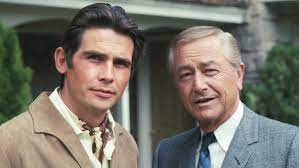
Robert Young (right) played the title role in Marcus Welby, M.D., with James Brolin as his assistant.

Michael arrives with a stack of magazines and declares that his father has all the signs of hypertension, agreeing with Thelma that James needs to have a physical check-up right away. “Look, Dr. Welby,” Florida says, “What makes you think your father has hypertension?” Florida was referring to a popular one-hour television drama, Marcus Welby, M.D., which starred Robert Young in the title role of the wise and kindly doctor who had a private practice in Santa Monica, California. The series aired from September 1969 until May 1976. Young, incidentally, had a successful career in movies, which began in the late 1920s, and was also the star of the long-running television series Father Knows Best, which aired from 1954 to 1960.

Hank Aaron

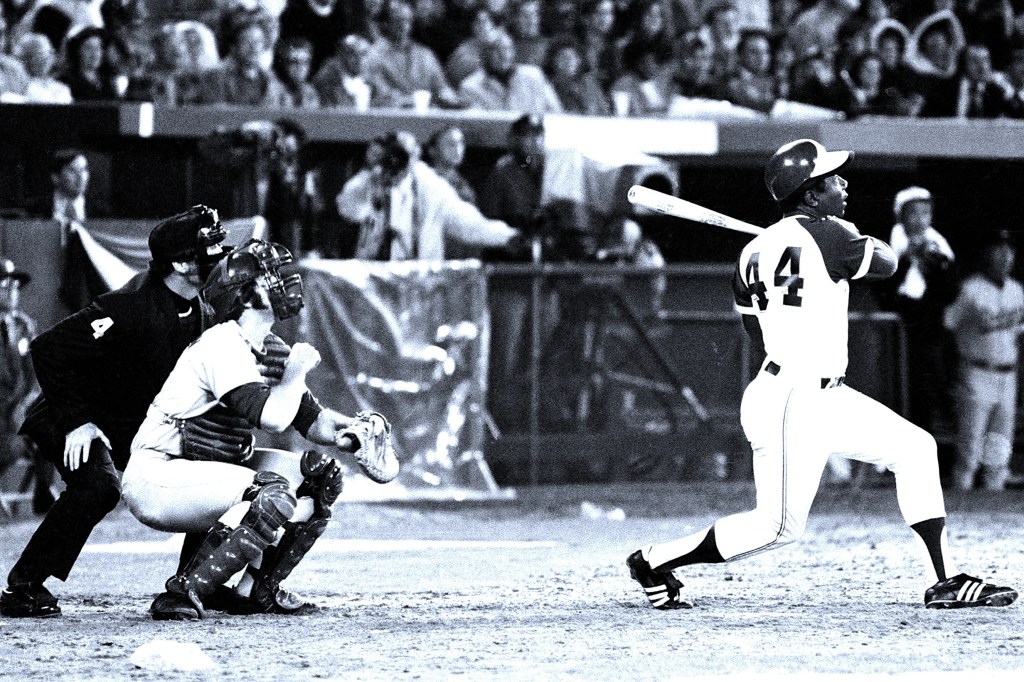
Hank Aaron broke Babe Ruth’s home run record on April 8, 1974.

Aware that James has been out of sorts lately, Willona assumes that his issues are sex-related and brings Florida a bag of items including candles, wine, and a bottle of perfume – if Florida puts two drops of the fragrance behind each ear, Willona promises, James will “try to hit more home runs than Hank Aaron.” About a month before this episode aired, baseball great Hank Aaron, of the Atlanta Braves, hit a home run that gave him 715 for his career and topped Babe Ruth’s record of 714 homers. Aaron’s record remained intact for more than 30 years, until Barry Bonds broke it in 2007.

Front-page news.

Nixon’s Tax Bill

Florida tells Willona that James has been laid off for a few days and that she has to tell him when he wakes up. “That’s like having to tell Nixon they’re adding another $100,000 to his tax bill.” This referred to an investigation by the Joint Committee on Internal Revenue Taxation (JCIRT), which reported in April 1974 – about a month before this episode aired – that President Richard Nixon owed the government $476,431 in unpaid taxes and accrued interest from his tax returns from 1970, 1971, and 1972. The tax scandal was front-page news.

Guest Star:

Santoro guested on numerous TV series during his career.

Doctor: Dean Santoro

Born Floyd Edward Santoro on January 30, 1938, in Johnstown, Pennsylvania, Santoro’s appearance on Good Times marked his television debut. He went on to appear in guest spots on several popular television shows during the 1970s and 1980s, including Cannon, Barnaby Jones, Kojak, Barney Miller, and Charlie’s Angels. In the mid-1980s, Santoro landed a recurring role on the nighttime soaper Dallas, appearing in six episodes. Santoro’s last role was as a professor on Newhart in 1985; he died of AIDS two years later, on June 10, 1987. He was 49 years old.

Other Stuff:

Florida and Henry — not James — on Maude.

This episode refers to the fact that Florida previously worked as a maid. Although Good Times is unquestionably a spinoff of Esther Rolle’s character of Florida on Maude, several differences exist between the two women – Maude’s Florida lived in New York and had a husband named Henry (played by John Amos), who worked as a firefighter, while Good Times’s Florida, of course, lives in Chicago and is married to James. Still, there’s little doubt that both Floridas are one and the same person, even though there are only a few mentions throughout the series of her working as a maid, and there’s never any reference to Maude Finlay and her family.

The next episode: My Son, The Lover . . .

Happy 50th Anniversary, Good Times!

Fifty years ago today, on February 8, 1974, Florida and James Evans, their children J.J., Thelma, and Michael, and neighbor and friend Willona Woods, made their debut on American television on Good Times. The series was only on for five seasons, but it continues to entertain fans with its insightful writing and first-rate performances from the cast and guest stars.
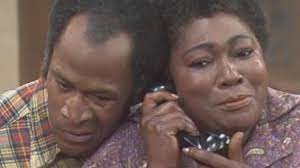
To celebrate this momentous 50-year milestone, I am offering 50 things I love about Good Times, including memorable quotes, favorite episodes, and much more. I hope you’ll let me know in the comments what you love about this groundbreaking show!

  1. “Well, it’s comforting to know there’s still some respect for Black Power around here.” – Florida’s first line in the show’s pilot episode.
  2. “Boy is a white racist word.” We heard this declaration from Michael in several of the early episodes.
  3. Florida, Thelma and Willona’s performance of “Stop, in the Name of the Love” in “The Rent Party” (Season Three). It’s a delight.
  4. Janet Jackson’s four-episode introduction to the series as Penny at the start of Season Five. I’ll never forget when it first aired – everyone I knew was watching and talking about it.
  5. Seeing guest appearances from performers who went on to be stars, like Roscoe Lee Browne, Judy Pace, Brenda Sykes, Jay Leno, Alice Ghostley, Ron Glass, Charlotte Rae, and Debbie Allen.
  6. The way the show addressed real-life issues like teen drinking, gang violence, teen pregnancy, hypertension, and venereal disease.
  7. The live studio audience – their responses were part of what made the show so memorable – not just the laughing and clapping, but other reactions like shocked gasps and audience members calling out, “Right on!”
  8. Ralph Carter having the opportunity to display his singing talent in several episodes, including “The Rent Party” and at Thelma’s wedding.
  9. The theme song. I’ve heard it countless times and still can’t help singing along.
  10. Willona’s collection of wigs. She had a different look in practically every episode! (One of my favorites was her afro in “Sex and Evans Family.”)
  11. Ernie Barnes’s paintings. This talented artist was behind most of the artwork on the show that was presented as J.J.’s.
  12. James’s patented responses in place of the word “yes,” like, “Is fat meat greasy?” and “Is an elephant heavy?”
  13. James’s brown corduroy pants. (What can I say?)
  14. The first three seasons. There’s no denying that the series was never the same after John Amos left, but the three seasons that he was on the show were absolute gold.
  15. “Where There Smoke” from Season Five, a Rashomon-type episode where J.J., Thelma, Michael, and Penny each give their own accounts of how the family sofa caught on fire. It’s hilarious (and the only episode after Season Three that I’ve seen multiple times).
  16. “The Dinner Party,” from Season Two, where a senior citizen friend of the Evans’s has fallen on hard times, and the family believes that she has brought a meat loaf made of dog food to serve at dinner. This is one of the many episodes that expertly walks a fine line between presenting a serious issue and being incredibly funny.
  17. “Bon appetit, y’all!” Willona in “The Dinner Party” (Season Two)
  18. The ideal role model provided by Thelma. She wasn’t just pretty, but she was also smart, talented, ambitious, fearless (I loved the way she stood up to Mad Dog in the “The Gang” episode), and she could put J.J. in his place every time.
  19. Having two former members of the 1930s Little Rascals on the show: Stymie Beard and Ernest “Sunshine Sammy” Morrison.
  20. “Sir? Can I ask you just one question? Who IS looking for the guy who shot Medgar Evers?” – Michael, talking to the FBI agents looking for Florida’s nephew in “Cousin Cleatus” (Season Three)
  21. “The Debutante Ball” episode, which included an interesting depiction of a couple who’d made it out of the ghetto, but forgotten from whence they came.
  22. The many Chicago references, like Mayor Richard J. Daley, Marshall Field’s department store, and the Chicago Defender newspaper.
  23. The loving relationship between James and Florida. There was a reason why Willona called them the “Liz and Dick of the Ghetto” – these characters were clearly still in love, and showed it often through their affection for each other. It was beautiful to see.
  24. The way James called Florida “baby.”
  25. “The kitchen and the bedroom, Florida, the kitchen and the bedroom!” – James in “Florida Flips” (Season Two)
  26. “You know what I’m gonna leave the world when I go, Florida? A tombstone that reads “Here lies James Evans. Back in the hole again.” – James in “Florida’s Rich Cousin” (Season Three)
  27. “How do I love thee? Let me count the ways. I love you for your skin’s pure sheen, for your two sweet lips, with teeth in between.” – J.J. to Marcy Jones in “My Son, the Lover” (Season One)
  28. “Those coulda been Sweet Daddy’s drawers!” – James in “Sweet Daddy Williams” (Season Three), where the flamboyant numbers runner hires J.J. to paint his girlfriend, Savannah Jones.
  29. “The elevator ain’t workin’” in “The Visitor” (Season One). This line was said by nearly every character in the episode and whenever I see it, I say it right along with them!
  30. “Now that’s the kind of religion I can get into. The good word rolls out and the long green rolls in!” – J.J. in “God’s Business is Good Business” (Season One)
  31. “Florida the Woman” episode, where Florida’s boss Oscar Harris (Thalmsus Rasulala) brightens Florida’s day after an especially frustrating morning with James and the children. One of my favorite scenes is when Oscar and James come face to face and James can’t suppress his jealousy.
  32. “The TV Commercial” episode, featuring a particularly funny bit with J.J. and James, where they present a faux commercial of their own.
  33. Willona’s wardrobe. Some of her outfits were so sharp, they could be worn today!
  34. The fact that Willona was content being single. It was so refreshing when, during a conversation with Florida, she declared that there was “a big difference between being alone and being lonely. And the one thing I ain’t is lonely.”
  35. Mention of popular Black performers like Diana Ross, Redd Foxx, The Isley Brothers, The Jackson Five, Harry Belafonte, Isaac Hayes, Gladys Knight and the Pips, Marvin Gaye, Curtis Mayfield, and Harold Melvin and the Blue Notes.
  36. J.J.’s love for Thelma, despite their constant arguing. This was demonstrated in numerous episodes, including his defense of her engagement to Larry (Carl Franklin), and his protective reaction after she was attacked in the “Family Gun” episode.
  37. Florida’s constant support of James – like in “Too Old Blues” when James missed out on a job opportunity because of his age, or “The Mural,” where the family learns that James had spent Thelma’s college fund.
  38. “If she gets any happier, she’s gonna break every dish in the house.” – J.J. in “Florida Flips” (Season One)
  39. “The Family Gun” episode, which had an especially chilling ending, when Michael shoots his father’s gun into the air after mistakenly thinking that he’d removed the bullets.
  40. “She hit her husband? Free at last, free at last! You’re halfway there, sister.” – Wanda (Helen Martin in “Florida Flips” (Season One)
  41. “Thelma’s Young Man,” where Lou Gossett guested as the balding, 40-something boyfriend of 17-year-old Thelma.
  42. “The Lord is my German Shepherd.” – J.J. in “The Dinner Party” (Season Two)
  43. “If you want that button sewed, you sew it yourself. And if you want breakfast, make it yourself. Then make the lunch for the children. Wash the dishes, do the laundry, make the beds and sweep the floor. And see how you’d like being mother, housewife, diplomat, referee, counselor, cook, seamstress, and sparring partner, with no pay and no fringe benefits!” – Florida in “Florida the Woman.”
  44. “Damn, damn, damn!” Florida’s unforgettable reaction in “The Big Move, Pt. 2,” when she finally allows herself to feel the pain of James’s untimely and unexpected death. (Season Four)
  45. The “Thelma’s Scholarship,” episode, where Thelma is sought as the “token” in an all-white sorority at a Michigan boarding school.
  46. The lines said and situations depicted on the show that simply could not be aired today, like James using the “N” word or delivering a whooping to Michael’s classmate.
  47. The way James bravely, and with no hesitation, protected his family. One instance that comes immediately to mind is his confrontation in “Cousin Cleatus” with Florida’s nephew, who planned to use Michael as a hostage (or worse yet, a shield).
  48. Scenes that make me laugh every single time, no matter how often I’ve seen them – like when James cracks up in “My Son, the Lover” after hearing J.J. reading his poem to Marcy Jones, or in “Sex and the Evans Family” when Michael asks if the item Florida’s hiding has anything to do with Black unity and Willona responds, “In a way.” Florida’s silent slow burn is a masterpiece!
  49. The show’s use of terms I remember from my childhood, like “blister your behind.”
  50. “Have mercy!”

Happy anniversary, Good Times!

“I Ain’t Felt Like This Since I Stopped Drinking!” – Season One, Episode Eleven: The TV Commercial (April 26, 1974)

“I got the job!”

The action in this episode revolves around Florida who, while shopping at her local supermarket, is approached by a man who suggests she might be ideal for his television commercial. When the call from the advertising agency comes, Florida learns that she’s being offered the job and could earn as much as $5,000, promoting a new health tonic called “Vita Brite.”

When a messenger shows up with Florida’s script and a six-pack of the tonic, Florida nervously rehearses her lines but balks at the sections that claim she’s been using the tonic for three months and that it was recommended by her family doctor. “What family doctor? All we got is a bottle of iodine and three bandages,” she protests. “James, they got me telling lies! They hired me for an honest face and I ain’t gonna give it a crooked mouth!” The family tries to convince Florida that she wouldn’t be lying – only acting – and emphasizes the benefits to be gained from the money she would earn. (“This is a dog-eat-dog world out there,” James says, “and I’m tired of being inside of the dog looking out.”) When James urges Florida to sample the tonic, she, James, J.J. and Thelma sit at the kitchen table for a taste test – and promptly discover that the tonic is 18 percent alcohol. Meanwhile, Michael, alone in the living room, breaks out with a rousing rendition of “Tie a Yellow Ribbon ‘Round the Old Oak Tree” and the family realizes that he has guzzled nearly a whole bottle of the tonic. After seeing the effect on Michael, Florida declares that she’s not going to do the commercial and James agrees: “Your mother ain’t selling nothing that’s going to put 11-year-olds on Skid Row.” The closing of the episode shows that the government prohibited Vita Brite from being advertised on television.

This was one of the funniest parts of the episode to me, where J.J. and James pretend to do a commercial.

Florida’s tendency toward what some might term her “goody two shoe-ism” is on full display in this episode. Although I agree with her final decision to steer clear of the commercial because of its high alcohol content, it’s a little hard to get behind her earlier objection. Her family made perfect sense when they explained that people on commercials don’t necessarily use the products they are promoting – maybe Florida thought that because she was a “real” person and not a professional actor, she shouldn’t offer claims that were untrue, but that’s a stretch. Surely the positive impact of $5,000 (which, incidentally, is more than $30,000 in 2023 dollars) should have been sufficient to overcome Florida’s concerns. Still, I certainly don’t blame her for putting her foot down after seeing Michael’s in his inebriated condition. (And, of course, the point was moot anyway after the government put ITS foot down.)

Pop Culture References:

The Cost of Stamps

As the episode begins, James is going over the family’s bills, separating them into stacks to either pay, stall, or argue about – and then there’s one that he jokes that he’ll “put in the funny papers.” Michael suggests that all of the poor people band together and send letters of protest to Washington about the high cost of living, but James responds that “they stopped us from doing that by raising the price of stamps.” In 1971, the price of a first-class U.S. stamp increased from six cents to eight cents, and in March 1974, about a month before the airing of this episode, the price increased to 10 cents. (As of this writing, a first-class stamp costs a whopping 66 cents.)

Toll Calls

As James reviews his phone bill, he notes that there is a charge for a “toll call” to Oak Park, a suburb of Chicago. First referenced around 1912, a toll call is a long-distance telephone call which has charges that are above the local rate. The term is seldom, if ever, used anymore. Incidentally, “toll-free” – or 1-800 – numbers were introduced in 1967, which allowed users to make long-distance calls without being charged.

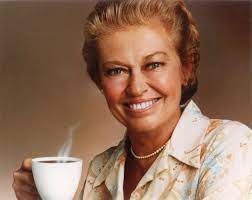
Mrs. Olson had all the answers.

Mrs. Olson

When time passes and Florida hasn’t yet received the call offering her the commercial spot, she muses, “I guess I won’t become the Mrs. Olson of the projects.” Mrs. Olson was the name of the TV and print spokesperson for Folgers Coffee; she was played by actress Virginia Christine for 21 years, beginning in 1965. In commercials, Mrs. Olson had a faint Swedish accent and could frequently be seen advising young housewives on how to improve their lives by using Folgers “Mountain-Grown” coffee. Christine’s career began on the big screen in the early 1940s – she would go on to appear in numerous film classics, including The Killers (1946), High Noon (1952), Invasion of the Body Snatchers (1956), and Guess Who’s Coming to Dinner (1967), as well as such television series as The Twilight Zone, Mr. Ed, Perry Mason, and Bonanza. She made her final commercial as Mrs. Olson in 1986.

Grauman’s Chinese Theatre and the Forecourt of the Stars.

Grauman’s Chinese Theatre

James jokes that Florida’s commercial appearance could lead to such fame and fortune that she would be asked to place her hand and footprints in the cement at Grauman’s Chinese Theatre. Grauman’s was a movie theater that opened in 1927 on Hollywood Boulevard in Los Angeles and is styled in the design of a giant Chinese pagoda. The theater’s most famous feature is the Forecourt of the Stars, which displays the hand and footprints (or in some cases, legs and noses) of more than 200 celebrities, from classic stars including Humphrey Bogart, Bette Davis, Clark Gable, and Marilyn Monroe, to more modern luminaries, such as Billy Crystal, Tom Hanks, and Cicely Tyson. The theater was purchased in 1973 by Ted Mann and renamed Mann’s Chinese Theater. It reverted to the original name in 2001, but the naming rights were purchased in 2013 by a Chinese electronics manufacturer called TCL Corporation (also known as “The Creative Life.”). The theater is now known as the TCL Chinese Theatre and still shows first-run movies.

Tony Orlando and Dawn.

Tie a Yellow Ribbon ‘Round the Ole Oak Tree

This was the name of a hugely popular song by a group known as Tony Orlando and Dawn, which consisted of the lead singer (Orlando) and his backup singers, Telma Hopkins and Joyce Vincent Wilson.Born Anthony Orlando Cassavitis, Orlando began his singing career in the 1960s, but he didn’t hit pay dirt until Hopkins and Wilson joined him as “Dawn.” The group had a number of hits, but their best-known single was this 1973 release, which told the story of a soldier returning home from a war after three years and writing a letter to his girlfriend, asking that she tie the ribbon of the song’s title if she’d waited for him. (Incidentally, Telma Hopkins went on to have a successful career in television sitcoms, with recurring roles in the casts of Bosom Buddies, Gimme A Break, Family Matters, and Half and Half.)

Joe Namath, Mark Spitz, and the Ty-D-Bol Man

In trying to illustrate the difference to Florida between “lying” and “acting” in a commercial, Florida’s family members offer several examples. J.J. says, “Joe Namath is doing those pantyhose commercials now. You think he really wears them?” This refers to a 30-second commercial for Beautymist pantyhose that began airing in 1974, featuring famed New York Jets quarterback Joe Namath. As the spot begins, the voiceover narrator promises that the commercial will prove Beautymist panty hose can “make any leg look like a million dollars.” The camera then shows Namath’s pantyhose-covered legs and he tells the viewers why they should choose Beautymist. You can see the commercial for yourself below:

In another example, Thelma queries, “How do we know Mark Spitz drinks milk to build strong teeth?” Spitz was a swimmer who captured the attention and adulation of the nation after winning seven gold medals at the 1972 Summer Olympics in Munich, Germany. Spitz went on to endorse several products; his most popular commercial was for the California Milk Advisory Board, in which he claimed to drink milk on a daily basis.

And James tells Florida that everything seen on television isn’t real, referencing the “guy in the little boat that goes sailing around in the toilet,” and adding, “I ain’t never seen no yachtsman in our john.” He’s talking about the commercials from the 1960s and 1970s for Ty-D-Bol, a toilet cleaner that was known for its oxidizing agent that turned toilet water blue. The spokesman for the product was a man dressed in nautical gear who sailed in the toilet tank in a boat. One of the commercials is below:

Guest Stars:

Ernest Morrison (The Messenger)

When the messenger delivers the Vita Brite script and sample six-pack, Florida asks him if he uses the product and the man responds, “Day and night!” The messenger was played by Ernest Frederick Morrison, Jr., born on December 20, 1912, in New Orleans, Louisiana. His father was also an actor, as were his sisters Florence, who appeared in the 1922 film Penrod, and Dorothy, who was featured in the Our Gang series and in the 1929 musical Hearts of Dixie. Ernie’s first appearance on film was an infant; he took the place of another child who would not stop crying. When young Ernie proved to be perfect on set, the crew nicknamed him “Sunshine” – his father added the “Sammy” and in subsequent films, he would be credited with a variety of names, including Sunshine Sammy, Sambo, and Little Sambo. He made his official film debut in The Soul of A Man in 1916, and the following year, he began appearing in a series of silent films produced by actor Harold Lloyd and co-starring Baby Marie Osborne. A clip from one of their films is below:

In 1919, Morrison reportedly became the first African-American to ink a long-term film contract when he signed with Hal Roach. He would go on to appear in 28 Our Gang/Little Rascals film shorts, and would later recall: “The picture business was great. Our Gang? We all got along. No problems. And when we weren’t working, we were playing, and when we were working, we were playing. Hal Roach, Harold Lloyd, Bob McGowan – they didn’t make it a job, they made it fun. It was a beautiful childhood.” He left Hollywood to spend several years in vaudeville, but he was back on screen in the early 1950s, cast as Scruno in the East Side Kids film series. He also appeared in such films as In This Our Life (1943), starring Bette Davis, and Greenwich Village (1944), where he displayed his dancing talent with a group known as The Four Stepbrothers. His number from the latter movie can be seen below. Ernie is the shortest of the group.

After serving in World War II, Ernie was asked to appear in the Bowery Boys film series, but he declined, saying he “didn’t like the setup.” Instead, he left the entertainment world behind, and worked for numerous years as a quality control inspector for an aerospace company in Compton, California, retiring in 1972. In the 1980s, he was briefly seen in two documentaries, Passion and Memory (1986)  which focused on Black performers from the Golden Age of Hollywood, and Harold Lloyd: The Third Genius (1989). Both of these can be found on YouTube.

Morrison died of cancer in 1989 at the age of 76. He is buried at the Inglewood Memorial Cemetery in Inglewood, California.

Other Stuff:

I found this to be curious. The man from the advertising agency called Florida around 4:15 pm to offer her the job, and I’d estimate that an hour passed between the time she got the call and when she decided not to do the commercial. In the final scene, Florida comments on a commercial she sees on television, and Thelma says that could have been Florida. “No way,” Florida responds. “Mr. Moore said the government wouldn’t let them advertise Vita Brite on television.” This exchange makes it seem that at least a few days – and probably more – had passed since Florida decided against appearing in the TV spot. But all of the characters have on the same clothes that they’ve worn throughout the episode. So what happened here? When did the agency inform Florida that the government shut down the commercial? How did “the government” find out about the commercial? When did the “government” reach out to the advertising agency? And who or what is THE GOVERNMENT?? So many questions . . .

~ ~ ~

The next episode: The Checkup . . .

My First Good Times Quiz!

Do you watch Good Times episodes over and over again? If you do, this quiz — focusing on Season 1, episodes 1-3 — is for you! Click here to join in the fun — and please leave a note in the comments to let us know your thoughts about our first quiz!

“His Name is Engraved in the Ripple Hall of Fame” — Season One, Episode Ten: Springtime in the Ghetto (April 19, 1974)

“Not Ned the Wino!”

As the episode opens, Florida is at her sewing machine, working on a new slipcover for the living room sofa. The whole household is abuzz as the family prepares their home for entry in a contest for the most beautiful apartment in the building: James is building a stand for Florida’s plants, Thelma is cleaning her room (including wiping her lipstick prints from her autographed picture of Stevie Wonder), and Willona adds to the ambience with the gift of a bowl of goldfish. Although Florida is confident that she will win, James cautions her about getting her hopes up, telling her, “It ain’t what you do, but who you know.”

Willona makes a brief appearance to deliver a gift of goldfish.

Florida’s chances for winning the coveted top prize are rocked when Michael comes home with local drunk Ned the Wino, asking if the “tired, hungry brother [with] no place to go” could stay with the family for a few days. Florida eventually relents and James, J.J., and Michael go to work making Ned presentable (including feeding him, bathing him, and dressing him in James’s clothes). By the time the three-person committee arrives, a grinning, practically catatonic Ned is propped up on the sofa and passed off as James’s cousin. Following the committee’s inspection of the apartment, the chairperson, Mrs. Vinson, declares that the Evans apartment is the winner. Minutes later, Mrs. Vincent returns to disclose that the family won primarily because of “the way you cleaned up Ned,” and announces that Ned is her husband. The episode ends with Florida quipping, “Now, I not only got pull in the projects but, thanks to Ned, I also got connections in the gutter.”

The New Ned.

There are a lot of laughs in this episode, with a sense of gravity provided by Michael’s “Good Samaritan” act of bringing Ned in the family home in an effort to help him get sober. Michael’s belief that Ned’s life can be turned around after staying a few days with his family is a sweet and touching notion, and his way of thinking is a testament to his character and the way he was raised: “All he needs is someone to help him,” Michael says. “If we don’t help him out, who will?” It’s also interesting that Florida’s initial, knee-jerk reaction is focused solely on trying to win the contest and the possibility that Ned will jeopardize her chances. It’s not long, though, before she’s convinced by Michael’s heartfelt pleas and her own Christian beliefs to reverse her stance.

Ironically, James’s declaration about only getting ahead because of “who you know” proves to be a self-fulfilling prophecy, as Florida actually doesn’t win the contest on her merit. Instead, she wins because the family cleaned up Ned to the point where his wife was willing to allow him back in their home. It seems a little curious then, that Florida is so proud of her first-place victory, since, if not for Ned, she might not have won.

Pop Culture References:

The Secret Life of Plants

Much is made of Florida’s plants, including her insistence that plants are sensitive and will enjoy having their “own little home” on the stand that James built, and that plants understand communication from humans. She said she got this information from “a plant book,” which was likely The Secret Life of Plants, a best-selling book published in 1973 that focused on the physical, emotional, and spiritual relations between plants and man. After its release, it became popular for people to talk to their plants to keep them happy and help them grow.  

Montgomery Ward

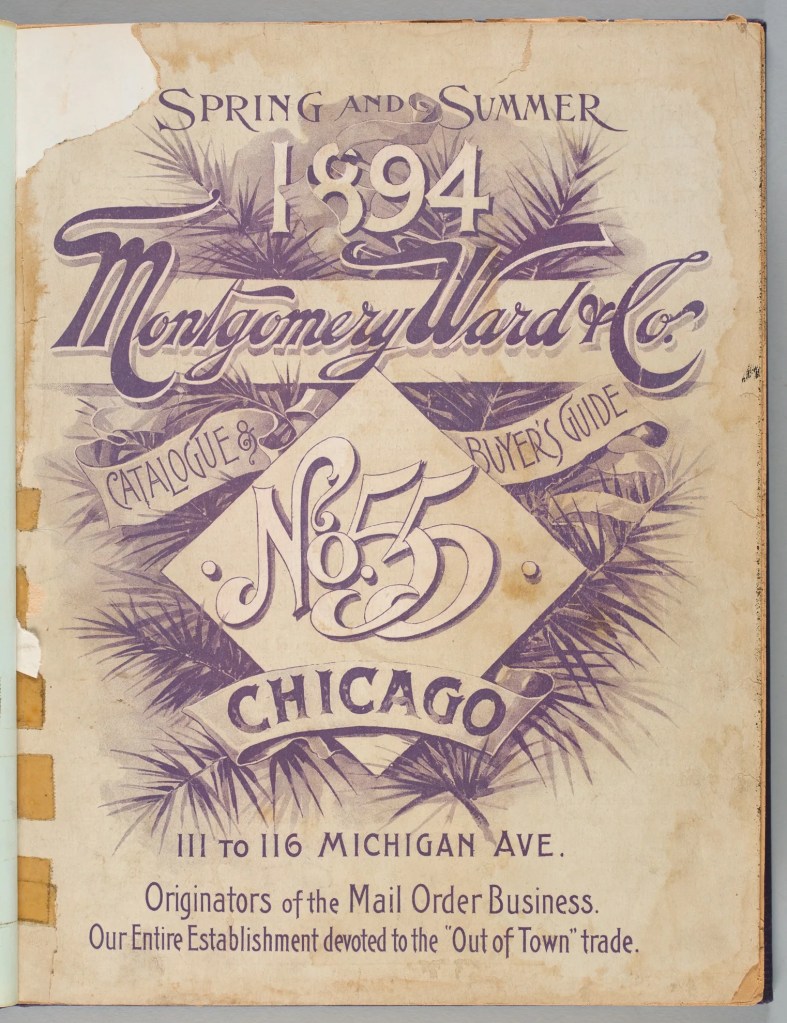
Montgomery Ward catalog from the 1890s.

Discussing her competition in the contest, Florida remarks that one of the entrants has a “genuine antique umbrella stand” from Montgomery Ward. Founded in Chicago in 1872 by Aaron Montgomery Ward, the store was the first successful mail order retail company. Ward originally worked for the store that would later become Marshall Field & Co.; he left that company to open his mail order business, selling everything from clothes to steam engines. The company also invented the promise of “satisfaction guaranteed or your money back.” In 1926, the company began opening retail stores (following the lead of its main competitor, Sears, Roebuck & Co.), and five years later, there were more than 500 Montgomery Ward stores nationwide. (Incidentally, in 1939, an advertising writer for the company wrote “Rudolph the Red-Nosed Reindeer” as an illustrated poem for distribution to children who visited the company’s Santa Claus.) The store had more than 70,000 employees across the country by the early 1940s, but it grew more slowly in the second half of the century, and in 1974 – the year that this episode first aired – the company was purchased by the Mobil Oil Corp. In 2000, it was announced that the company was closing all of its stores and the last Montgomery Ward store closed the following year.

Ozzie and Harriet

The goldfish that Willona gives to Florida were named Ozzie and Harriet, after the stars of the popular long-running radio and television series. More about the series can be found in the post on Season One, Episode Three: Too Old Blues.

Streaking

As James and his sons prepare to bathe Ned, J.J. jokes that they could just remove all of his clothes and run him through the car wash. “Nobody will notice,” he adds. “They’ll just think he’s streaking.” Streaking – or running naked through a public place – first became a phenomenon in the U.S. around 1973. It began on college campuses; in June 1973, a streaking trend was reported at Michigan State University, and in December of that year, Time magazine called streaking a “growing Los Angeles-area fad” that was increasing among college students as well as other groups. In February 1974, the phenomenon was labeled a “streaking epidemic” in the press, and on April 2, 1974 – just a few weeks before the airing of this Good Times episode – one of the best-known incidents took place on live television during the Academy Awards ceremony. Actor David Niven was in the process of presenting an award when a naked, mustachioed man ran across the stage and flashed a peace sign. “Well, ladies and gentlemen, that was almost bound to happen,” Niven quipped. “But isn’t it fascinating to think that probably the only laugh that man will get will ever get in his life is by stripping off his clothes and showing off his shortcomings?” (A clip of the streaking incident at the Oscars can be viewed below.)

Guest Stars:

Raymond Allen (Ned the Wino)

Allen on Sanford and Son.

After references to his character in a few previous episodes, Ned the Wino finally makes his debut here. Played by Raymond Allen, he would go on to appear in six other episodes in the series during seasons one through four. Allen was born in Kansas City, Missouri, on March 5, 1929, one of 12 siblings. In addition to guest spots on a number of television series, Allen had recurring roles on Sanford and Son, where he played Aunt Esther’s long-suffering husband Woody, and Starsky and Hutch, where he was mechanic Merle the Earl. He also reprised his role as Woody on the Sanford and Son spinoff series, The Sanford Arms. He retired from acting in the mid-1980s due to health issues; his last acting performance was in a 1985 made-for-TV movie called Gus Brown and the Midnight Brewster, co-written by Scoey Mitchell and starring John Schneider and Ron Glass. Allen had three children, one of which – Ta-Ronce Allen – played Michael’s girlfriend Yvonne on two episodes of Good Times. Allen died of respiratory issues in August 2020 at the age of 91.

Committee Members: Robin Braxton (Mrs. Vinson), Simeon Holloway (Mr. Johnson), Betty Cole (Mrs. Hines)

Robin Braxton in Blue Thunder.

Robin Braxton can be seen in several TV series including Police Woman and The Jeffersons, and films including Blue Thunder (1983), starring Roy Scheider. Gary, Indiana, native Simeon Holloway played a watchman in the 1972 film Trouble Man, directed by Ivan Dixon, and TV series including 227, Little House on the Prairie, and What’s Happening! Betty Cole’s credits include Room 222, Sanford and Son, and The White Shadow, as well as the 1981 film The Postman Always Rings Twice.

Other Stuff:

The comments about Florida’s weight continue. James remarks that instead of making the slipcover for the sofa, Florida could have made herself a new dress. Florida responds that she saved money making the cover, and adds, “The sofa takes less material than I do!” And James piles on. Although he initially tells Florida not to put herself down, he does so himself with his back-handed appreciation: “I like you just the way you are,” he says, “with plenty to hug, plenty to squeeze . . . and I know there’s always enough left over for next time.” Later, as James gets ready for Ned’s clean-up effort, he gives Florida a kiss, and when she asks what it was for, he explains, “That’s for being a whole lot o’ woman. And I don’t mean weight, neither.” (Wink, wink.)

This episode marks the first appearance of Ned the Wino; previously he was only referred to on the show.

This is the first of two episodes to have a character with the last name of “Vinson.” The second character would be Gertie Vinson, in the Season 2, Episode 19, episode entitled “The Dinner Party.” Are these two women related?

~ ~ ~

The next episode: The TV Commercial . . .