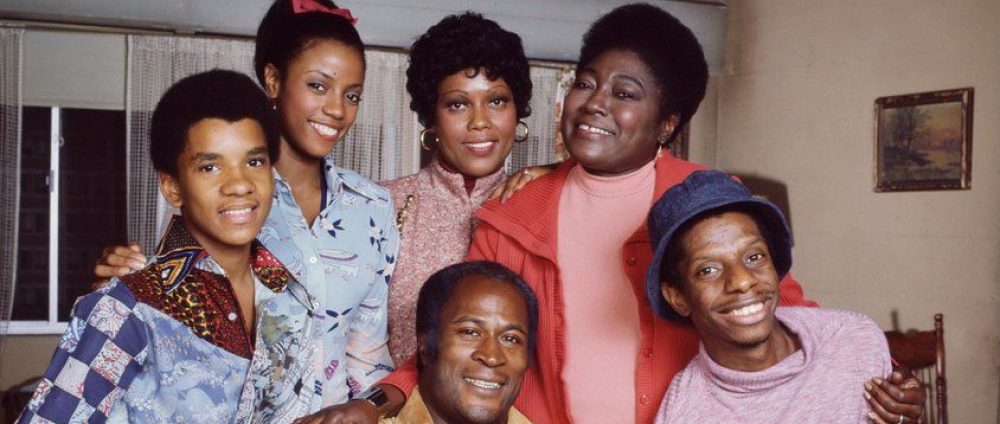
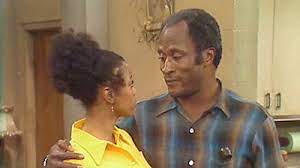
“I Ain’t Sick, I Ain’t Nervous, and I Ain’t Upset!” Season One, Episode Twelve: The Checkup (May 3, 1974)

A moment of calm. Enjoy it while you can.

When the Evans children become concerned about their father’s short temper and frequent headaches, Thelma and Michael do a little research and decide that James is suffering from hypertension (or, according to Florida, “as we plain folks say, ‘high blood pressure.’”). After James breaks a kitchen chair during his latest rant, Florida and the children convince him to see a doctor for a checkup – his first one in 20 years. As it turns out, James doesn’t have hypertension, but is suffering from elevated cholesterol which, the doctor tells him, can be addressed through diet and relaxation. (“Oh, good – we’ll go down to Acapulco for a few weeks,” Florida cracks.)

“I think we should stay here and protect the furniture.”

Perhaps because James’s outbursts were so severe (bordering on scary, to be honest), and the possible cause was so consequential, the laughs in this episode didn’t seem to be as abundant as usual – John Amos yelled so loudly and so often, I was practically concerned for HIS health! Also, this episode marked the first of many that infused the plot with what I think of as public service announcements – in this case, the script had Thelma and Michael explaining to their mother that high blood pressure causes heart attacks, stroke, and kidney malfunction, and can only be diagnosed through a physical examination. The children also state that hypertension is caused by the “stress and frustration of ghetto life,” as well as the grease and salt prevalent in soul food, and that the black male is the “number one victim.” And later in the episode, James’s doctor cautions him to “cut down on the grease and the fat, and fried foods whenever possible.”

Pop Culture Connections

Chicken Delight was most popular in the 1960s.

Chicken Delight

Florida has purchased some of James’s favorite foods – including chitterlings, collard greens and pork chops – in an effort to boost her husband’s mood. J.J. jokes that the last time they had meat in their household, “Chicken Delight made a wrong delivery.” Founded in Illinois in 1952, Chicken Delight saw its highest popularity during the 1960s, when the chain expanded to more than 1,000 locations nationwide, attracting customers with a catchy jingle, “Don’t cook tonight – call Chicken Delight.” The company was bought in 1964 by Consolidated Foods (now the Sara Lee Corporation), but the business declined due to legal battles and strong competition from Kentucky Fried Chicken (KFC). In 1979, the remaining Chicken Delight operations were purchased by Otto Koch, owner of the Chicken Delight Canada, Ltd., and as of this writing, fewer than 10 Chicken Delight locations can be found in the United States.

Marcus Welby, M.D.
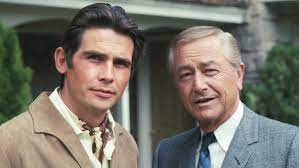
Robert Young (right) played the title role in Marcus Welby, M.D., with James Brolin as his assistant.

Michael arrives with a stack of magazines and declares that his father has all the signs of hypertension, agreeing with Thelma that James needs to have a physical check-up right away. “Look, Dr. Welby,” Florida says, “What makes you think your father has hypertension?” Florida was referring to a popular one-hour television drama, Marcus Welby, M.D., which starred Robert Young in the title role of the wise and kindly doctor who had a private practice in Santa Monica, California. The series aired from September 1969 until May 1976. Young, incidentally, had a successful career in movies, which began in the late 1920s, and was also the star of the long-running television series Father Knows Best, which aired from 1954 to 1960.

Hank Aaron
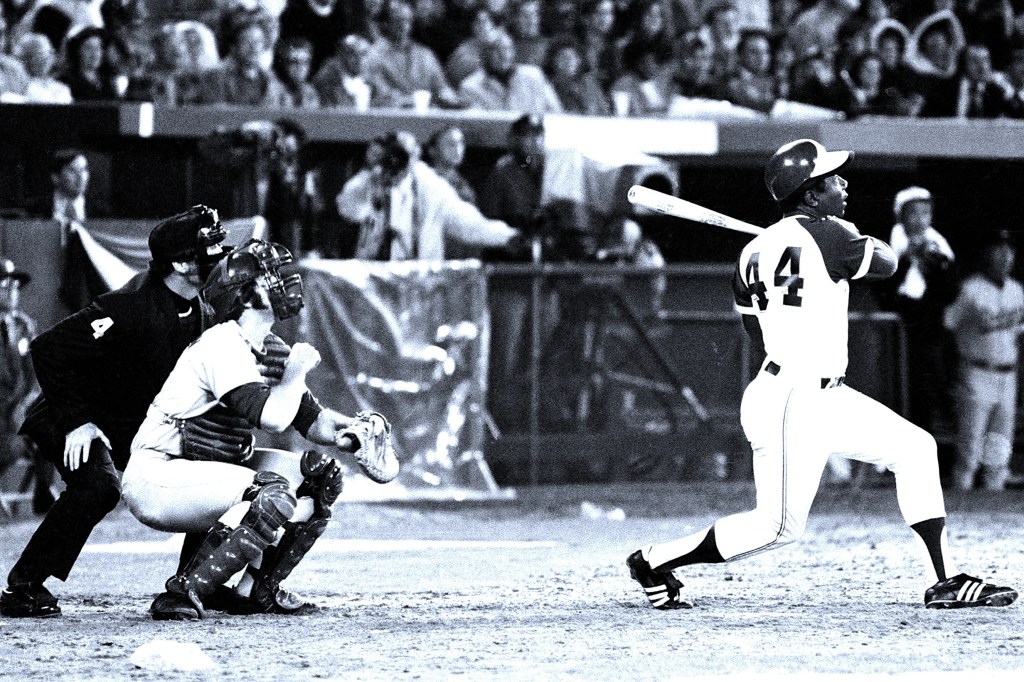
Hank Aaron broke Babe Ruth’s home run record on April 8, 1974.

Aware that James has been out of sorts lately, Willona assumes that his issues are sex-related and brings Florida a bag of items including candles, wine, and a bottle of perfume – if Florida puts two drops of the fragrance behind each ear, Willona promises, James will “try to hit more home runs than Hank Aaron.” About a month before this episode aired, baseball great Hank Aaron, of the Atlanta Braves, hit a home run that gave him 715 for his career and topped Babe Ruth’s record of 714 homers. Aaron’s record remained intact for more than 30 years, until Barry Bonds broke it in 2007.

Front-page news.

Nixon’s Tax Bill

Florida tells Willona that James has been laid off for a few days and that she has to tell him when he wakes up. “That’s like having to tell Nixon they’re adding another $100,000 to his tax bill.” This referred to an investigation by the Joint Committee on Internal Revenue Taxation (JCIRT), which reported in April 1974 – about a month before this episode aired – that President Richard Nixon owed the government $476,431 in unpaid taxes and accrued interest from his tax returns from 1970, 1971, and 1972. The tax scandal was front-page news.

Guest Star:

Santoro guested on numerous TV series during his career.

Doctor: Dean Santoro

Born Floyd Edward Santoro on January 30, 1938, in Johnstown, Pennsylvania, Santoro’s appearance on Good Times marked his television debut. He went on to appear in guest spots on several popular television shows during the 1970s and 1980s, including Cannon, Barnaby Jones, Kojak, Barney Miller, and Charlie’s Angels. In the mid-1980s, Santoro landed a recurring role on the nighttime soaper Dallas, appearing in six episodes. Santoro’s last role was as a professor on Newhart in 1985; he died of AIDS two years later, on June 10, 1987. He was 49 years old.

Other Stuff:

Florida and Henry — not James — on Maude.

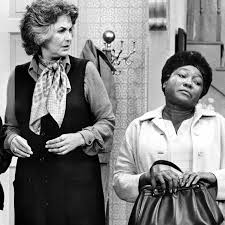
This episode refers to the fact that Florida previously worked as a maid. Although Good Times is unquestionably a spinoff of Esther Rolle’s character of Florida on Maude, several differences exist between the two women – Maude’s Florida lived in New York and had a husband named Henry (played by John Amos), who worked as a firefighter, while Good Times’s Florida, of course, lives in Chicago and is married to James. Still, there’s little doubt that both Floridas are one and the same person, even though there are only a few mentions throughout the series of her working as a maid, and there’s never any reference to Maude Finlay and her family.

The next episode: My Son, The Lover . . .
My First Good Times Quiz!

Do you watch Good Times episodes over and over again? If you do, this quiz — focusing on Season 1, episodes 1-3 — is for you! Click here to join in the fun — and please leave a note in the comments to let us know your thoughts about our first quiz!

Good Times Trivia Trio No. 1

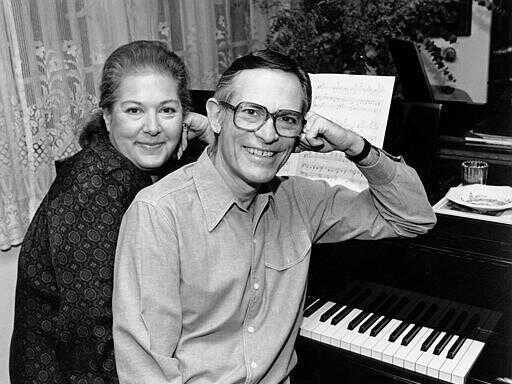
Marilyn and Alan Bergman, who wrote the lyrics for the Good Times theme song, were inducted into the Songwriters Hall of Fame in 1980.
Jimmie Walker’s denim hat was a mainstay in his wardrobe on the show for several seasons.
  • The theme song to Good Times was sung by Jim Gilstrap and Motown singer Blinky Williams with background vocals provided by a gospel choir. It was composed by Dave Grusin, with lyrics by Alan and Marilyn Bergman. The Bergmans were an acclaimed songwriting team who, during their careers, received four Emmys, three Oscars, and two Grammys, and were inducted into the Songwriters Hall of Fame. In addition to Good Times, the Bergmans penned the lyrics for TV shows like Maude and Alice, and numerous films including The Way We Were, In The Heat of the Night and The Windmills of Your Mind, for the movie The Thomas Crown Affair. The Bergmans were married for more than 60 years, until Marilyn’s death in January 2022.
  • For several seasons of Good Times, beginning with the first episode, Jimmie Walker almost constantly wore a floppy denim hat. According to Walker’s memoir, he bought the hat before he auditioned for a role as a street hood in Badge 373, a 1974 film directed by Howard Koch and starring Robert Duvall. Walker purchased the hat thinking it would make him look “more urban, more street.” He got the part. (But his lines were dubbed by an actor who sounded “blacker!”)
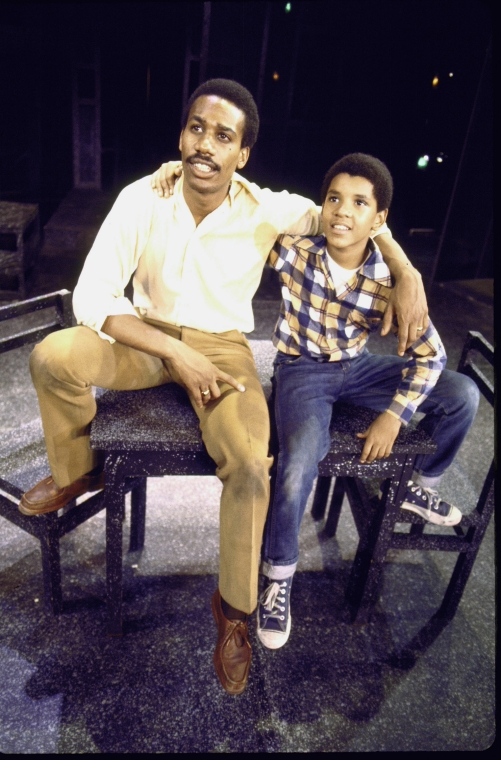
Ralph Carter starred in Raisin with Joe Morton.
  • Laurence Fishburne was originally cast as the youngest Evans child, Michael, but the producers really wanted Ralph Carter, who had a contract committing him to Raisin on Broadway; for his role in the musical, Carter was nominated for the 1974 Tony Award for Best Featured Actor in a Musical. (Here’s a clip of Carter performing the number “Sidewalk Tree” at the 1974 Tony Awards, where he was introduced by Esther Rolle.) Fishburne had participated in two weeks of rehearsals with the Good Times cast when Norman Lear bought out Ralph Carter’s contract – which meant that Fishburne was out and Carter was in.

My ‘Good Times’ Journey Begins . . .

I watch Good Times every day. Every single day. I’ve done it for years. I laugh at the same jokes in the same places, I make the same mental observations, I say the same dialogue along with the characters. I’m not claiming to be the biggest Good Times fan in the world – but I’ll wager that I’m up there in the top 10. So it was almost inevitable for me to devote a blog to this unforgettable show.

A situation comedy set in my hometown of Chicago, Illinois, Good Times premiered on February 8, 1974, and ran for six years on CBS-TV. I can’t say with certainty what it is about this show that captured and kept my fascination over all these decades – there are so many reasons. It shines a light on real-life issues, from teen pregnancy to drug use to crime. It showcases a variety of up-and-coming performers, including Debbie Allen, Rosalind Cash, Lou Gossett, and Philip Michael Thomas. It incorporates the pop culture of the day. And it’s well-written and legitimately funny. Beyond these tangible features, Good Times simply feels like family; these were people I knew.

The beginning: All in the Family.

Before Good Times, there were only a handful of television shows that featured black people. The 1950s gave us The Amos and Andy Show, Beulah, and The Jack Benny Program, and in the 1960s and early 1970s, there was Room 222, Julia, I Spy, Roll Out, The Flip Wilson Show, Sanford and Son, and The Bill Cosby Show (the one from the late 1960s where he played a physical education teacher named Chet Kincaid).

In 1971, television producer Norman Lear created All in the Family. Previously, Lear (a former writer for The Martin and Lewis Show, and director of two feature films) had created only one television show – a western called The Deputy featuring Henry Fonda that ran from 1959 to 1961. All in the Family starred Carroll O’Connor as rabid bigot Archie Bunker, and Jean Stapleton as Archie’s long-suffering wife. When it aired in January as a mid-season replacement show on CBS, it took a while for it to find its audience, but by the 1971-1972 season, it was a solid hit. In September 1972, All in the Family saw its first-spinoff, Maude, starring Bea Arthur as Archie’s outspoken, liberal cousin-in-law. On Maude’s third episode, she hired a maid: Florida Evans (Esther Rolle). The popularity of this intelligent, fearless, slightly imperious, and often impertinent black character earned Rolle her own spinoff, Good Times, in 1974.

Maude hires Florida.

There were a few tweaks between Florida on Maude and Florida on Good Times. On Maude, Florida lived in New York with her husband, Henry (John Amos), who worked as a fireman, while the Evans family on Good Times lived in a housing project in Chicago, Florida’s husband’s name was James, and James often worked several jobs to make ends meet. On Florida’s first episode on Maude, there’s a reference to the two of them drinking a few martinis at lunch, but on Good Times, Florida doesn’t drink alcohol. And on Maude, Florida and Henry have been married for 24 years, but on Good Times, they celebrate their 20th anniversary.

Good Times was created by writer Eric Monte, who also wrote for such series as The Jeffersons and What’s Happening, as well as the screenplay for the film Cooley High (another production set in Chicago – Monte’s hometown), and Michael Evans, best known for portraying Lionel on All in the Family and, for several years, on another spinoff, The Jeffersons. Originally, the show was slated to be called The Black Family, with the family’s last name being Black. (Get it?) Later, the creators decided to change the last name of the family to Evans and they renamed the show Good Times.

Florida and the former Henry, now James.

The show was a hit from the start, and in its second season, it trounced its main competition, ABC’s Happy Days, knocking it out of the top 30 shows. In that season, Good Times climbed to number seven in the ratings. After the second season, though, ratings started to dip, and after Amos’s character was killed off at the end of the third season, things would never be the same.

This blog, Ain’t We Lucky We Got ‘Em’, is my love letter to Good Times. I will provide a look at each of the show’s 133 episodes, as well as delve into the pop culture of the 1970s, which is significantly interwoven throughout so many of the episodes. I’ll also periodically offer other features, including trivia quizzes, my favorite episodes, and more.

I hope you’ll join me on this journey.