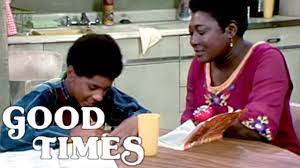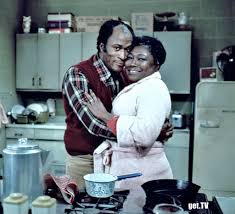
Happy 50th Anniversary, Good Times!

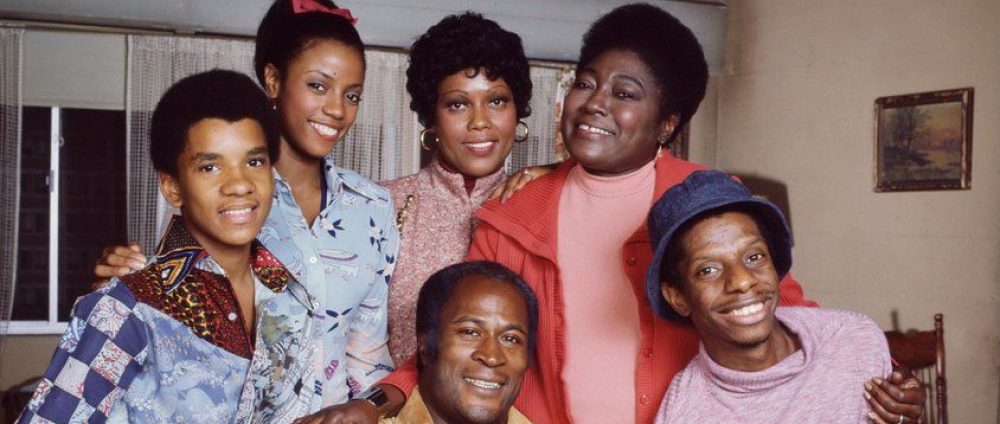
Fifty years ago today, on February 8, 1974, Florida and James Evans, their children J.J., Thelma, and Michael, and neighbor and friend Willona Woods, made their debut on American television on Good Times. The series was only on for five seasons, but it continues to entertain fans with its insightful writing and first-rate performances from the cast and guest stars.

To celebrate this momentous 50-year milestone, I am offering 50 things I love about Good Times, including memorable quotes, favorite episodes, and much more. I hope you’ll let me know in the comments what you love about this groundbreaking show!

  1. “Well, it’s comforting to know there’s still some respect for Black Power around here.” – Florida’s first line in the show’s pilot episode.
  2. “Boy is a white racist word.” We heard this declaration from Michael in several of the early episodes.
  3. Florida, Thelma and Willona’s performance of “Stop, in the Name of the Love” in “The Rent Party” (Season Three). It’s a delight.
  4. Janet Jackson’s four-episode introduction to the series as Penny at the start of Season Five. I’ll never forget when it first aired – everyone I knew was watching and talking about it.
  5. Seeing guest appearances from performers who went on to be stars, like Roscoe Lee Browne, Judy Pace, Brenda Sykes, Jay Leno, Alice Ghostley, Ron Glass, Charlotte Rae, and Debbie Allen.
  6. The way the show addressed real-life issues like teen drinking, gang violence, teen pregnancy, hypertension, and venereal disease.
  7. The live studio audience – their responses were part of what made the show so memorable – not just the laughing and clapping, but other reactions like shocked gasps and audience members calling out, “Right on!”
  8. Ralph Carter having the opportunity to display his singing talent in several episodes, including “The Rent Party” and at Thelma’s wedding.
  9. The theme song. I’ve heard it countless times and still can’t help singing along.
  10. Willona’s collection of wigs. She had a different look in practically every episode! (One of my favorites was her afro in “Sex and Evans Family.”)
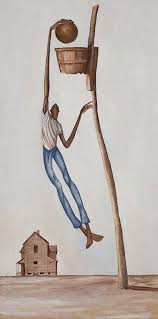
  11. Ernie Barnes’s paintings. This talented artist was behind most of the artwork on the show that was presented as J.J.’s.
  12. James’s patented responses in place of the word “yes,” like, “Is fat meat greasy?” and “Is an elephant heavy?”
  13. James’s brown corduroy pants. (What can I say?)
  14. The first three seasons. There’s no denying that the series was never the same after John Amos left, but the three seasons that he was on the show were absolute gold.
  15. “Where There Smoke” from Season Five, a Rashomon-type episode where J.J., Thelma, Michael, and Penny each give their own accounts of how the family sofa caught on fire. It’s hilarious (and the only episode after Season Three that I’ve seen multiple times).
  16. “The Dinner Party,” from Season Two, where a senior citizen friend of the Evans’s has fallen on hard times, and the family believes that she has brought a meat loaf made of dog food to serve at dinner. This is one of the many episodes that expertly walks a fine line between presenting a serious issue and being incredibly funny.
  17. “Bon appetit, y’all!” Willona in “The Dinner Party” (Season Two)
  18. The ideal role model provided by Thelma. She wasn’t just pretty, but she was also smart, talented, ambitious, fearless (I loved the way she stood up to Mad Dog in the “The Gang” episode), and she could put J.J. in his place every time.
  19. Having two former members of the 1930s Little Rascals on the show: Stymie Beard and Ernest “Sunshine Sammy” Morrison.
  20. “Sir? Can I ask you just one question? Who IS looking for the guy who shot Medgar Evers?” – Michael, talking to the FBI agents looking for Florida’s nephew in “Cousin Cleatus” (Season Three)
  21. “The Debutante Ball” episode, which included an interesting depiction of a couple who’d made it out of the ghetto, but forgotten from whence they came.
  22. The many Chicago references, like Mayor Richard J. Daley, Marshall Field’s department store, and the Chicago Defender newspaper.
  23. The loving relationship between James and Florida. There was a reason why Willona called them the “Liz and Dick of the Ghetto” – these characters were clearly still in love, and showed it often through their affection for each other. It was beautiful to see.
  24. The way James called Florida “baby.”
  25. “The kitchen and the bedroom, Florida, the kitchen and the bedroom!” – James in “Florida Flips” (Season Two)
  26. “You know what I’m gonna leave the world when I go, Florida? A tombstone that reads “Here lies James Evans. Back in the hole again.” – James in “Florida’s Rich Cousin” (Season Three)
  27. “How do I love thee? Let me count the ways. I love you for your skin’s pure sheen, for your two sweet lips, with teeth in between.” – J.J. to Marcy Jones in “My Son, the Lover” (Season One)
  28. “Those coulda been Sweet Daddy’s drawers!” – James in “Sweet Daddy Williams” (Season Three), where the flamboyant numbers runner hires J.J. to paint his girlfriend, Savannah Jones.
  29. “The elevator ain’t workin’” in “The Visitor” (Season One). This line was said by nearly every character in the episode and whenever I see it, I say it right along with them!
  30. “Now that’s the kind of religion I can get into. The good word rolls out and the long green rolls in!” – J.J. in “God’s Business is Good Business” (Season One)
  31. “Florida the Woman” episode, where Florida’s boss Oscar Harris (Thalmsus Rasulala) brightens Florida’s day after an especially frustrating morning with James and the children. One of my favorite scenes is when Oscar and James come face to face and James can’t suppress his jealousy.
  32. “The TV Commercial” episode, featuring a particularly funny bit with J.J. and James, where they present a faux commercial of their own.
  33. Willona’s wardrobe. Some of her outfits were so sharp, they could be worn today!
  34. The fact that Willona was content being single. It was so refreshing when, during a conversation with Florida, she declared that there was “a big difference between being alone and being lonely. And the one thing I ain’t is lonely.”
  35. Mention of popular Black performers like Diana Ross, Redd Foxx, The Isley Brothers, The Jackson Five, Harry Belafonte, Isaac Hayes, Gladys Knight and the Pips, Marvin Gaye, Curtis Mayfield, and Harold Melvin and the Blue Notes.
  36. J.J.’s love for Thelma, despite their constant arguing. This was demonstrated in numerous episodes, including his defense of her engagement to Larry (Carl Franklin), and his protective reaction after she was attacked in the “Family Gun” episode.
  37. Florida’s constant support of James – like in “Too Old Blues” when James missed out on a job opportunity because of his age, or “The Mural,” where the family learns that James had spent Thelma’s college fund.
  38. “If she gets any happier, she’s gonna break every dish in the house.” – J.J. in “Florida Flips” (Season One)
  39. “The Family Gun” episode, which had an especially chilling ending, when Michael shoots his father’s gun into the air after mistakenly thinking that he’d removed the bullets.
  40. “She hit her husband? Free at last, free at last! You’re halfway there, sister.” – Wanda (Helen Martin in “Florida Flips” (Season One)
  41. “Thelma’s Young Man,” where Lou Gossett guested as the balding, 40-something boyfriend of 17-year-old Thelma.
  42. “The Lord is my German Shepherd.” – J.J. in “The Dinner Party” (Season Two)
  43. “If you want that button sewed, you sew it yourself. And if you want breakfast, make it yourself. Then make the lunch for the children. Wash the dishes, do the laundry, make the beds and sweep the floor. And see how you’d like being mother, housewife, diplomat, referee, counselor, cook, seamstress, and sparring partner, with no pay and no fringe benefits!” – Florida in “Florida the Woman.”
  44. “Damn, damn, damn!” Florida’s unforgettable reaction in “The Big Move, Pt. 2,” when she finally allows herself to feel the pain of James’s untimely and unexpected death. (Season Four)
  45. The “Thelma’s Scholarship,” episode, where Thelma is sought as the “token” in an all-white sorority at a Michigan boarding school.
  46. The lines said and situations depicted on the show that simply could not be aired today, like James using the “N” word or delivering a whooping to Michael’s classmate.
  47. The way James bravely, and with no hesitation, protected his family. One instance that comes immediately to mind is his confrontation in “Cousin Cleatus” with Florida’s nephew, who planned to use Michael as a hostage (or worse yet, a shield).
  48. Scenes that make me laugh every single time, no matter how often I’ve seen them – like when James cracks up in “My Son, the Lover” after hearing J.J. reading his poem to Marcy Jones, or in “Sex and the Evans Family” when Michael asks if the item Florida’s hiding has anything to do with Black unity and Willona responds, “In a way.” Florida’s silent slow burn is a masterpiece!
  49. The show’s use of terms I remember from my childhood, like “blister your behind.”
  50. “Have mercy!”

Happy anniversary, Good Times!

My First Good Times Quiz!

Do you watch Good Times episodes over and over again? If you do, this quiz — focusing on Season 1, episodes 1-3 — is for you! Click here to join in the fun — and please leave a note in the comments to let us know your thoughts about our first quiz!

Good Times Trivia No. 2

Time for a couple of Good Times trivia tidbits!

Ralph Carter Sings . . .

Ralph Carter breaking it down in The Rent Party episode.

Ralph Carter, who played the youngest Evans sibling, Michael, started his career on Broadway at the age of nine, in The Me Nobody Knows. At the time that he was cast on Good Times, he was appearaing in Broadway’s Raisin, the musical based on Lorraine Hansberry’s play A Raisin in the Sun. In 1975, the year after Good Times premiered, Carter recorded an album called “Young and In Love.” He performed the title song on Soul Train that same year, and the following year, he’s seen performing it on Good Times, in episode 24 of Season 3, called “The Rent Party.” The episode aired on March 2, 1976. Ralph’s Soul Train appearance can be viewed below:

Ratings, Ratings . . .

The cast of Roll Out consisted of several familiar faces, including Mel Stewart, Garrett Morris, Hilly Hicks, and Stu Gilliam.

When Good Times premiered, it aired on Fridays; it replaced Roll Out, another series with a predominantly black cast (which included Garrett Morris, Hilly Hicks, Mel Stewart, and Stu Gilliam), and aired opposite The Odd Couple and The Girl with Something Extra. It was an instant success and wound up the 17th highest-rated series of the year. It did even better when it was moved in fall 1974 to Tuesday nights. It was a solid Top 10 hit, despite competition from Happy Days and Adam-12.

Do you have any trivia about the show to share, or any information that you’re looking for about the show? Let me know in the comments!

“I’m Not Going to School Just to Learn What THEY Teach” — Season One, Episode Five: Michael Gets Suspended (March 8, 1974)

“I know how old you are. You mess with me and I’ll tell it.”

This week’s episode focuses on Michael, who has been suspended from school after referring to President George Washington as a “white racist” because he was a slave owner. The suspension will be lifted if Michael apologizes to his teacher, but he refuses, insisting that he’s quitting school to get a job. (“I’m not going to school just to learn what they teach,” he says.) Although the family tries to hide Michael’s misdeeds from James, he quickly learns of the suspension when he comes home from work and threatens to give Michael “a whipping [he’s] going to remember for the rest of [his] life” if he doesn’t return to school. Before dispensing the promised punishment, James has a one-on-one talk with Michael, where he explains to his son the importance of school and the reason for the spanking he’s going to deliver. Repeatedly laying across his father’s lap in preparation, Michael tells James that one of his heroes, Crispus Attucks, “wasn’t afraid when his turn came.” This comment results in a Black history lesson, with Michael sharing information about several black notables with whom James wasn’t familiar. When Florida enters the room, planning to bring a stop to Michael’s punishment, she’s surprised to see her husband and son hugging and laughing. Florida helps Michael to understand the value of school, flaws and all: “School ain’t perfect,” she tells him. “But that’s no call to drop it. It’s got a lot of good in it. You take that good. And use it.” James apologizes to Michael for his intention to spank him, and Michael decides that if his father can apologize to him, then he can return to school and apologize to his teacher.

“Why, you militant midget, you!”

Florida’s thoughtfulness and wisdom as a mother is once again on display in this episode. When she sizes up the situation involving Michael’s suspension, she doesn’t scold or punish him but, instead, talks to him like an equal, calmly addressing each of his arguments. (My own rather militant daughter didn’t buy into Florida’s contention that all presidents are for all the people, not just some of the people, but then again, neither did Michael.) In sharp contrast, James’s immediate reaction was to literally whip Michael into submission. To his credit, James certainly wasn’t eager to spank Michael, although it was obvious he thought that was the right thing to do; he insisted on talking to him first, though, showing Michael the callouses on his hands and telling him that he never wanted Michael’s hands to look like that. “That’s why I don’t take no excuses when you mess up in school,” James says. “I’d rather you be a little bit hurt now than hurt for the rest of your life. Do you understand?” It’s a touching, heartfelt sentiment that James shares with his son, letting Michael know that he wants better for him than what his own life has been. James also shows depth of feeling when he apologizes to Michael for his initial reaction, demonstrating to his son yet another quality of a real man.

Pop Culture References:

Billy Dee Williams

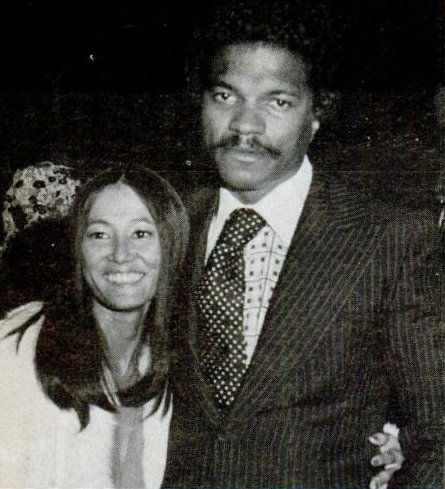
Billy Dee Williams and his wife, Teruko.
(Sorry, Thelma.)

When Willona enters the episode, she gives Thelma a copy of Essence magazine which, she informs Thelma, contains an article on Billy Dee Williams and how happy he is with his wife. (“What a hip life that must be,” Thelma says, “married to Billy Dee!”) Williams (who has a twin sister, and whose birth name is William December Williams) was a popular performer who rose to fame in the early 1970s with roles in films like Brian’s Song (1971) and Lady Sings the Blues (1972). He would go on to play Lando Calrissian in the Star Wars series and star in such hits as Mahogany (1975) and The Bingo Long Traveling All-Stars and Motor Kings (1976), in addition to numerous other feature film and television appearances. The Essence magazine article was referring to Williams’s 1972 marriage (his third) to Teruko Nakagami. The couple remain married to this day. (Williams and Nakagami filed for divorce in 1993, but they later reconciled.)

Essence Magazine

Essence magazine began publication in May 1970 as a lifestyle magazine targeting black women. After starting out with 50,000 copies a month, the magazine grew to a circulation of 1.6 million. (During the magazine’s first three years, its editorial director was Gordon Parks, photographer and director of such films as The Learning Tree [1969] and Shaft [1971].) In the 2000s, the magazine was sold to Time, Inc, but it was acquired in 2017 by Essence Ventures LLC, an independent black-owned company.

Stepin Fetchit and Rochester

Stepin Fetchit with his Cadillac Phaeton.

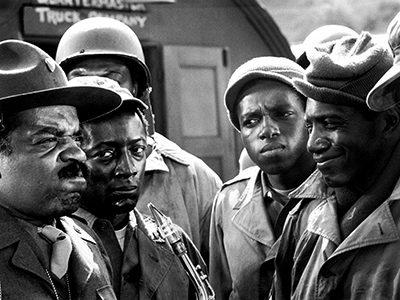
Florida shares that when she was younger, she dreamed of marrying Errol Flynn, a movie star popular in swashbuckling films from the 1930s and 1940s. When Thelma points out that Flynn was white, Florida explains that her options were either Errol Flynn and Clark Gable (another white star, famous for playing Rhett Butler in Gone with the Wind) or Stepin Fetchit and Rochester. “Somehow, the sword seemed more dashing than the broom,” Florida says. Stepin Fetchit was the stage name of Lincoln Theodore Monroe Andrew Perry; he began his career in vaudeville but is best known for his feature film roles where he invariably played lazy half-wits – or maybe “half-wits” is giving these characters too much credit.

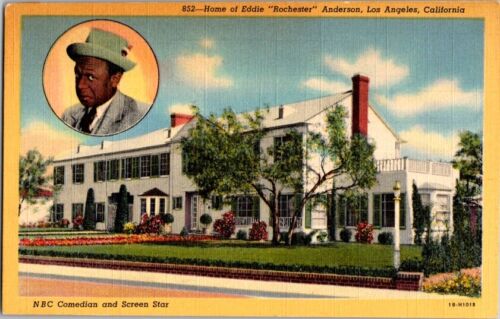
Vintage souvenir postcard of
Eddie “Rochester” Anderson’s house.

Rochester, born Edmund Lincoln Anderson, was known for his distinctive gravelly voice and also had his roots in vaudeville – he frequently played servants on the big screen, but his characters weren’t as subservient and cringe-worthy as some other black performers of the day. In the late 1930s, he joined Jack Benny’s radio show as Benny’s personal valet, Rochester Van Jones, a character he continued to portray when Benny moved to television. The character was so popular that Anderson became known thereafter as Eddie “Rochester” Anderson. (Even though Florida leaned more toward Flynn and Gable, it’s worth noting that Perry was the first black actor to become a millionaire, and Anderson was paid $100,000 a year on Benny’s show, making him the highest paid black actor of that time.)

Nat Turner

Willona refers to Michael as “an 11-year-old Nat Turner.” Turner was an American slave from Virginia who, in August 1931, led the only effective, sustained slave revolt in U.S. history. Turner killed the family of his owners and, along with a group of approximately 40 other slaves, eventually killed 55 whites. Turner was eventually captured and hanged.

Rona Barrett

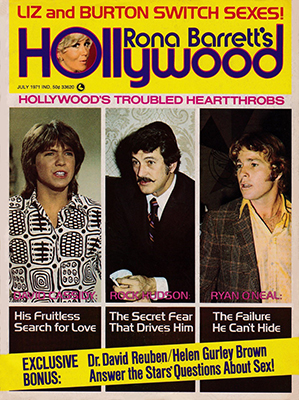
In addition to her TV appearances, Barrett had a series of gossip magazines.

Willona is leaving the Evans apartment as James arrives home from work; he expresses his appreciation at her departure, adding that he is in “no mood to listen to the Rona Barrett of the projects this morning.” Rona Barrett was a well-known gossip columnist whose career started in 1957 when she went to work for New York’s Bell-McClure Syndicate, which distributed columns, feature articles, fiction, and comic strips to newspapers throughout the country. In 1966, she began broadcasting Hollywood gossip on ABC television station in Los Angeles, appearing on ABC’s five owned and operated stations nationwide, and she joined Good Morning America in 1975. She retired in 1991. (Interestingly, her reports occasionally got her in hot water with her subjects; Frank Sinatra put her on his enemies list after she criticized his relationships with his children, and she reported offended Ryan O’Neal to the point where he sent her a box containing a live tarantula.)

Food Prices

When Florida and James and James are arguing about Michael’s suspension, the conversation takes a detour, resulting in Florida reciting a litany of her day to James, which included grocery shopping. She tells him, “While they got the whole world watching the price of gas, they are sneaking food prices up again.” In 1971, during Richard Nixon’s first presidential term, he imposed a wage and price freeze to combat the high cost of food. When he won re-election in 1972, he put an end to the freeze, and prices began skyrocketing again. To put this in perspective, today, the average American spends less than 10 percent of their income on food; in the 1970s, the average was closer to 15 percent.

Other stuff:

This Ernie Barnes work is similar to the painting by J.J. in this episode.

This episode contains the first close-up of a painting by Ernie Barnes, who was responsible for creating most of J.J.’s artwork in the show.  (The Black Jesus from Episode Three, though, was not painted by Barnes.) Barnes was born in Durham, North Carolina, and was interested in art from an early age; he was continually drawing in sketchbooks and by the time he entered first grade, he was familiar with the works of such famed artists as Toulouse-Lautrec, Rubens, and Michelangelo. Barnes majored in art at North Carolina College at Durham (now North Carolina Central University), played football throughout his college years, and became a professional football player upon his graduation. He never stopped drawing, however; during off-seasons with the San Diego Chargers, he illustrated articles for the San Diego magazine, and while playing with the Denver Broncos, he was frequently fined for drawing during team meetings. When he retired from professional football in the mid-1960s, he was hired by the owner of the New York Jets to be the team’s official artist. It was just the beginning of what would become an illustrious and much-admired (and much-imitated) art career. One more note about Barnes’s paintings – his subjects always have their eyes closed.

Yet another reference to Florida’s weight appears in this episode.  When Willona says that she is too young to remember anything before the Korean War, Florida threatens to reveal Willona’s age to the children, and Willona rejoins by indicating that she will reveal Florida’s weight. “My lips are sealed,” Florida says. (Ugh.) Speaking of the age issue, this exchange brings up the first baffling reference to the ages of the three older characters in the series. By listening to this conversation, one would deduce that Willona is younger than Florida because, if Florida’s children know their mother’s age (which Florida says they do), and Willona and Florida are the same age, then the children would also know Willona’s age. Hmm. Later episodes muddle this theory. More on that in future posts . . .

Who’s the guy in the poster above James’s head?

We get our first look at Thelma’s room in this episode (the boys don’t have their own room; they sleep on the pull-out sofa in the living room). Thelma’s walls are decorated with numerous posters of black celebrities of the day, including Sylvester Stewart, better known as Sly Stone (from Sly and the Family Stone), Stevie Wonder, Bill Cosby, Jimi Hendrix (I think), and several others. (There’s also a poster of a white singer with brownish-red hair and a beard singing at a microphone. If anyone knows who he is, please share with the group!)

This episode contains another reference to Michael’s ambition to become a lawyer and, eventually, sit on the Supreme Court. If you know, you know . . .

During his discussion with Michael about black history, James refers to black people as “spooks,” incredulously asking Michael, “A spook sailed with Columbus?” and later querying Florida, “Baby, did you know a spook sailed with Columbus?” I know that there was a book and subsequent feature film called The Spook Who Sat By The Door, but I have never in my whole entire life heard a black person refer to our race or an individual as “spooks” in this manner. Have you? Is it just me?

Although I don’t necessarily think of this episode as one of my favorites, it contains numerous lines that are well-written and brilliantly delivered. My favorite scene takes place in Thelma’s room, where the older children first try to convince Michael to back down from his stance and then, failing this, give him tips on how to weather the upcoming whipping from their father. The scene is chock full of humor, but it has moments of sweetness as well, especially when Thelma tells Michael that before commencing with the whooping, their father will solemnly tell him, “This hurts me more than it hurts you.” She then looks at Michael, narrows her eyes with steely determination and says, “Make him believe it.” And she punctuates her advice with a kiss on Michael’s cheek – a loving gesture that I always felt was not expected by Ralph Carter; he looks so pleased and surprised. It makes me smile every time I see it.

~ ~ ~

The next episode: Sex and the Evans Family. (It’s my favorite episode, y’all!)

“We’re Talking About Working, We Ain’t Talking About Playing Stickball” Season One, Episode Three: Too Old Blues (February 8, 1974)

James and Florida search the want ads for “equal opportunity”

In this episode, James has just received word that he has passed the written aptitude test for a union apprentice training program and is scheduled for an interview. If he’s accepted, he’ll earn $2.50 an hour as an apprentice, and upon completion of the program, he’ll receive $4.25 an hour. Before leaving for his interview, James tells Florida to use their rent money for a party to celebrate his new job. During the interview, while going over James’s application, the interviewer discovers a computer error; the application states that James is 31 years old, but he’s actually 41. Because the government-funded apprentice program is for men ages 18 to 35, James is too old to be accepted. When James arrives home, the party he requested is in full swing, complete with guests. He looks sheepish as he’s serenaded by the group’s rendition of “He’s a Jolly Good Dude,” and his discomfort grows as Thelma and J.J. talk about all the things they’d like to buy with James’s new salary. He finally shares that he didn’t get the job, but Florida offers words of support and encouragement, leading James to philosophically conclude: “So I missed out. What’s the big deal? What would it have meant anyhow? Some more spending money, fancy clothes, nicer place to live? What do I need with a union job for when I have you and these kids?” He and Florida embrace, but James rather plaintively adds, “But it sure would’ve been nice.”

James isn’t pleased to learn that he’s “too old.”

Between the laughs, and the surfeit of pop culture references (see below), this episode serves to underscore the close-knit, caring nature of the Evans family. There’s the excitement and pride over James’s new employment prospects but, more importantly, it’s the family’s reaction when they learn that he didn’t get the job. After James shares his disappointing news with the partygoers, he leaves the room with Florida, and the three children commiserate in their own little group. “Whoever said he was too old don’t know Daddy,” J.J. offers, and Michael adds, “I’d like to see the dude who called him too old. I’d tell him about some of those not-too-old whippings he’s laid on me.” Thelma has the last word: “Daddy ain’t too old. He could do that job at the union. He could do anything anybody gave him a chance to.” And even though James expresses concern that he has disappointed Florida, she bolsters his spirits with her uplifting response: “James, you always see this family through,” she tells him. “You can do it.” The episode sees the family experience a hopeful start only to plummet back to earth in worse shape than they’d been before, but the message is that together, they will always find a way.

Pop Culture Connections

Energy Crisis

While hugging Florida (more on this below under “Other Stuff”), James states that he doesn’t have to worry about “that energy crisis” because he has his “own personal heating system” (meaning Florida.) The energy crisis James is referring to was caused by the action taken by the Arab members of the Organization of Petroleum Exporting Countries (OPEC) during the 1973 Arab-Israeli War, who imposed an embargo against the United States. This was in retaliation for the U.S. decision to re-supply the Israeli military and to gain leverage in the post-war peace negotiations. Embargoes were also enacted against other countries who supported the Israelis, including the Netherlands and South Africa. As a result of the embargo, the U.S. saw skyrocketing prices for gasoline and fuel oil. The embargo, which started in October 1973, ended in March 1974, about a month after the episode aired.

Wilt Chamberlain

Before joining the NBA, Chamberlain played for the Harlem Globetrotters.

After the “personal heating system” comment, Florida observes that a good looking man like James could have married any woman in Chicago, and he responds, “True. But I married you.” Florida rejoins, “If that’s a compliment, I’m Wilt Chamberlain.” Chamberlain was a seven-foot, one-inch basketball star who joined the National Basketball Association (NBA) in 1959, when he signed on with the Philadelphia Warriors (which later relocated to California to become the San Francisco Warriors). During his career, he would also play for the Philadelphia 76ers and the Los Angeles Lakers and would play on two NBA championship teams. Chamberlain retired from basketball in 1973.

Meat Shortage

At breakfast, Thelma complains about the family eating oatmeal again, and Florida tells her that she should be grateful for the oatmeal or any other food on the table. “Remember,” she adds, “this family got through the meat shortage without even knowing there was one.” The term “meat shortage,” while commonly used at the time, is a misnomer. In the early 1970s, there was a blight in corn crops that started in Florida and spread north and west, resulting in an increase in corn prices. Concomitantly, livestock producers began to cut back on their herds, leading to a reduction in beef production and a spike in beef prices. This led to price gouging and even a meat boycott; there was no shortage, per se, but meat was inordinately expensive. After a few years, the blight faded, corn prices fell, livestock was rebuilt, and prices returned to normal.

Ozzie and Harriet

This ain’t the Evans family.

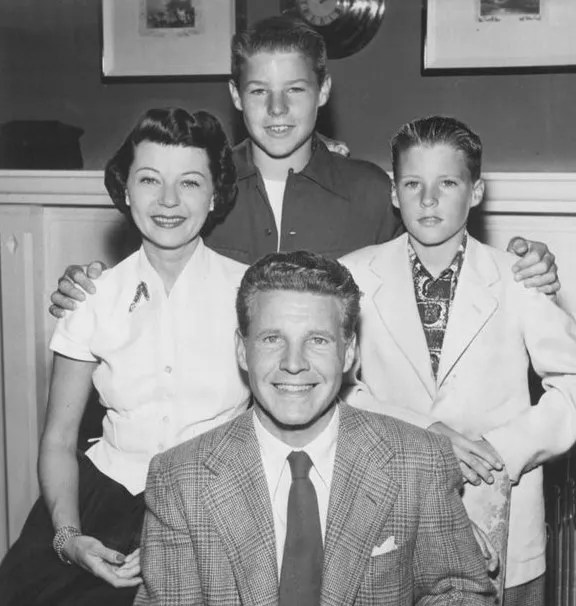
When Thelma and J.J. argue about the amount of time she spends in the bathroom, James complains about the frequency of the arguments between the siblings and Florida remarks, “Let’s face it, James – this family ain’t Ozzie and Harriet.” The Adventures of Ozzie and Harriet was an ABC-TV sitcom that aired from 1952 to 1966 and starred the real-life family of actor/bandleader Ozzie Nelson, his wife, singer Harriet Nelson, and their sons, David and Ricky. The series was typified by the family’s wholesome relationship and homespun lifestyle.

Aristotle Onassis

For his celebration party, James tell Florida that he wants barbecued chicken and ribs, champagne, and music, and jokes that she can hire The Temptations. “Hold on there, Onassis,” Florida says. “What do I use for money for this orgy?” Florida was referring to Aristotle Socrates Onassis, the Greek shipping magnate who was, at that time, one of the wealthiest men in the world. In 1968, he married Jacqueline Kennedy, the widow of President John F. Kennedy. Onassis died in 1975 at the age of 69.

Rodney Allen Rippy

Everybody knew who this kid was, back in the day.

In an allusion to J.J.’s penchant for thievery, Willona refers to him as “Rodney Allen Ripoff.” This is a takeoff of the name of a child actor who became popular in the 1970s for his appearances in commercials for fast-food chain Jack-in-the-Box. (Jack-in-the-Box was the first fast-food restaurant to popularize drive-thru ordering via a two-way intercom system. These restaurants featured a clown head on top of an intercom, with a sign that read, “Pull forward. Jack will speak to you.”) Rippy would later guest on numerous television shows, present with Michael Jackson and Donny Osmond at the American Music Awards, and sing “Take Life a Little Easier,” a record released by Bell Records in 1973 based on one of Rippy’s Jack-in-the-Box commercials.

Diana Ross

While joking about the type of party he wants for his celebration, James tells Florida not to book The Temptations but, instead to hire “The Supremes – and WITH Diana Ross!” The Supremes was an all-girl musical group that was popular during the 1960s, comprised originally of Diana Ross, Mary Wilson, and Florence Ballard. (Ballard was fired from the group in 1967 and replaced by Cyndy Birdsong.) Almost from the beginning, Ross emerged as the main singer, and in 1970, she left the group to pursue a solo – and wildly successful – career.

Soul Train

Soul Train was a product of Chicago.

Thelma is responsible for providing the music for the party that her father requested – she explains to Florida that she;s gotten albums by Isaac Hayes, The Jackson Five, Gladys Knight and the Pips, Marvin Gaye, Curtis Mayfield, and Harold Melvin and the Blue Notes. Florida quips, “When he said ‘music,’ he didn’t expect you to hijack Soul Train.” Soul Train was a popular musical variety show that premiered on WCIU-TV in Chicago in 1970, created by Don Cornelius, who was also the show’s executive producer and host. Airing live on weekday afternoons and sponsored by local Chicago-based retailer Sears, Roebuck and Company, the show featured acts by popular R&B and soul acts, and local teens and young adults were shown dancing to the music – the first episode on August 17, 1970, featured Jerry Butler, The Chi-Lites and The Emotions as guests. The program was an immediate hit, attracting the notice of another Chicago company, the Johnson Products Company, which co-sponsored the show’s expansion into syndication. Seven other cities purchased the program: Atlanta, Birmingham, Cleveland, Detroit, Houston, Los Angeles, and Philadelphia, and by the end of its first season, the show was airing in 18 additional markets. In October 1971, when the program moved into syndication, it began airing weekly and its home base moved to Los Angeles. Cornelius moved west as well, but for a while, a local version of Soul Train continued to air in Chicago, with Cornelius briefly hosting both programs before focusing solely on the Los Angeles show. The show’s Chicago version continued to air every weekday afternoon until June 1976, hosted by dancer Clinton Ghent, who’d been a part of the show since its inception, and reruns were shown every Friday until 1979. The show was known for two long-running elements: the Soul Train scramble board, where two contestants would unscramble letters to spell out a famous group or singer, and the Soul Train line, a take-off of the 1950s dance, The Stroll. Here, dancers would line up in two lines opposite each other, and dance two at a time down the center of the makeshift aisle. Don Cornelius stopped hosting the syndicated version in 1993, and the show was cancelled after the 2005-2006 season.

Ambassador East

Willona likened the Evans’s decor to the grand ballroom at the Ambassador East.

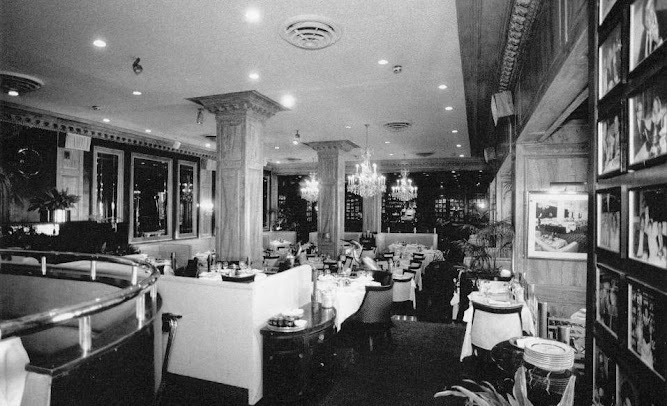
Willona commends Florida on the decorations for the party, telling her that it looks like the Grand Ballroom at the Ambassador East. This was a popular hotel in Chicago that opened in 1926 in the Gold Coast area, near the city’s Magnificent Mile district. It was featured in the 1959 Alfred Hitchcock film North by Northwest, starring Cary Grant and Eva Marie Saint, and the hotel’s Pump Room was a magnet for stars including Frank Sinatral, Elizabeth Taylor, and Natalie Wood. It was purchased in 2010 by Ian Schrager, an entrepreneur best-known for being co-founder and co-owner of New York’s Studio 54 nightclub. Schrager renamed the hotel the Public Chicago. The hotel changed hands a few more times and is now known as the Ambassador Chicago, under the Hyatt brand.

What You See is What You Get

Willona also has complimentary words for Michael’s outfit for the party, and jokes that he’ll have to fight off the girls. Michael rejoins, “Well, what they see is what they gonna get,” accompanied by a little swaying type of dance movement and a snap of his fingers. This is reminiscent of a catchphrase and movement used by comedian Flip Wilson in drag as “Geraldine Jones,” a sassy, independent, sexy, and feisty female character that he popularized on his NBC television show in the early 1970s. Also, in 1971, the R&B group The Dramatics released a hit song, “Whatcha See is Whatcha Get.”

Guest Stars

Interviewer: Woodrow Parfrey

Parfrey played the man who interviewed James for the apprentice program. Born Sydney Woodrow Parfrey on October 5, 1922, this prolific actor of stage, screen, and TV was orphaned in his teenage years and worked as a car mechanic before entering the military. He was captured by the Germans in World War II, and upon his release from the Army following the war, he took an aptitude test which indicated that he would be proficient in the acting field. He performed in a variety of stage productions during the 1940s and 1950s, including the Broadway production of Room Service, which closed after only 16 performances despite a cast that included Jack Lemmon and Everett Sloane.

He focused primarily on TV and film beginning in the 1960s; his television credits included appearances on a wide variety of popular shows including Gunsmoke, Perry Mason, Hazel, Quincy, and the pilot for The Waltons, titled The Homecoming: A Christmas Story. On the big screen, he was in such hits as Planet of the Apes (1968), Dirty Harry (1971), Papillion (1973), and The Outlaw Josey Wales (1976). Sadly, Parfrey suffered a fatal heart attack at the age of 61 – the same age his father was when he died.

Monty: Stymie Beard

Beard played one of the guests at James’s “celebration” party; he had one line: “Florida, I couldn’t be happier if it was MY wife who got a job!” You can read more about Beard in the post on the first episode of the series.

Other stuff:

Although this was the third episode filmed, it was actually the first one to air.

This is the first episode that makes a reference to Florida’s weight (a running gag that lasted for too long, in my opinion). James gives Florida a hug from behind and remarks, “Gorgeous hunk o’ woman here.” Florida laughingly replies, “I don’t know about the gorgeous, but I’m sure a lot o’ hunk.”

There isn’t an overabundance of lines or situations in Good Times that are cringe-worthy to me, but they do exist and this episode contains the first. James says that he married Florida because she was pregnant but adds that he’s only joking. Michael and J.J. are seated at the dining table nearby and J.J. says, “You mean y’all waited for the preacher to say the word before y’all had me? Don’t spread it around – my friends will never stop jiving me!” So, in other words, most of the families in the community are single-parent households, with an absentee father and children born, as they say, out of wedlock – and this is so much the norm that J.J.’s friends would make fun of him if they knew that his parents were married before he was born. This is patently insulting – and not the last time this type of characterization will come up in the series.

This episode contains numerous references to J.J. being a thief, which was first mentioned in the pilot. J.J. is heading downstairs to get the family’s mail, and Florida warns him not to take any mail that doesn’t belong to them. “I don’t take things, Mama,” J.J. says, “I find them.” Florida admonishes him, saying that God didn’t intend for man to steal, and J.J. asks, “Then how come he gave us more pockets than hands?” Later, when James learns how much he’ll make if he’s accepted into the apprentice program, J.J. remarks, “We gonna be so rich and have so much money, I won’t have to find my art supplies no more!” Before the party begins, Florida sends .J.J. and Thelma to buy potato chips from the local store, and when Thelma asks why she has to go along, Florida explains: “I want the potato chips bought, not found.” And upon his return with the chips, J.J. remarks that he’d been in the store numerous times, but “that’s the first time I’ve ever been involved with a cash transaction.” (Ugh. Talk about overkill!)

We learn in this episode that James dropped out of school after the sixth grade, and that he served in the Korean War. We also learn the name of Willona’s ex-husband: Alvin. That name would change later in the series, though.

Florida is back to conversing with God in this episode – after James leaves for his interview, she looks heavenward and expresses her thanks to the Lord, adding, “In my heart I always knew you was the biggest equal opportunity employer of them all!”

The next episode: God’s Business is Good Business . . .

“It’s Comforting to Know There’s Still Some Respect for Black Power Around Here” — The Pilot: Getting Up the Rent (February 22, 1974)

The family’s foundation: Florida and James.

And so it begins . . .

The first characters introduced in the series are Thelma (Bern Nadette Stanis), who is cooking breakfast in the kitchen, and Michael (Ralph Carter), who enters the apartment after playing with a friend. (Incidentally, during his first-scene argument with his never-seen pal, Michael tells him, “You make me sick sometimes.” This struck me as such an authentic line – it’s something that I used to say as a child.)

With Thelma and Michael’s first few lines, the show sets up two long-running character traits: Thelma is not exactly a culinary whiz, and Michael is a pro-black, anti-establishment militant. In fact, the show economically illustrates these two characteristics when Michael, peering into Thelma’s pot on the stove, comments, “Black is beautiful, Thelma, but not when it’s oatmeal.” And their older brother, J.J. (Jimmie Walker), before he is even seen, is established by Thelma as a loafer (“Where’s that big string-bean brother of yours? He was supposed to help me set the table, make the beds, and clean up!”). The matriarch of the family, Florida (Esther Rolle), is recovering from a recent operation to have her appendix removed, we meet her husband James (John Amos) when he comes home after working all night, and Florida’s best friend and neighbor Willona (Ja’ Net DuBois) pops in to share the news about her latest date.

J.J. offers to sell his first painting to help pay the rent.

Written by the show’s co-creator Eric Monte, and directed by Donald McKayle and Perry Rosemond, the episode’s plot centers around an eviction notice that the family received for non-payment of rent; two previous notices were received during Florida’s hospital stay, and with the movers arriving to remove the contents of the apartment, the family is desperate to raise the money they need. Each of the family members tries different means of getting the money – Florida tries to sign up for welfare benefits, the children hatch a “department store hustle,” and James (against Florida’s wishes) uses his skills in shooting pool. Ultimately, James’s method is successful, but he pretends that a friend gave him the money – and Florida pretends that she doesn’t know the truth.

“Getting Up the Rent” was the first episode taped and was the actual series pilot, but it wasn’t aired first – that distinction went to “Too Old Blues.” Instead, “Getting Up the Rent” was the third episode to be broadcast.

The pilot was full of promise, and did an admirable job of establishing the personas of each of the main characters: strong, faith-filled Florida; proud, dedicated, and no-nonsense James; streetwise, artistically gifted J.J.; family-focused but sharp-tongued Thelma; budding militant Michael; and loyal, quick-with-a-quip Willona. I was never pleased with the depiction of J.J. as a hustling, “light-fingered Louie” but, to their credit, the producers/writers pivoted from this characterization after the first few episodes.

The family that stays together.

The episode brought the Evans’s poverty into sharp focus – it can’t get much worse than getting evicted from your home, and it’s made clear that James had the choice of paying for their shelter or paying for his wife’s life-saving operation. With James working two jobs and bringing home just six dollars after working all night, and the family keeping their savings in a shoe box, there’s no question about the family’s financial situation. But the pilot also managed to showcase the close-knit nature of the Evans family and the deep love and respect that existed between Florida and James. There was James’s tender reaction to Florida apologizing for the cost of her recent operation. And the children’s willingness to chip in their meager contributions to help with the rent. And Michael vehemently refusing to allow J.J. to sell his first painting (“The only way anyone gets this painting is over my dead body!). They were small but effective touches which helped established a foundation that would last throughout the run of the series. Finally, the cast demonstrated a unique and instant chemistry – they felt like a real family and fostered a feeling of audience affection and recognition from the very start.

Pop Culture Connections

A little more than a year after Thelma was seen reading an Ebony magazine in the show’s pilot, the cast appeared on the magazine’s cover.

Ebony Magazine

As Thelma is preparing the oatmeal in the first scene, she’s reading Ebony, a monthly magazine which covers entertainment, politics, fashion, and beauty that pertain to the Black community. The magazine was founded in 1945, ceased publication of the print format in 2019, and relaunched in a digital format in 2021.

Detroit Automobile Recall

After J.J. makes a crack about Thelma’s looks, she counters by telling him, “If you were born in Detroit, you would have been recalled for being dangerously ugly.” In 1973, the year before the series started, more than 3.7 million vehicles were recalled by General Motors, which is headquartered in Detroit. The vehicles, from the Buick, Chevrolet, Oldsmobile, and Pontiac lines, were recalled because stones from unpaved or gravel roads could get caught in the engine compartment, which could affect the driver’s ability to steer. At the end of 1973, another 22,000 cars from these four lines were recalled due to safety defects that could cause the rear wheels to lock.

President Richard Nixon

The family is facing a possible eviction, but Michael tells his mother that Monty – a friend of James’s who works for the administration of the projects – has assured the family that “everything would be okay.” Florida responds, “That’s the same Monty that said Nixon was going to be poor folks’ best friend.” At the time that the episode aired, Richard Nixon was the president of the United States. In the wake of the Watergate scandal, he would resign from office later that year, on August 9, 1974.

Marshall Field’s

Downtown Chicago, at Randolph and State Streets. You can see the famed clock from Marshall Field’s on the right.

J.J. concocts a scheme for he and his siblings to get the rent money by going to Marshall Field’s; Thelma will pretend to faint from malnourishment in the hopes that passersby will donate the needed funds. Marshall Field’s was a large, upscale department retailer in Chicago whose flagship store was located in the city’s downtown area. The store was founded in the 1800s and remained a Chicago staple until 2006, when it was taken over by Macy’s and renamed.

O.J. Simpson

James arrives home (and for some reason, knocks on the door instead of using his key), and grouses about the amount of time Florida takes to let him in. “If you wanted somebody fast,” Florida responds, “you should have married O.J. Simpson.” In December 1973, Simpson, a member of the Buffalo Bills football team, became the first National Football League (NFL) player to rush more than 2,000 yards in a single season. This would be the show’s first reference to Simpson, but not the last – which is always a bit jarring, given what would happen about 20 years hence.

Ain’t Got a Pot or a Window . . . “

Trying to help the family get the money for the rent, Willona takes Florida to the welfare office (that’s literally the sign on the door: WELFARE OFFICE), but James’s meager income is too high to qualify. Before they leave, they’re approached by a buffoon in a maroon velvet suit who tries to hit on them; Willona dismisses him by observing that he “ain’t got a pot or a window.” She’s referring to a popular saying that means a person is financially bereft; the entire expression is that the person doesn’t have “a pot to piss in or a window to throw it out of.”

Running Jokes

I don’t take things – I FIND them . . .”

The pilot episode sets up J.J. as not only lazy, but also a thief. When Florida expresses concern about the overdue rent money, J.J. tells her that he has numerous ways of getting hold of the needed cash, and Florida insists that she doesn’t want him to steal. “I wouldn’t do that, Mama,” J.J. says. “I may just find seventy dollars.” This characterization would last only a few episodes.

“’Boy’ is a white racist word.”

“Don’t call me ‘boy.'”

The pilot also saw Michael’s first insistence that the word “boy” is a “white racist word.” He offers this nugget when Florida admonishes J.J. about stealing and adds, “I hope I’m coming through to you, boy.” Later in the episode, Michael gives the same rebuke to his father when James calls him a boy. This budding catchphrase for Michael didn’t last long, though. But there was a different catchphrase that was, well . . .

Dy-No-Mite!

J.J. used the exclamatory word in the first episode that would become his trademark and a popular catchphrase that would be forever associated with the show. He uses it to indicate his enthusiastic approval upon learning that his father plans to get the rent money by hustling pool games. J.J. would go on to use “Dy-No-Mite,” in one way or another, in every episode for the next few seasons. Every. Episode.

Guest Stars

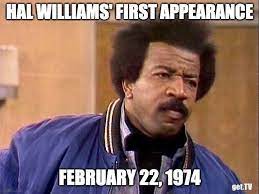
Tom: Hal Williams

Halroy Candis Williams was born in Columbus, Ohio, on December 14, 1938, and started acting in local community theater. After working as a postal worker and a corrections officer, Williams moved to Los Angeles in the late 1960s to pursue his acting career and signed on with the California Youth Authority to pay the bills while he went on auditions. Williams was able to devote his time to acting full time in 1970, when he landed roles in three TV productions: a TV movie and two series, Dan August and That Girl. Williams went on to play Officer “Smitty” Smith on the Sanford and Son TV series, Harley Foster on The Waltons, Sgt. Ted Ross on the film Private Benjamin (1980) and the subsequent TV series based on the movie, and Lester Jenkins on 227. As of this writing, he is still performing; his most recent appearance was earlier in 2022 in the TV series The Mayor. In this episode, Williams played Tom, one of the two men who arrive at the Evans apartment to remove their belongings.

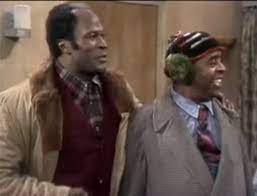
Monty: Stymie Beard

Matthew “Stymie” Beard in his first of several Good Times appearances.

Matthew “Stymie” Beard played Monty, a friend of James’s. He was born in Los Angeles on New Year’s Day 1925, one of 14 children. After playing a few uncredited bit parts in movies like Uncle Tom’s Cabin (1927) and Showboat (1929), he was signed by Hal Roach at the age of five to appear in the Our Gang Comedies. Beard’s Our Gang name was originally Hercules, but director Robert McGowan changed it because Beard was known to “stymie” him by wandering around the lot. Beard reportedly was given his trademark bowler hat by comic actor Stan Laurel, of Laurel and Hardy fame.

“Stymie” when he was in Our Gang.

He remained with Our Gang until, at age 10, he was too old, and he later appeared in small parts in such films as Captain Blood (1935), Jezebel (1938), and The Return of Frank James (1940). During his teen years, however, he developed a heroin habit and wound up spending a number of years in jail. He later got clean and sober and returned to acting in the 1970s on TV shows including Sanford and Son, Maude, and Different Strokes. Beard suffered a stroke a few days after his 56th birthday and died of pneumonia on January 8, 1981.

Eddie: Ernie Banks

Ernie Lee Banks played the other employee of the project who showed up to evict the Evans family. Banks was born in Franklin, Virginia, on April 3, 1935. His appearance on Good Times was his acting debut. Later that year, he was also seen in two blaxploitation movies from 1974: Black Godfather and Baby Needs a New Pair of Shoes. He went on to appear in such films as Bulworth (1998); TV series including The Jeffersons, NYPD Blue, and ER; and the 1978 miniseries King, where he portrayed Rev. Ralph Abernathy. Banks also released a record in 1990 called Are You Ready to Be Loved? He died in his hometown of Franklin on August 13, 2006, at the age of 71.

Other Stuff:

The Evans family lives on the 17th floor. (J.J. distributes the mail to his siblings and tells them he’s just been down 17 floors to get it.)

We learn that Michael plans to be a lawyer. He offers to give his father the two dollars he’s been saving for law school.

In order to get the money for the rent, James wins it by playing pool. He has his own pool cue, and it’s made clear that he used to “hustle” pool for money in the past. This is never referenced again in the series.

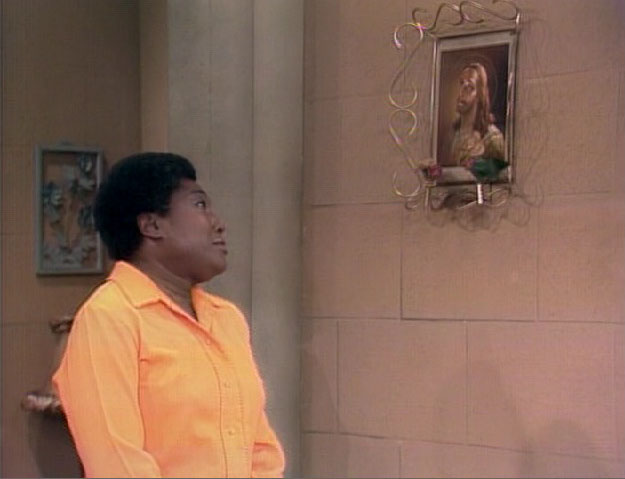
Florida talks to Jesus. (More on Jesus in the next episode. . .)

This episode contains a heavy emphasis on Florida’s spirituality, including Florida praying aloud, more than once, to her picture of Jesus on the wall.

J.J. is referred to as “James Junior” by both Thelma and Florida throughout the episode. After the pilot, he would be known only as J.J.

At the start of the episode, J.J.’s head was bare. But with about six minutes remaining, he was seen sporting the blue jean cap that would become a staple in his wardrobe over the next few seasons.

The next episode: Black Jesus . . .