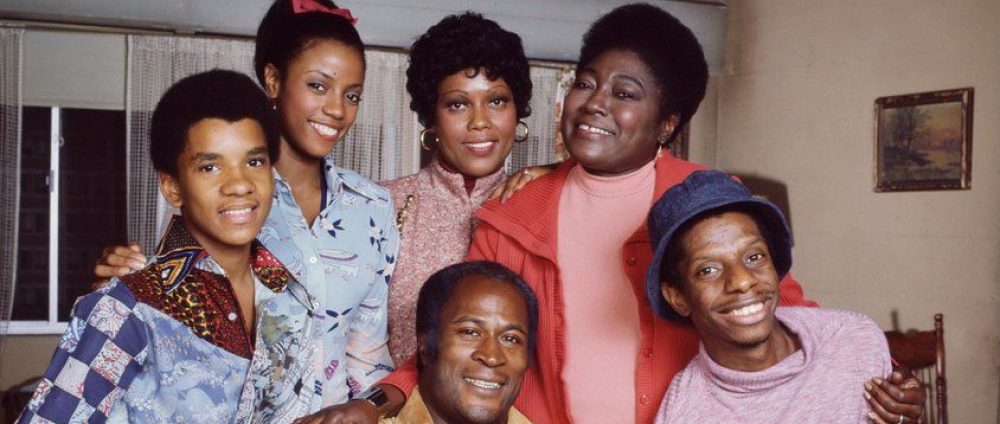
Michael – who J.J. once informed us “does most of the reading in the family” – opens the first episode of Season Two by asking Thelma, “Why do they call it ‘MEN-O-PAUSE’?” He’s certain that, because of the way his mother has been “yelling, screaming, and acting up the last few days,” she must have it. Although Thelma assures him that Florida is not experiencing menopause, she certainly has been in a fury lately – and Florida herself gives a demonstration when she slams the door to her bedroom, shouts at the children, and gets into an argument with James.
Encountering Florida in the hallway, Willona observes that her friend is “not satisfied with herself all of a sudden” and that her day-to-day life is an “empty existence” where she tries to stretch two hours of housework into one “great, big nothing of a day.” Willona suggests that Florida accompany her to what was known in the 1970s as a “consciousness-raising group,” where participants opened up to share thoughts and feelings they might not otherwise discuss in their daily lives. But Florida is reluctant to join in, and becomes offended when the women get a little too close to the truth: “My family depends on me,” she insists, “and I don’t need a bunch of cackling hens, with nothing else to do, except try to say what is bothering me, ‘cause nothing is bothering me. Nothing is bothering me!

Relieved to return home to the comfort of her family, Florida is welcomed by her gratified children and husband, who’d been wondering where she was. James is kind and conciliatory – until he learns that she’s been to one of those “crazy ladies meetings.” After first insisting that she sit down and relax, he does an about-face, demanding that she start dinner and sharing a long-held family belief: “I’m going to tell you something my Uncle Ed used to say, and maybe he was right. There’s only two places a woman belongs – the kitchen and the bedroom, Florida, the kitchen and the bedroom!”
James’s outburst shows Florida that despite her unwillingness to admit it, Willona and the women from the group were “right on” about what has been keeping her so upset. There’s nothing wrong with being a wife and a mother, she explains, but she has nothing to talk about except her husband and her children. “There’s a whole world out there, and I’m not a part of it. I want to be somebody, too!” James and Florida reach an understanding about what she truly needs and wants for her life, and the episode concludes with Florida leafing through a catalog of courses for night school.
This episode is really quite astonishing, given its candid look at the very real issues faced by wives and mothers – not just Florida’s experience of feeling unfulfilled as a stay-at-home mom, but the problems of women from other walks of life as well. In the support group, for instance, one of the women complains that her husband “has his nose out of joint” because she has a higher salary than he does, and another openly discusses spousal abuse (it’s handled with humor, but it’s addressed nonetheless).
We also again get a glimpse of James’s inclination toward male chauvinism, obstinacy, and insensitivity. In talking with Willona, he insists that the “only trouble with [Florida] is she’s spoiled . . . I’m gonna put that lady in her place.” And during an argument with Florida, he is overly forceful, bordering on violent, as he tells her she should be counting her blessings instead of complaining: “Ain’t you got nice kids and an understanding husband? Damn right, so I don’t want to hear no more of your lip or I’ll button it, you hear?” But as we so often see with James, no matter how extreme his views, he’s never so far gone that he can’t listen to reason and modify his stance. And we see that in this episode as well, where, beneath the bluster, he shows his own vulnerability and uncertainties, and is more than willing to grow alongside his wife.
Pop Culture Connections
Joe Frazier
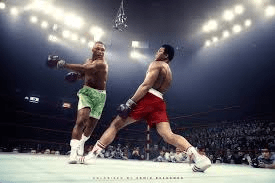
Near the episode’s opening, James complains that lately, sleeping with Florida is like “being in a phone booth with Joe Frazier.” Frazier was a heavyweight boxer whose most famous bouts were against Muhammad Ali. The two fought in three matches: The Fight of the Century in 1971, Super Fight II in January 1974 (about nine months before this episode first aired), and The Thrilla in Manila in October 1975. Frazier won the first fight, and Ali was victorious in the next two. Frazier only fought a few more times after his defeat in Manila and he later became a boxing trainer. He died of liver cancer in November 2011 at the age of 67, just a few months after he was diagnosed with the disease. After Frazier’s death, Ali said he would always remember him with respect and admiration, adding: “The world has lost a great champion.”
The Proud Bird With the Slow Tail
While talking to Willona in the hallway, Florida repeatedly presses the button for the elevator. When the door opens at last, she remarks, “Well, whaddya know? The proud bird with the slow tail finally rolled in.” This line is a reference to an advertising slogan by Continental Airlines which, in the 1960s, painted the tails of its airplanes gold and adapted the tagline, “The Proud Bird with the Golden Tail.” One of the company’s commercials be seen below, with employees singing the catchy jingle, “We really move our tails for you.”
“Mighty White of You”
Willona contends that Florida is upset and on edge because she doesn’t have enough to do. In response, James says that Florida has plenty to occupy her time, adding that he lets Florida do all the washing, cleaning, shopping, sewing, and so on, because he’s not “the kind of man that interferes with a woman’s pleasure.” To this, Willona rejoins, “That’s mighty white of you” – which, incidentally, elicits a rather shocked response from the studio audience. This phrase was historically used to indicate that a person was behaving in a manner that was especially generous, honorable, or compassionate. At its root, however, it espouses the racial stereotype that being “white” denotes something positive or virtuous. Willona’s use of the phrase to James was clearly meant in a facetious manner.
Guest Stars:
Cora: Rosanna Carter

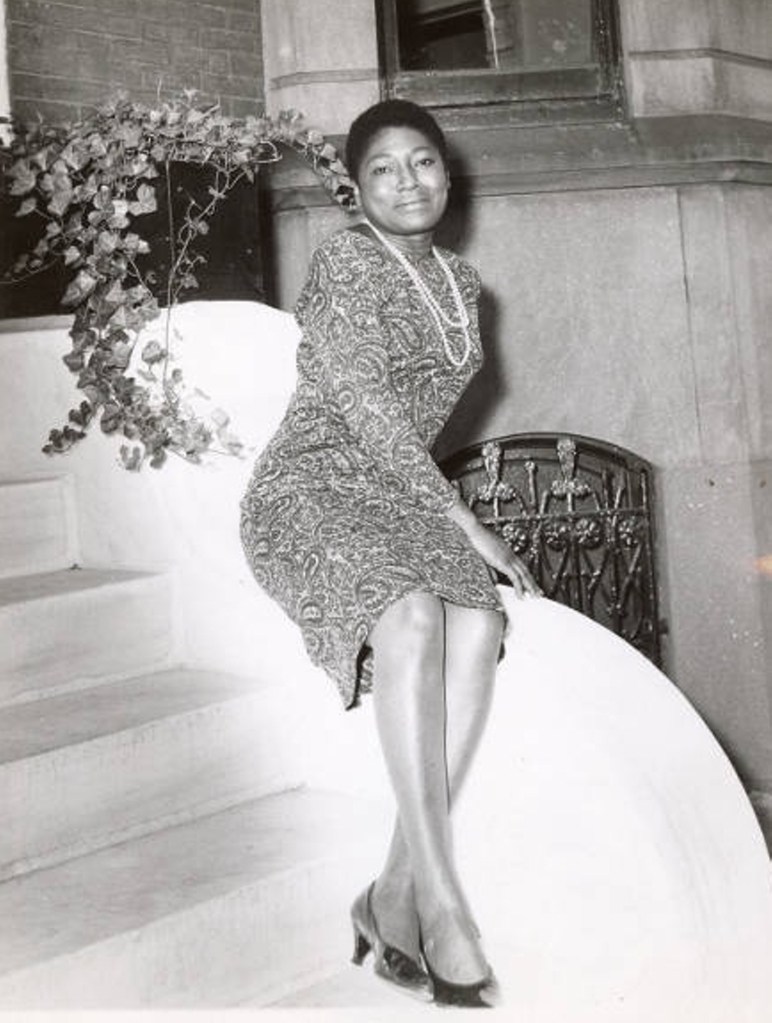
The leader of the women’s support group is played by Rosanna Carter, who happens to be the older sister of Esther Rolle. She was born in the Bahamas on September 30, 1918, one of 18 children of Bahamian immigrants Jonathan Rolle, a vegetable farmer, and his homemaker wife, Elizabeth. Like her sister, she displayed a talent for acting and was a member of The Lafayette Players, a dramatic stock company comprised solely of Black performers. The members of the company included Charles Gilpin, who originated the title role of The Emperor Jones on Broadway, and Dooley Wilson, who would later gain fame as Humprhey Bogart’s piano-playing right-hand in Casablanca (1942). She was also a member of the Negro Ensemble Company and was seen in several Broadway productions.
Carter’s role as Cora on Good Times was one of her first appearances on television. That same year, she was injured when her automobile was hit from behind by a police car at an intersection and she, in turn, hit a parked bus. Seven years after the accident, she was awarded $1 million for the injuries she sustained, as well as for lost wages, medical expenses, and impairment of earning capacity. (“I suffered a great deal,” Carter said after the award was announced. “I’m just so appreciative of the support from my colleagues which helped to keep my spirits up.”) She would go to appear in television programs including I’ll Fly Away, for which she landed an Emmy nomination for Outstanding Guest Series in a Drama (she lost to Elaine Stritch), and in such films as Night of the Juggler (1980), The Brother From Another Planet (1984), and She-Devil (1989).
Carter died on December 30, 2016 (my birthday), in Pompano Beach, Florida. She was 96 years old.
Wanda: Helen Martin
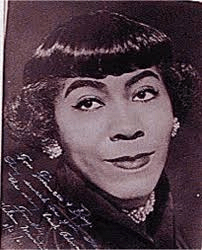
Born on July 23, 1909, Helen Martin was a native of St. Louis but was raised in Nashville; her parents hoped she’d become a concert pianist and she attended Fisk University (my mother’s alma mater!) for two years, but she left the school to pursue her own interests in acting. “Some people want to be doctors or psychiatrists,” she told Ebony magazine in 1988. “All I knew is that I wanted to be in show business. Always did.” Martin had a variety of experiences on the stage – she performed with troupes including the Rose McClendon Players and the American Negro Theater, and made her Broadway debut in 1937 in Orchids Preferred. A few years later, she appeared in Native Son, produced by Orson Welles and John Houseman; she portrayed the sister of the main character, Bigger Thomas, played by Canada Lee. She was also in the Broadway productions of Raisin, in a cast that also included Good Times’ Ralph Carter, and both Purlie Victorious, written by Ossie Davis, and its musical adaptation, Purlie.
Martin made her big screen debut in 1955 in Phenix City Story, a hard-hitting film noir about the real-life Alabama town that was known as Sin City, U.S.A. and was notorious for its proliferation of gambling, prostitution, and organized crime. She was also in a few more films, like Cotton Comes to Harlem (1970), before beginning her prolific television career. Her many credits included the popular 1977 mini-series Roots; Maude, on which Esther Rolle originated her role as Florida Evans; Baby, I’m Back, a short-lived sitcom starring Demond Wilson; and 227, where Martin had a recurring role as Pearl Shay. During the 1980s and 1990s, she could be seen in such films as Hollywood Shuffle (1987), where she played the grandmother of Robert Townsend, the writer, director, producer, and star of the film; Don’t Be a Menace to South Central While Drinking Your Juice in the Hood (1996), a spoof of the “hood” films of the 1990s; and Bulworth (1998), which starred Warren Beatty and Halle Berry.
Martin continued to work up until the end of her life; she died on March 25, 2000, at the age of 90. Her final screen appearance was in a TV movie called Something to Sing About, which aired a few months after her death.
Sylvia Ann Soares: Bernadine
Soares plays Bernadine, a member of the women’s support group (she’s the one with the soft afro who complains that her husband “has his nose out of joint” because she has a higher salary than he does).mThe second generation of Cape Verdean immigrants, Soares was born on November 23, 1941, in Cranston, Rhode Island, and graduated from Hope High School in Providence (the same high school attended by Ben Powers, who would later join the Good Times cast as Thelma’s husband, Keith). For two years, she attended Lincoln University, an Historically Black College and University (HBCU) located in Jefferson City, Missouri.
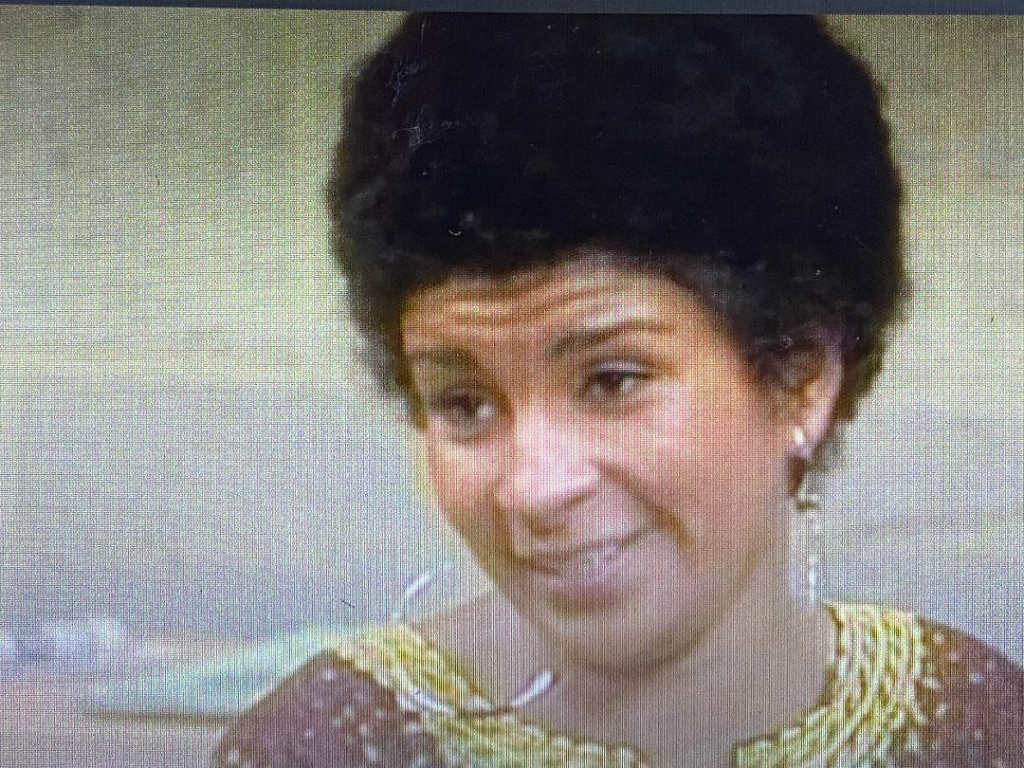
After leaving Lincoln, Soares became one of the first members of the newly formed Trinity Repertory Company and went on to perform with a variety of regional theater companies. She played the Madame in Ed Bullins’s The Gentleman Caller, a one-act play in Woodie King, Jr.’s anthology, A Black Quartet; performed in the Negro Ensemble Company’s Works in Prorgress that included playing in Sonia Sanchez’s Sister Sonji; appeared in Richard Wesley’s Black Terror at the Public Theatre; and was featured as Lady Capulet in Romeo and Juliet at the L.A. Shakespeare Festival. National tours included the first Black Pulitzer Prize play, No Place to Be Somebody, and the first tour of NEC’s Tony Award-winning play, The River Niger. Her small screen debut was her appearance on the CBS-TV series, Kojak, followed by Good Times and guest spots on numerous other series, including Baretta, Police Story, and The Rookies.
A favorite role of Soares’s came on the 1985 American Playhouse historical drama, Three Sovereigns for Sarah, about three sisters who went on trial for witchcraft in Salem, Massachusetts. Soares played Tituba, the real-life Caribbean Indian slave who was one of the first to be accused of being a witch. Soares later earned her Bachelor of Arts degree in Theater Studies from Brown University in 1995.
In recent years, Soares has performed in a variety of productions in Rhode Island, where she resides, including an oral history on the Local ILA #1329 Longshoremen, of which her father served as president for 16 years. She also wrote, directed, and starred in Plantation Complex: A Harvesting of Souls, a play about slavery in Rhode Island; wrote A Coupla Miles of Hell, about racism and injustice in an 1950s Providence, Rhode Island, neighborhood not far from her present home; and presented RI Ambassador of Jazz — Deacon of Dixie, the story of her paternal uncle Eddie Soares, a 1920s jazz pianist. In addition, after extensive research, she performed numerous one-woman shows on Nancy Elizabeth Prophet, an African American Narragansett-Pequot sculptor who, in 1918, became the first graduate of color from the Rhode Island School of Design. A clip from one of her performances as Nancy Elizabeth Prophet can be found below:
As of this writing, the 83-year-old activist-artist continues to share her varied and multiple talents. Quoting the diary of Nancy Elizabeth Prophet, she says, “I stop only when I drop,” adding that her journey “is a testimony that neither ethnicity, gender, nor age are barriers to accomplishing artistic feats.”
Other Stuff:
One of my favorite laughs in the episode comes when Florida is squabbling with James, insisting that she’s “happy, very happy” as she aggressively sets the breakfast table. J.J. observes, “If she gets any happier, she’s gonna break every dish in the house.” Another line that’s good for a guaranteed laugh is served up by Wanda during the women’s support group session. It’s almost spoken as an aside, and I always wonder if it was part of the script. It comes after Wanda asks Florida how often she has “relations.” Florida responds that it’s none of her business, adding a second later, “And plenty!” Beneath the laughs of the studio audience, you can hear Wanda say, “Uppity, ain’t she?” Gets me every time.
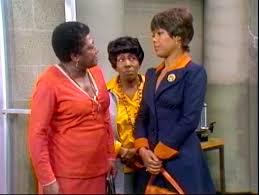
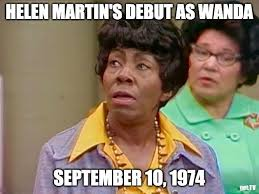
This episode marked the first time Helen Martin appeared as Wanda; she would go on to make six more appearances on the show as this character. In this episode, she played one of the women in the support group visited by Willona and Florida.
Speaking of Wanda, she offers a stance during the women’s group scene that would be considered politically incorrect and would never appear on a television show today. With a laugh, she tells the other women, “If my husband didn’t beat me up on Friday, I wouldn’t know the next day was Saturday.” Yikes.
The next episode: J.J. Becomes a Man, Part I . . .



 Ain't We Lucky We Got 'Em?