
United, We Stand: A Tribute to T.K. Carter

T.K. Carter

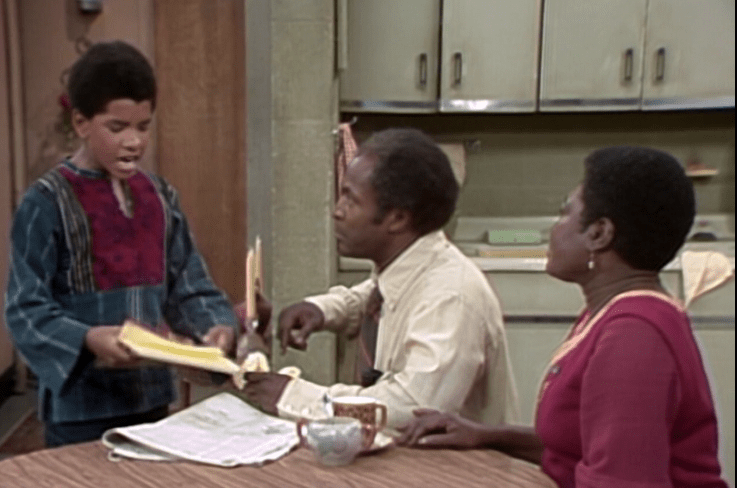
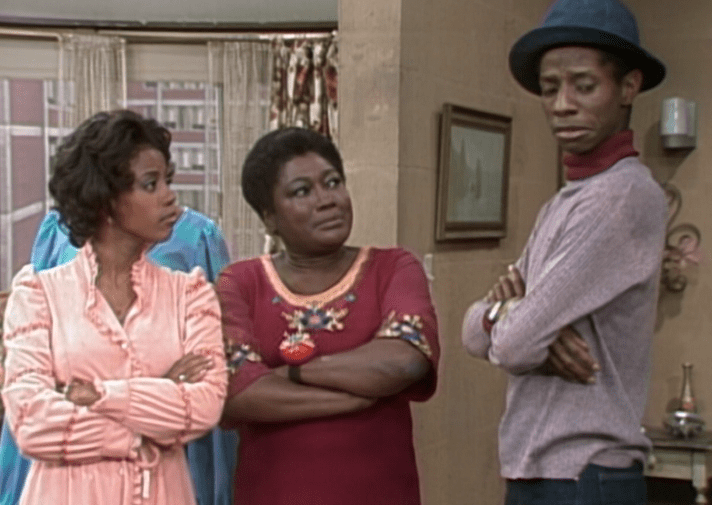
Here at “Ain’t We Lucky We Got ‘Em,” we were saddened to learn that actor T.K. Carter died on January 9, 2026, at the age of 69. Carter made two memorable appearances on Good Times, playing J.J.’s friend, Head, in Season 5, Episode 7 (“Wheels”), and Season 5, Episode 15 (“J.J. and the Boss’s Daughter”) – one of the “Awesome Foursome” in the first, and the “Gleesome Threesome” in the second. Carter’s appearance on the “Wheels” episode marked his TV sitcom debut.
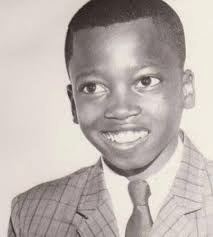
Young T.K.

Born Thomas Kent Carter, the actor grew up in the San Gabriel Valley area of Southern California; he was interested in performing from an early age – he won a talent show at the age of 10 by imitating bits made famous by Bill Cosby, wrote school plays, and developed a stand-up routine when he was barely a teenager. During his high school years, he demonstrated his talent for acting as well as sports – he was a track star while at Duarte High School and appeared in plays including a local production of The Odd Couple. (Incidentally, according to some sources, Carter attended Monrovia High School, while others say he went to John Muir High School in Pasadena). According to Internet sources, he attended Citrus Junior College, where he was the president of the Black Student Union.
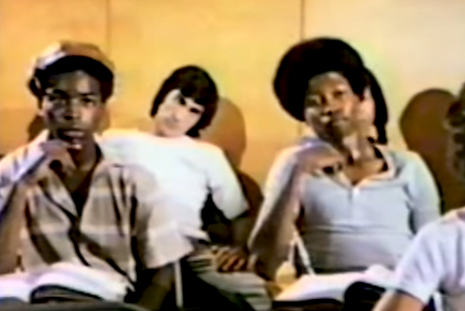
Carter (with Levar Burton) in Billy: Portrait of a Street Kid.

Carter demonstrated his flair for comedy at a number of venues in Los Angeles, including The Comedy Store, The Improvisation Café, and Ye Little Club. He made his acting debut in 1976 on an episode of the TV series Police Woman and the following year – the year of his first appearance on Good Times – he was seen in a made-for-TV movie called Billy: Portrait of a Street Kid (part of a stellar cast that included Levar Burton, Ossie Davis, Roxie Roker, Michael Constantine, Dolph Sweet, and Tina Andrews – who you may recall as Henrietta, J.J.’s pregnant girlfriend in a Season 2 episode of Good Times).
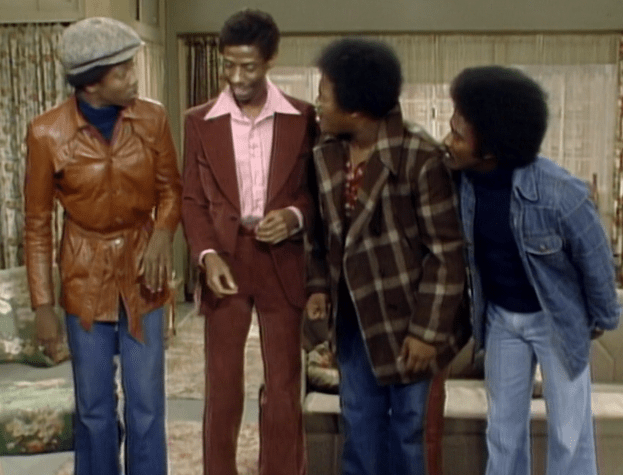
Carter and the other members of the Awesome Foursome.

In an interview in early 2025 on “Live From the Green Room,” a podcast hosted by Tony Rock, Trey Elliott, and Joe Fox, Carter recalled some of his influences in honing his comedic craft; before he started his professional career as a performer, he said that he always wanted to work jobs where he would be able to observe others, from local liquor stores and gas stations, to Disneyland, where he was a ride operator for Pirates of the Caribbean and other attractions. He also shared the circumstances that led to his casting on the Good Times episodes – a friend who worked as a page at Metromedia Square, where the show was produced, allowed him to watch the tapings. Before the actual tapings began, audience members were invited to tell jokes, and Carter volunteered. After the third taping where Carter performed a few routines, he received the offer to appear on the show, where he demonstrated his talent for mimicry, serving up impressions of Muhammad Ali and Howard Cosell. As one of four of J.J.’s pals, Carter was a standout – he offered something that made you think about him even when he wasn’t on the screen. He was warm and funny, attractive and smart, and even a tiny bit goofy. He clearly made the most of his few minutes in front of the camera, and he looked like he’d been there for years. Carter said he was also responsible for coming up with the cadence for the rhyme recited by the group: “United, we stand. Divided, we fall. We’re tighter than pantyhose two sizes small . . .”

“And that’s how I really got started,” Carter said, adding that he went on to do the warm-ups for popular shows like Chico and the Man and Welcome Back, Kotter: “That’s how I paid my rent.”
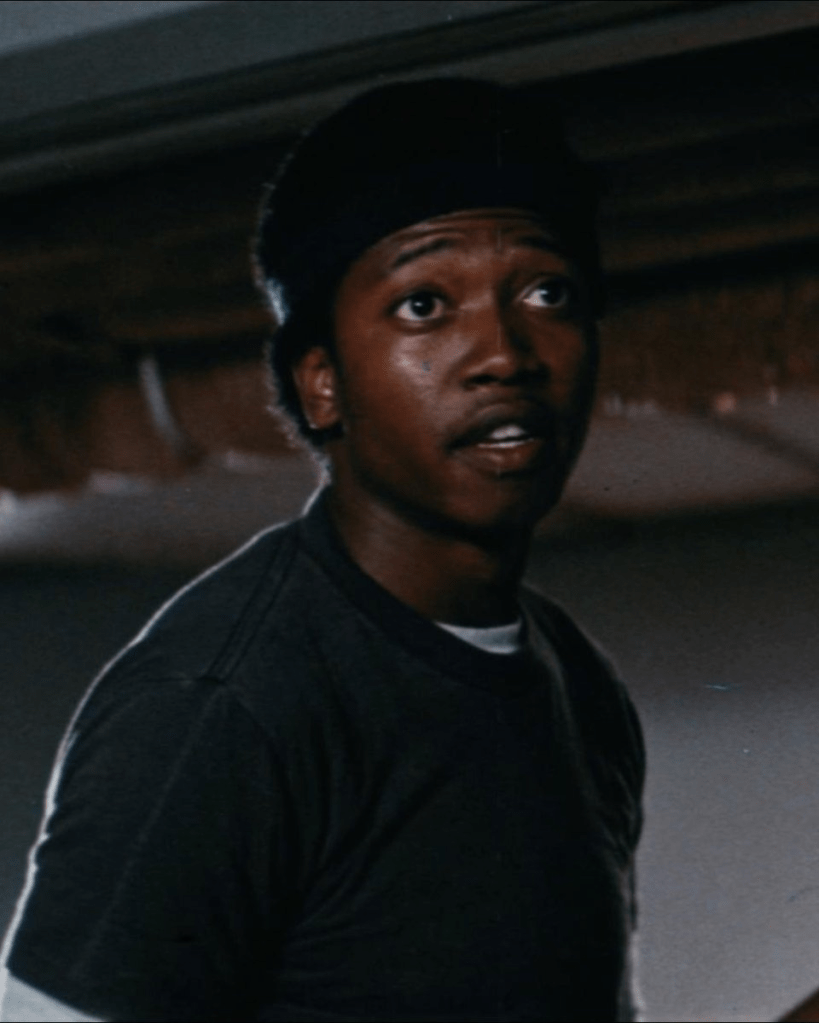
As Nauls in The Thing.

As his career grew over the years, Carter was a standout in a variety of films, including Seems Like Old Times (1980), which starred Chevy Chase; The Thing (1982), playing a roller skating cook named Nauls; Dr. Detroit (1983), where he was seen as Dan Akyroyd’s streetwise chauffeur; and He’s My Girl (1987), in which he was singled out by critics, including the reviewer for Variety, who applauded his “considerable talent.” On the small screen, Carter demonstrated his versatility in numerous roles, including the teacher of the title character on Punky Brewster; a custodian in Good Morning, Miss Bliss; a drug addict on The Corner, for which he was nominated for an NAACP Image Award; and the wise-cracking best friend of the star of The Sinbad Show. Carter’s most recent credit was on the ABC-TV series The Company You Keep, in 2023, when he was seen in three episodes.

In January 2026, following a wellness check that was initiated by his family, Carter’s body was found in his home by authorities. According to his brother, Harold, the actor had been suffering from several ailments in recent months, including diabetes and heart problems.
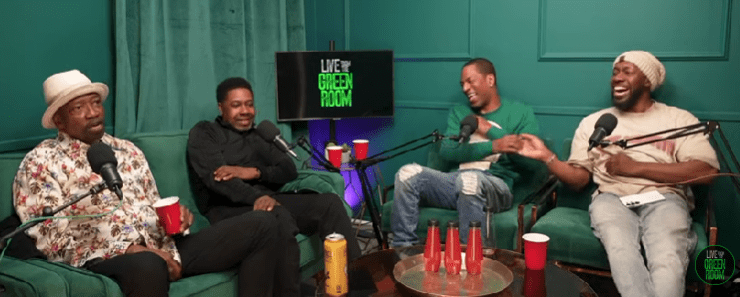
On the “Live From the Green Room” podcast in early 2025.

“My brother was a very uplifting person, always funny,” Harold said in an interview with TMZ. “He was a good person. We miss him . . . We will always cherish him.” 

After his death, tributes for Carter poured in from friends, colleagues, and fans alike. Keith David, who made his big screen debut on The Thing, told Syfy Wire that he and Carter “bonded from then ’til now.” In a Facebook post, Jamie Foxx called Carter “a cornerstone of comedy,” writing that he was “an inspiration to me and a lot of other comedians.” And on her Instagram page, Bern Nadette Stanis of Good Times remembered Carter as “a great talent” who “will be missed but never forgotten.”
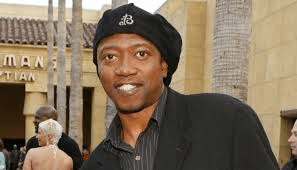
RIP.

Around these parts, we’ll always remember T.K. Carter – not just for his memorable performances as Head on Good Times, but for the numerous other productions in which he demonstrated his many talents. As his brother stated, he will be missed . . . and cherished.

Rest in power, T.K.
“Boy, Y’all Are Really Spreadin’ the Fertilizer Thick This Morning, Ain’t You?” Season Two, Episode Five: The Man I Most Admire (October 8, 1974)

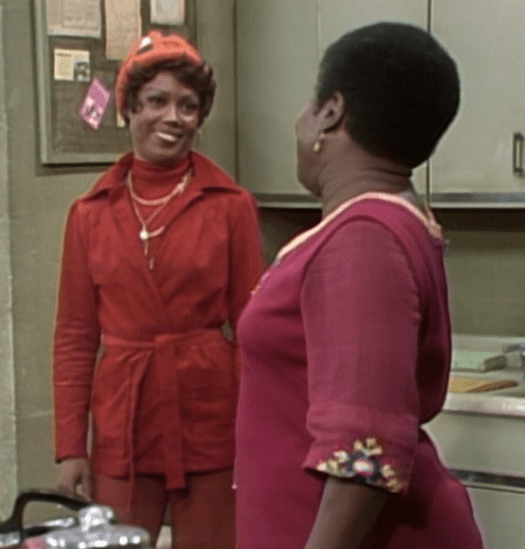
Thelma tells it like it is.

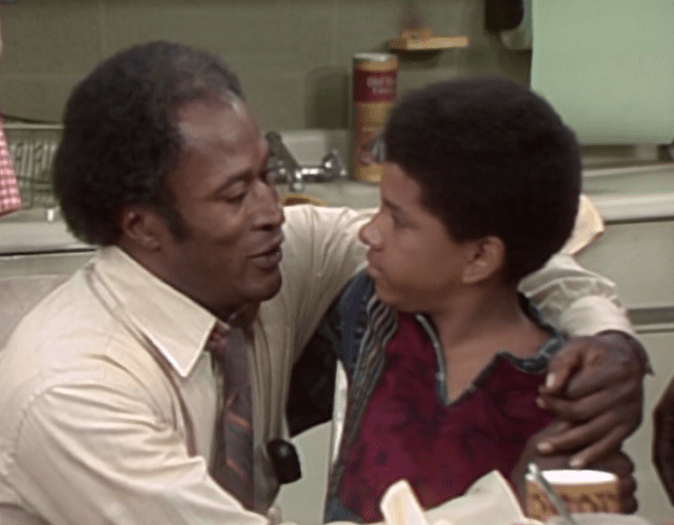
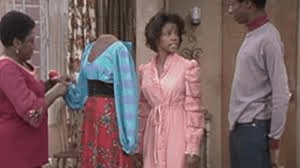
As this episode kicks off, Florida and the children are together in the living room area; Florida is working on a dress she’s making for Thelma, J.J. is painting a still life, and Michael is trying to decide on the subject for a school essay entitled, “The Man I Most Admire.” And James passes through on his way to a job interview for assistant foreman for a van and storage company. After considering famous names like Jesse Jackson and Thurgood Marshall, Michael ultimately decides to write about his father – but he rethinks his decision when James returns home, having given up on his chances for the job without even making it to the interview.

“Don’t you never try and pull a stunt like this again!”

Thelma and J.J. endeavor to boost their father’s lagging self-confidence by seeking his sage advice on their post-high school plans, but the scheme backfires when James overhears J.J. tell his sister, “I think he’s okay now.” Angered by the ruse enacted by his elder children, James goes on to accuse Florida of equally artificial behavior with her “sweet talkin’ and neck-rubbin,” then aims his wrath in Michael’s direction when he finds a draft of his essay identifying James as the man he most admires. Ultimately, though, after Florida reads from the final draft of Michael’s composition, James’s ire cools and he is able to accept the appreciation that his family has for him, despite the challenges and setbacks he is sometimes forced to face.

“Don’t just sit there, Michael!”

I found this episode to be outstanding in both writing and directing, resulting in numerous laugh-out-loud moments. My favorites include the “battle of the sexes” exchange, with Florida and Thelma going head-to-head against J.J. and Michael. During the argument, J.J. offers up a notable achievement by a male, and Florida or Thelma counter it with a female-related comeback. Finally, J.J. is unable to think of a response and calls on his little brother: “Well, don’t just sit there, Michael, jump in here! Say something!” I think you have to see this scene to appreciate it – the humor doesn’t come through with the written word, but trust me, it’s funny. And in a later scene, after failing to show up at his job interview, James explains his rationale to Florida, mimicking the voice of a white personnel director: “You know how it goes, baby,” he tells Florida: “‘Uh, Mr. Evans, as you know, we’re an equal employment opportunity employer, so your color really isn’t important.’ Meanwhile, the dude is lookin’ me up and down like he’s trying to figure out how many watermelons a day I can knock off.” John Amos does a great job here showing his comic chops.

John Amos serves up a heartwaring ending.

Outside of the humor, the episode’s heart shines though, particularly in the scene where James believes that his entire family is putting on an act to appease him, and then realizes how much he means to them. It’s the poignant but honest words from Michael’s essay that turn his heart: “He gets knocked down a lot, but he always comes up swinging. . . . He doesn’t have the best education in the world, but he’s the best father in the world.”

Pop Culture Connections

According to the World Wide Web, this is Elroy Duncan.

Elroy Duncan

As Michael ponders which person to select for his essay, J.J. suggests Elroy Duncan who, he says, “did more for Blacks than anybody – he invented the hot comb!” There’s not a whole lot of information available about Duncan, but he was believed to have introduced the straightening comb in America, after it was invented in France by a hairdresser named Marcel Grateau. Duncan reportedly marketed the comb as an instrument for mustache grooming.

Male Chauvinist

When Michael remarks that “all the great any-persons are men,” Thelma calls him a male chauvinist. During this 1970s, this was a commonly used label, which referred to a man who believed that men were superior to women in terms of ability, intelligence, and other areas. (Sometimes, an adjective was added to turn the descriptor into a bigger insult: “male chauvinist PIG.”) J.J., incidentally, elicits a big laugh in this scene when he admonishes Thelma, “Don’t call my kid brother nothin’ to do with Russia!”

Isaac Hayes and Meadowlark Lemon

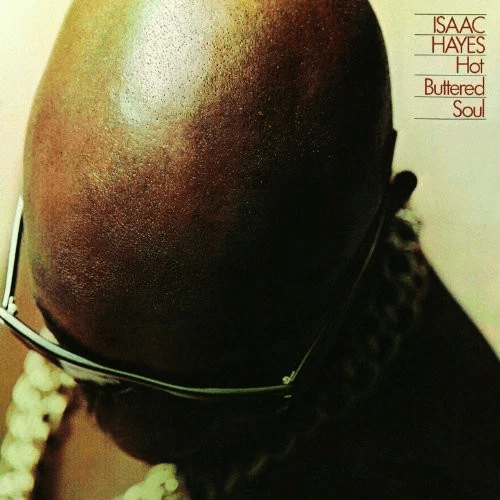
The cover of Hayes’s groundbreaking album.

In the scene where Thelma and J.J. seek James’s guidance on their career aspirations, J.J. remarks that they need someone with “the wisdom of Isaac Hayes and the worldly experience of Meadowlark Lemon.” Isaac Hayes was a composer, singer, and songwriter who was a session musician and writer at Stax Records and first rose to fame in 1969 when he released the innovative album Hot Buttered Soul. Two years later, he won an Academy Award for his score for the film Shaft, which skyrocketed him into superstardom. In 2002, Hayes was inducted into the Rock and Roll Hall of Fame (as was Jim Stewart, co-founder of Stax Records. By the way, if you’ve never seen the documentary on Stax, called “Soulsville, U.S.A.,” you really should seek it out; it’s available on several streaming services as of this writing, including HBO Max, Hulu, Amazon Prime, and YouTube. You only owe it to yourself.)

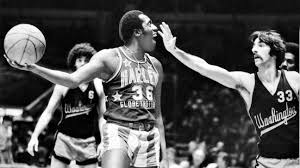
Meadowlark Lemon in action.

Meadowlark Lemon – whose real name was Meadow George Lemon, III – was best known as a member of The Harlem Globetrotters, a famous basketball team that traveled around the world demonstrating amazing and hilarious feats of basketball skill. He performed with the popular team from 1955 to 1980, when he left to form The Bucketeers, the first of several teams that were similar to the Globetrotters. It’s said that Lemon made his first basketball hoop using a rounded coat hanger and an onion sack for the net, and used an empty evaporated milk can for a ball. An ordained minister, in 1994 he started the Meadowlark Lemon Ministries in Scottsdale, Arizona.

Van and Storage Company

This isn’t a term you hear today, but van and storage companies offered moving services, using vans for transport, and they also provided facilities for short- or long-term storage for residential or commercial customers. These days, moving companies and storage companies are generally separate.

No guest stars in this one, but Willona pops in for about 90 seconds!

Guest Stars:

From feast to famine – the previous episode had more guest stars with speaking parts than any to date, and this one had none!

Other Stuff:

This episode marks another one that evokes the name of O.J. Simpson. During an argument with Thelma about suggestions for Michael’s essay, Thelma names off a string of accomplished women: Shirley Chisolm, Coretta Scott King, and Harriet Tubman. For each woman Thelma names, J.J. counters with “O.J. Simpson!” Oy.

The next episode: Crosstown Buses Run All Day, Doodah, Doodah . . .