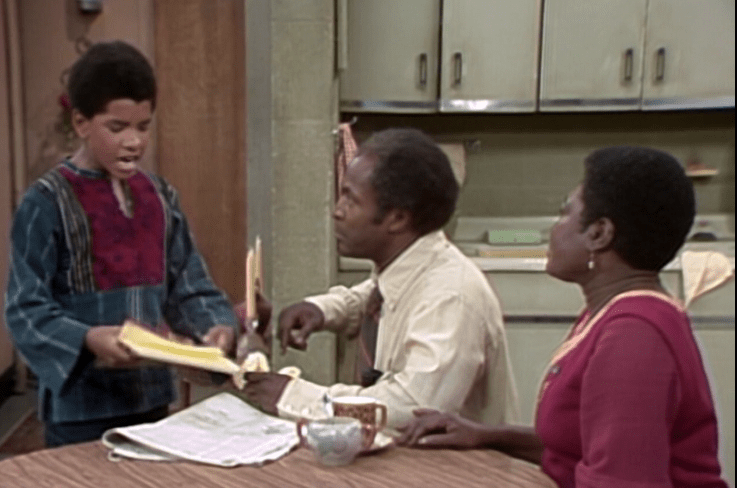
As this episode kicks off, Florida and the children are together in the living room area; Florida is working on a dress she’s making for Thelma, J.J. is painting a still life, and Michael is trying to decide on the subject for a school essay entitled, “The Man I Most Admire.” And James passes through on his way to a job interview for assistant foreman for a van and storage company. After considering famous names like Jesse Jackson and Thurgood Marshall, Michael ultimately decides to write about his father – but he rethinks his decision when James returns home, having given up on his chances for the job without even making it to the interview.
“Don’t you never try and pull a stunt like this again!”
Thelma and J.J. endeavor to boost their father’s lagging self-confidence by seeking his sage advice on their post-high school plans, but the scheme backfires when James overhears J.J. tell his sister, “I think he’s okay now.” Angered by the ruse enacted by his elder children, James goes on to accuse Florida of equally artificial behavior with her “sweet talkin’ and neck-rubbin,” then aims his wrath in Michael’s direction when he finds a draft of his essay identifying James as the man he most admires. Ultimately, though, after Florida reads from the final draft of Michael’s composition, James’s ire cools and he is able to accept the appreciation that his family has for him, despite the challenges and setbacks he is sometimes forced to face.
“Don’t just sit there, Michael!”
I found this episode to be outstanding in both writing and directing, resulting in numerous laugh-out-loud moments. My favorites include the “battle of the sexes” exchange, with Florida and Thelma going head-to-head against J.J. and Michael. During the argument, J.J. offers up a notable achievement by a male, and Florida or Thelma counter it with a female-related comeback. Finally, J.J. is unable to think of a response and calls on his little brother: “Well, don’t just sit there, Michael, jump in here! Say something!” I think you have to see this scene to appreciate it – the humor doesn’t come through with the written word, but trust me, it’s funny. And in a later scene, after failing to show up at his job interview, James explains his rationale to Florida, mimicking the voice of a white personnel director: “You know how it goes, baby,” he tells Florida: “‘Uh, Mr. Evans, as you know, we’re an equal employment opportunity employer, so your color really isn’t important.’ Meanwhile, the dude is lookin’ me up and down like he’s trying to figure out how many watermelons a day I can knock off.” John Amos does a great job here showing his comic chops.
John Amos serves up a heartwaring ending.
Outside of the humor, the episode’s heart shines though, particularly in the scene where James believes that his entire family is putting on an act to appease him, and then realizes how much he means to them. It’s the poignant but honest words from Michael’s essay that turn his heart: “He gets knocked down a lot, but he always comes up swinging. . . . He doesn’t have the best education in the world, but he’s the best father in the world.”
Pop Culture Connections
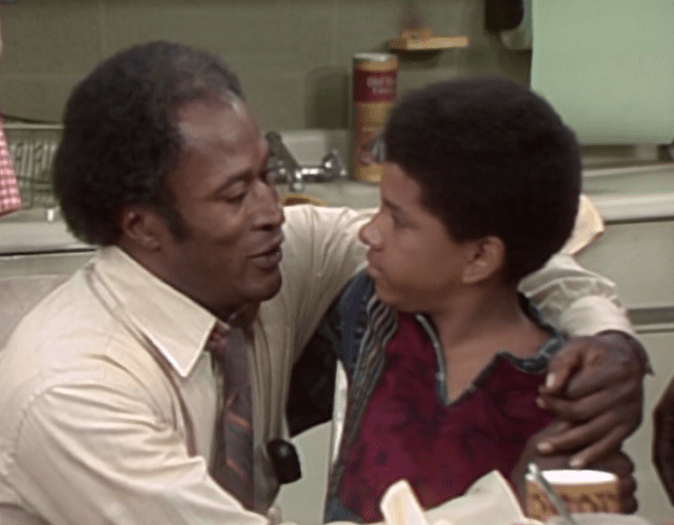
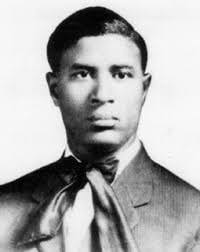
According to the World Wide Web, this is Elroy Duncan.
Elroy Duncan
As Michael ponders which person to select for his essay, J.J. suggests Elroy Duncan who, he says, “did more for Blacks than anybody – he invented the hot comb!” There’s not a whole lot of information available about Duncan, but he was believed to have introduced the straightening comb in America, after it was invented in France by a hairdresser named Marcel Grateau. Duncan reportedly marketed the comb as an instrument for mustache grooming.
Male Chauvinist
When Michael remarks that “all the great any-persons are men,” Thelma calls him a male chauvinist. During this 1970s, this was a commonly used label, which referred to a man who believed that men were superior to women in terms of ability, intelligence, and other areas. (Sometimes, an adjective was added to turn the descriptor into a bigger insult: “male chauvinist PIG.”) J.J., incidentally, elicits a big laugh in this scene when he admonishes Thelma, “Don’t call my kid brother nothin’ to do with Russia!”
Isaac Hayes and Meadowlark Lemon
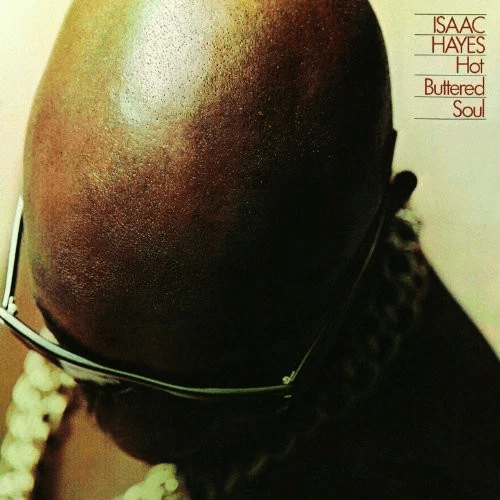
The cover of Hayes’s groundbreaking album.
In the scene where Thelma and J.J. seek James’s guidance on their career aspirations, J.J. remarks that they need someone with “the wisdom of Isaac Hayes and the worldly experience of Meadowlark Lemon.” Isaac Hayes was a composer, singer, and songwriter who was a session musician and writer at Stax Records and first rose to fame in 1969 when he released the innovative album Hot Buttered Soul. Two years later, he won an Academy Award for his score for the film Shaft, which skyrocketed him into superstardom. In 2002, Hayes was inducted into the Rock and Roll Hall of Fame (as was Jim Stewart, co-founder of Stax Records. By the way, if you’ve never seen the documentary on Stax, called “Soulsville, U.S.A.,” you really should seek it out; it’s available on several streaming services as of this writing, including HBO Max, Hulu, Amazon Prime, and YouTube. You only owe it to yourself.)
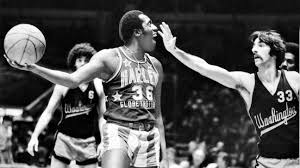
Meadowlark Lemon in action.
Meadowlark Lemon – whose real name was Meadow George Lemon, III – was best known as a member of The Harlem Globetrotters, a famous basketball team that traveled around the world demonstrating amazing and hilarious feats of basketball skill. He performed with the popular team from 1955 to 1980, when he left to form The Bucketeers, the first of several teams that were similar to the Globetrotters. It’s said that Lemon made his first basketball hoop using a rounded coat hanger and an onion sack for the net, and used an empty evaporated milk can for a ball. An ordained minister, in 1994 he started the Meadowlark Lemon Ministries in Scottsdale, Arizona.
Van and Storage Company
This isn’t a term you hear today, but van and storage companies offered moving services, using vans for transport, and they also provided facilities for short- or long-term storage for residential or commercial customers. These days, moving companies and storage companies are generally separate.
No guest stars in this one, but Willona pops in for about 90 seconds!
Guest Stars:
From feast to famine – the previous episode had more guest stars with speaking parts than any to date, and this one had none!
Other Stuff:
This episode marks another one that evokes the name of O.J. Simpson. During an argument with Thelma about suggestions for Michael’s essay, Thelma names off a string of accomplished women: Shirley Chisolm, Coretta Scott King, and Harriet Tubman. For each woman Thelma names, J.J. counters with “O.J. Simpson!” Oy.
The next episode: Crosstown Buses Run All Day, Doodah, Doodah . . .
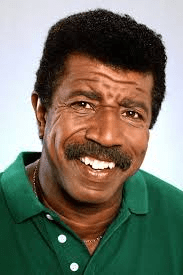
Hal Williams, who played a repo man (who may or may not have had a resemblance to Billy Dee Williams and Sidney Poitier!) on the first episode of Good Times, is celebrating his 87th birthday today!
Born Halroy Candis Williams in Columbus, Ohio, the actor started his career in local community theater. He worked for a time as a postal worker and a corrections officer, then moved in the late 1960s to Los Angeles to pursue acting; to make ends meet while he went on auditions, he worked with the California Youth Authority.
In 1970s, Williams was able to devote his time to acting full time, when he landed roles in three TV productions: a TV movie called Swing Out, Sweet Land, starring John Wayne, and two series, Dan August and That Girl. Williams went on to play Officer “Smitty” Smith on the Sanford and Son TV series, Harley Foster on The Waltons, Sgt. Ted Ross on the film Private Benjamin (1980) and the subsequent TV series based on the movie, and Lester Jenkins on 227.
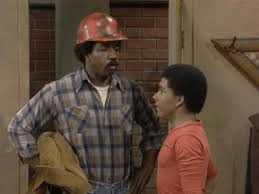
Wililams in his third Good Times appearance.
In addition to his appearance on the first Good Times episode, Williams was seen in two additional episodes of the show; in Florida Goes to School, which aired in Season 2, Williams played pinball with James and warned him about the risks involved in his wife trying to better herself. And in the Season 6 episode J.J. the Teacher, Williams played the father of Earl Mitchell (Ernest Harden), an art student of J.J.’s.
As of this writing, Williams is still performing; most recently, he made two appearances on the hit television series Matlock, starring Kathy Bates. He’s showing no signs of stopping!
We extend best wishes to Mr. Williams here at Ain’t We Lucky We Got ‘Em!
Happy birthday to Chip Fields, who turns 74 today! Perhaps best known for playing the abusive mother of Penny (Janet Jackson) on Good Times, Fields is the mother of actresses Kim and Alexis Fields.
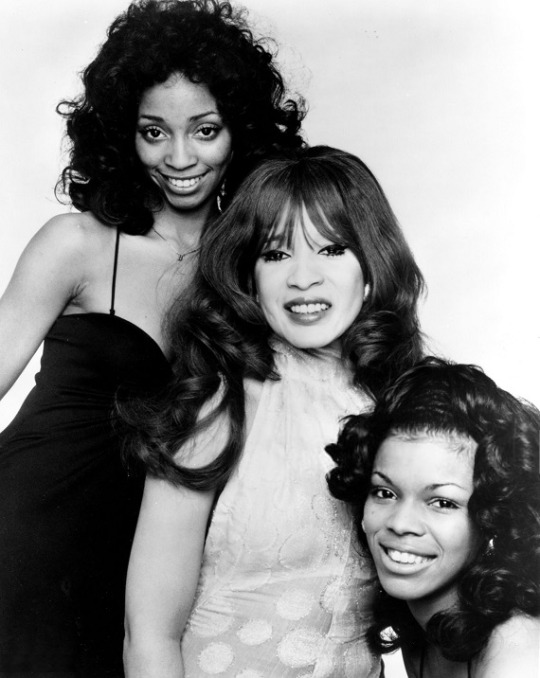
Born Laverne Fields in New York, the actress-director began her career as a singer; when Ronnie Spector reformed her group, The Ronettes, in 1973, Chip was one of the two singers selected to replace the two other originals, who did not return to the group. She recorded two songs with the group before it disbanded in 1975. Her acting debut came in the 1974 film Claudine, where she can be seen as an extra, and she later played an unwed mother on the NBC soaper Days of Our Lives.
Chip (lower right) as a member of Ronnie and the Ronettes.
Fields also played the mother of Regine (played by her real-life daughter Kim) on TV’s Living Single, and was seen in a variety of other shows, including What’s Happening!, Hill Street Blues, Roc, and The Wayans Brothers. In addition to her career in front of the camera, Fields was a dialogue coach for the film Menace II Society and directed episodes on a variety of television shows, including Girlfriends, The Parkers, One on One, and Hannah Montana.
In recent years, Fields directed numerous episodes of the Tyler Perry show Young Dylan, which ran on Nickelodeon from 2020 to April 2025. She and her husband, Erv Hurd, have been married since 1994.
This episode is the second half of the series’ first two-parter; in Part 1, the family celebrated J.J.’s 18th birthday, which included his announcement of his new job as a courier, and his quickly masked disappointment when he learned his parents had been unable (due to a computer error) to buy the fancy art supplies he’d been expecting. And the episode ended when the family learned that J.J. had been arrested for trying to rob a liquor store.
As the second part begins, the family and Willona are arriving at the police station with hopes of securing J.J.’s release. They soon learn, however, that his bail has been set at $5,000 – which means a bond of $500 would be needed to get him out. Meanwhile, J.J. not only faces a “good cop, bad cop” interrogation session, but he’s then put into a cell with a brutish criminal characterized by his ability to bend a spoon with one hand and his penchant for appropriating J.J.’s meals.
Just as Florida and James consider borrowing the bond money from a loan shark (at 20 percent – per WEEK), they’re told that the real culprit has been found and that J.J. is being set free. But the family’s celebration is short-lived – after visiting J.J.’s new boss to offer an excuse for his absence, Thelma learned that the manager already knew about the arrest and that J.J. has lost his job. And in a final twist of irony, the Evans family gets a glimpse of the real robber of the liquor store – a short, rotund youth with a large, unruly afro. “I can see how you made a mistake,” Florida facetiously tells the arresting officer. “They’re practically twins.”
“They’re practically twins.”
As I stated in my previous post, I didn’t find Part 1 of this two-parter to be a laugh-riot, but Part 2 more than made up for it; this episode is practically overflowing with humorous lines and exchanges. The first comes just a minute or so after the episode begins, when Florida keeps interrupting James to talk to the desk sergeant, despite James’s insistence on handling the situation. And then, when Thelma speaks up as well, Florida commands her to be quiet, adding, “Let your daddy do the talking!” There are laugh-out-loud moments throughout, but the episode still manages to sneak in several somber situations, using humor to highlight the reality of false arrest and the increasing encroachment of computers on the lives of law-abiding citizens.
Pop Culture Connections
Certs
When J.J. is asked by the cops why he was in the liquor store, he tells them he had a date and stopped in to buy some Certs. He then adds, “You know – click, click?” and makes a gesture with his two index fingers. Certs was a popular breath mint that debuted in 1956 and was one of the first breath mint to be marketed nationwide. A small disc with green flecks, Certs was advertised as “two mints in one,” because it was both a breath mint and a “candy” mint. Interestingly, it didn’t contain oil from a mint plant but, instead, was made with a substance known as “retsyn,” which was a mixture of partially hydrogenated cottonseed oil, copper gluconate, and flavoring. The mint’s green flecks were a result of the copper gluconate.
Certs was discontinued in 2018, reportedly due to the product’s use of the hydrogenated oil; this substance is no longer allowed in foods sold in the U.S. because of its connection with heart disease. However, the product has been revamped and made a reappearance at the Sweets and Snacks Expo, held in Indianapolis, Indiana, in May 2025.
J.J.’s gesture with his fingers and his comment, “click, click,” refers to the advertising for Certs and its “two mints in one” concept. You can see what I mean in the commercial below.
Mrs. Olson
Willona brings Florida and James a thermos of coffee that she made, but it’s so distasteful that James quips that it could help secure J.J.’s release – a few drops could burn a hole in the jail. Willona responds that she “never said that [she] was Mrs. Olson.” Mrs. Olson was the name of the pitchwoman for Folgers Coffee, played by actress Virginia Christine. More on Mrs. Olson and Virginia Christine can be found in my post on Episode 11 from Season 1.
Supp-Hose
When J.J. is being questioned by the two detectives, one of them mentions that the liquor store robber had a nylon stocking over his face. J.J. responds that this proves his innocence: “Where would I get a nylon stocking from?” he asks. “My sister wears panty hose and my mother wears Supp-hose!” Supp-hose was a line of support stockings developed in 1956 by the Kayser-Roth company. They were designed to improve blood circulation and reduce swelling in the legs, but Supp-hose strived to be more glamorous and less utilitarian; the advertisements for the product claimed that they were the sheerest support hose on the market and showed them being worn by a stylish model in a fur coat.
Guest Stars:
This episode had more guest stars with speaking parts than any to date!
James Greene (Desk sergeant)
James Greene was in the first scene as the desk sergeant.
Born James Thomas Nolan in Lawrence, Massachusetts in 1926, Greene made his Broadway debut in the chorus of the 1951 production of Romeo and Juliet, starring Olivia de Havilland. He went on to appear in 22 Broadway plays and 29 off-Broadway productions; these included The Iceman Cometh in 1985, where he co-starred with Jason Robards. After appearing in his first feature film in 1961, he had roles in pictures including Ghost Story (1981), which featured classic film stars Fred Astaire, Melvyn Douglas, and Douglas Fairbanks, Jr., and The Road to Perdition (2002), a Depression-era thriller starring Tom Hanks. He was most prolific on the small screen, however, with guest spots on a variety of shows and recurring parts on the Days and Nights of Molly Dodd, where he played the elevator operator, and Parks and Recreation, where he was seen as a city councilman. Greene continued working until the year he died, 2018, at the age of 91; his final appearance was on the TV series Break a Hip, starring Christina Pickles (who won an Emmy for her performance).
Mel Stewart (Davis)
Stewart was born in Cleveland, Ohio, and started acting with a community theater there when he was a teenager. He later moved to New York, appearing in such Broadway productions as Simply Heavenly, written by Langston Hughes, and Purlie Victorious, where he was the understudy for characters played by Ossie Davis and Godfrey Cambridge. Stewart was also an accomplished musician, playing the tenor saxophone with such greats as John Coltrane and Charlie Parker; he was proficient on the piano and the flute as well.
Mel Stewart is perhaps best known for his role on All in the Family.
After moving to California in the 1960s, Stewart joined an improv group and eventually caught the attention of Hollywood; in one of his earliest feature film appearances, he played an elevator operator in Odds Against Tomorrow (1959), a gritty noir produced by Harry Belafonte. Some of his other films included Nothing But a Man (1964), starring Ivan Dixon, and The Landlord (1970), directed by Hal Ashby. On the small screen, he was seen in recurring roles in several shows including Car 54, Where Are You?, Roll Out, Tabitha, and Scarecrow and Mrs. King. He also played Henry Jefferson, the brother of Sherman Hemsley’s George, on All in the Family.
Stewart’s talents included work behind the camera – he directed two episodes of the series Get Christie Love, starring Teresa Graves, as well as plays at the Black Repertory Theater in Berkeley, California, and San Francisco’s Center for African and African-American Art and Culture. He also served as an acting teacher at San Francisco State University, where one of his students was Danny Glover, and while at the university, Stewart established a theater group called Black Actors Now Through Unity (BANTU). And apart from acting, Stewart held a third-degree black belt in aikido and operated a martial arts school for inner-city young people in San Francisco.
After appearing in the film Made in America in 1993, Stewart retired from acting, reportedly stating that there were “too many black bald actors in Hollywood.” He died of Alzheimer’s disease in 2002 at the age of 72.
Ron Masak (Sloane)
Chicago native Ron Masak was born in 1936; his mother, a merchandise buyer, was of Irish descent and his father, a salesmen and musician, was of Czech Bohemian descent – and his first cousins are Michael Gross from TV’s Family Ties and Mary Gross from Saturday Night Live. Masak grew up on the city’s south side and was a graduate of Chicago’s Kelly High School. According to the actor, he turned down a contract from the Chicago White Sox; instead, he made his acting debut in Stalag 17, produced by Chicago’s Drama Guild in 1954, and studied theater at Chicago City College. He also served as a military policeman in the U.S. Army and toured the world doing vocal impressions in an Army production called Rolling Along.
Ron Masak with Angela Lansbury on Murder, She Wrote.
One of Masak’s first TV appearances was on The Twilight Zone in 1960, when he played the “Harmonica Man” in Season 1, Episode 19, “The Purple Testament.” His feature film debut came near the end of the decade, in Ice Station Zebra (1968), where he joined a cast that included Rock Hudson, Ernest Borgnine, and Lloyd Nolan. During the next several decades, Masak appeared on nearly 100 television series, but he’s probably best remembered as Cabot Cove Sheriff Mort Metzger on the popular Angela Lansbury series, Murder, She Wrote, which he played for the final eight years of the show.
Masak was also a frequent guest on numerous game shows, including Match Game and Password, served for eight years as the Los Angeles host for the Jerry Lewis Telethon, and for 15 years was the pitchman for Vlasic pickles, voicing the animated stork who sounded like Groucho Marx. He also did ads for numerous other products including Rice-a-Roni, Glad sandwich bags, Spray and Wash, and Ford automobiles, and was once dubbed “King of the Commercials.” Masak died of natural causes in 2022, at the age of 86.
Stan Haze (Prisoner)
Haze was born Stanley Hazlip in Pittsburgh, Pennsylvania, in 1938. His career started, according to the actor, by accident. He was living in Chicago in the early 1970s and took his son to a swimming class at a local community center. A play was being performed at the center, the production was in need of a soldier, and Haze was asked to step in. “I told them I had never acted before and they said, ‘Don’t worry – all you have to do is shoot this lady with a machine gun,’” Haze said in an interview with the Los Angeles Times. “It was my first live performance. The reviews panned the show, the lead actor quit, and the production was going to shut down. I had memorized all his lines and asked the producer to give me a shot. I ended up playing the lead.”
Haze went on to take three years of classical training and in 1973, he made his TV debut playing a mugger in the made-for-TV movie, The Blue Knight. He appeared on Good Times the following year and later guested on numerous TV series, including The Odd Couple, Sanford and Son, Hill Street Blues, and Amen, as well as the blockbuster mini-series, Roots. He was also in feature films like From Noon Till Three (1976), a western starring Charles Bronson and his wife, Jill Ireland, and the hit 1990 comedy, House Party.
Stan Haze’s appearance on Good Times was one of his first TV gigs.
In addition to his film and TV appearances, Haze had an affinity for Shakespeare; in 1977, he was seen at L.A.’s Gryphon Theater in an updated version of Macbeth, and in 1980, he produced, directed, and starred in Othello at the 5th Street Theater in Los Angeles. Some of his other stage work included Porgy and Bess, The Great White Hope, and Carousel. In 1981, he teamed with San Diego developer John Bancroft to lease and remodel a clothing store in Glendale, California, and transform it in the Glendale Academy of Performing Arts. Haze and Bancroft planned to provide classes in dance and acting, produce plays, offer a showcase where aspiring actors could perform in front of industry representatives, and videotape productions for sale to cable television. (I regret that I’ve been unable to find out what happened with this project.)
By the 1990s, Haze’s TV career was behind him, but he did appear in a few films and continued his stage work as well, including a 1995 production of Othello and Desdemona at the Globe Playhouse in West Hollywood that he adapted, directed, and starred in. Sadly, in 1999, at the age of 60, Haze died of lung cancer.
Cal Wilson (Loan Shark)
Unfortunately, I haven’t yet been able to find a lot of information on Cal Wilson that I could confirm; I found some anonymously submitted information on the Internet Movie Database, but until or unless it can be corroborated, I simply don’t feel comfortable sharing it here.
I did, however, find two newspaper articles from the early 1970s about a couple of TV specials that listed Cal Wilson as a member of the cast: “Changing Scene,” a musical variety special on ABC in 1971, and The Jerry Reed When You’re Hot, You’re Hot Hour from 1972. That’s about it – but I’m determined to unearth more about this talented actor, and I’ll update this page when I do!
Connie Sawyer (Personnel Woman)
Born Rosie Cohen in Colorado in 1912, Sawyer began her career as a stand-up comedian in vaudeville and later earned the nickname, “The Clown Princess of Comedy.” She debuted on Broadway in a 1948 musical review called Hilarities, but it closed after only 14 performances. She didn’t get her big break until nearly a decade later, when she was a standout in the Broadway production of A Hole in the Head in 1957. Frank Sinatra later bought the film rights, and two years later, Sawyer made her big screen debut in the feature film, reprising her role from the play.
Sawyer went on to appear in a variety of movies and TV shows over the next six decades. Her films included True Grit (1969), Bob & Carol & Ted & Alice (1969), Oh, God! (1977), Dumb and Dumber (1994), and Out of Sight (1998). And on the small screen, she was seen on more than 100 shows, from Armstrong Circle Theater in the 1950s to Ray Donovan, where she made her final appearance in 2014. Sawyer published her memoir in 2017, called I Never Wanted to Be a Star – And I Wasn’t; the following year, she died at the age of 105.
Other Stuff:
The $500 bond that the family would have had to cough up in order to get J.J. out of jail would be worth approximately $3,200 today.
Incidentally, in 2023, Illinois became the first U.S. state to abolish the system of putting up money in exchange for release after an arrest. The release of arrested individuals now focuses on the seriousness of the charges against them, and on whether they’re considered to be a flight risk or a danger to the public.
“Nigga, is you sick???”
This episode gives us James’s first use of the word “nigga.” He utters it to the loan shark after learning his interest rate for a loan, asking, “Nigga, is you sick?” It’s always startling to hear, because by no stretch of the imagination would this ever be used in a TV sitcom today.
This episode also gives us yet another reference to J.J.’s habit of petty thievery that had been introduced (and, mercifully, dropped) in the first season. Here, Florida tells James that she hopes J.J.’s experience with the arrest will teach him “not to make a joke out of finding things.”
One of these days, I’m going to find out why this two-parter was filmed under the name “J.J. Gets Arrested,” but is now called “J.J. Becomes a Man.”
The next episode: Crosstown Buses Run All Day, Doodah, Doodah . . .
J.J. tells Thelma that his new job is “really, really big!”
This episode – Part 1 of the first two-parter on the series – centers on J.J.’s 18th birthday. We learn early on that James and Florida are looking forward to presenting their gift to him: a monogrammed genuine leather case filled with new paints and brushes. And it’s no wonder they were so excited to see J.J.’s reaction – the gift cost $75, which would amount to more than $500 in 2025 dollars. As it turns out, though, James’s credit is turned down at the department store where he attempted to buy the case. When he protests, he’s told that he wouldn’t be able to get credit from any store, as his financial status has been broadcast to computers throughout the country.
Meanwhile, J.J. – who’s notorious for snooping and finding his presents (he’d already found and exchanged one of his gifts) – is expecting to receive the art supplies, and when he learns that he’s been given a sweater instead, he begins frantically searching the apartment, looking in closets and atop the kitchen cabinets for the more expensive gift. Once he realizes he’s not going to receive the supplies, he tamps down his disappointment and abruptly announces that he is going out for a date. A short time later, the episode ends on a cliff-hanger when the family learns that J.J. has been taken away in a police car.
The biggest laugh in the episode came when J.J. appeared in this get-up.
This episode doesn’t rank among my favorites – maybe because there’s a lot of dialog that I just don’t find funny, like James’s predictions for J.J.’s wedding, Florida’s description of J.J.’s birth, James’s recollections of first seeing J.J. in the nursery, and Florida’s reminiscences of her wedding day. I concede that the latter was a necessary set-up for the episode’s final exchange, where James and Florida sing the first dance song from their wedding reception, “It Had to Be You.” This part is actually quite sweet, as the two start out with a leisurely sway and then break into a dance known as the bop, before returning to the slow dance again. They’re interrupted, though, when Thelma answers a knock at the door and is given news from a family friend that knocks the family for a loop – J.J. has been arrested him for robbing a liquor store. “Could J.J. have wanted the art supplies that much?” Thelma asks at the end of the scene, as Florida, in disbelief, calls out to God. It’s a very sobering and real-feeling conclusion.
Pop Culture Connections
The Waltons.
The Waltons After J.J. leaves for his date, Willona announces that she’s going to return home and watch her favorite television show, The Waltons. This popular show aired on CBS-TV from 1972 to 1981 and focused on the large family of the title, which lived a hardscrabble life in the Appalachian Mountains of Western Virginia. Referring to the day-to-day problems that often plagued the family, Willona joked about the episode that would be airing that night: “It starts off where they can’t pay the mortgage, the horse dies, the mule gets a migrane and the drugstore’s closed,” she explains, adding, “and then it gets sad.”
Avon Lady When J.J. describes his new job to the family, he tells them that it’s “really, really big – I’m gonna be ringing doorbells all over Chicago.” To this, Florida responds, “Don’t tell me you’re going to be an Avon Lady!” Avon is an international company selling cosmetics, perfume, and personal care products; its founder, David H. McConnell, initially sold books door-to-door in New York, and decided in 1886 to switch to perfumes. Also in 1886, he hired a 50-year-old woman, Mrs. P.F.E. Albee, who became the first woman to sell the products door-to-door and is considered to be the first Avon Lady. The company is still in business today (although Avon Products, Inc., the non-U.S. brand, filed for bankruptcy in August 2024, primarily due to lawsuits related to alleged cancer-causing agents in the company’s talc products. The North American brand was unaffected by the bankruptcy filing.) Below is a vintage Avon TV commercial focusing on the “Avon calling” slogan:
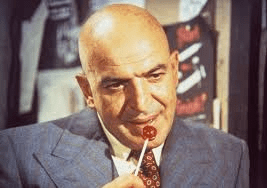
Telly Savalas as Kojak, with his ever-present trademark lollipop.
Kojak After J.J. reveals that he aleady knows what’s inside the gift box from Willona, she calls him an “ebony Kojak.” Airing from 1973 to 1978, Kojak was another popular CBS-TV series. This one was a cop show starring bald Greek-American actor Telly Savalas as the New York City detective of the title. The pilot for the series was a made-for-TV movie, The Marcus-Nelson Murders, which was based on a real-life case from the early 1960s, the Wylie-Hoffert murders. That cse involved the murder of two young professional women in Manhattan; by illegally obtaining a confession, the police pinned the crime on a Black man – George Whitmore, Jr. – who had been arrested on a different charge of assault. Later, a different team of detectives investigated the case, exonerated Whitmore, and captured the real killer. Telly Savalas starred in The Marcus-Nelson Murders – in that production, his character’s name was spelled “Kojack” and he was a composite of several people who worked on the real-life case.
Guest Star:
Monty: Stymie Beard
Beard was the family friend who informed Thelma about J.J.’s arrest. He didn’t have any lines; he just appeared on screen for a few seconds. You can read more about Beard in the post on the first episode of the series.
Other Stuff: Unless I’m mistaken, this is the episode that knocked J.J.’s use of the word “dynomite” into the pop culture stratosphere, when he began inserting the word into rhymes. This one takes place when he first enters the Evans apartment and announces, “Here I am! Eighteen today, happy, bright – now a man and pure dynomite!” (Up to this point in the series, I didn’t have a problem with the use of the catchphrase, but when the writers turned J.J. into a dynomite poet, it was really too much.)
I’m not sure if I overlooked it in previous episodes (one of these days, I’ll review them to see), but this one seemed to be overflowing with slang from the day. Here are all the different terms you can hear in this episode:
Later for you Groovy Jive turkey Outta sight Right on Pad
For my money, Michael had the episode’s best line.
My favorite laugh in the episode comes when J.J. receives his gifts and, without tearing the wrapping paper, he knows that Michael gave him a book on Black oppression. “Remember? Me and you sleep together,” J.J. explains, “and you’re the little guy who talks in his sleep.” Offended, Michael retorts, “So what? You used to wet the bed.” The way Ralph Carter delivers this line, and the insulted look on his face, cracks me up every time I hear it.
As the episode ends, the words, “TO BE CONTINUED NEXT WEEK” appear on the screen and John Amos’s voice informs us, “You have just seen Part One of ‘J.J. Gets Arrested.’ Be sure to see the conclusion next week.” Interestingly, that is not what the episode is called now – it’s now called “J.J. Becomes a Man,” for some reason.
The next episode: J.J. Becomes a Man (or J.J. Gets Arrested – take your pick), Part II . . .
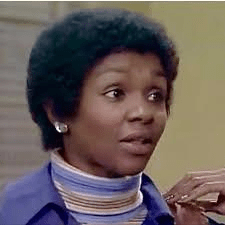
Today we celebrate the actress Ta-Tanisha, who turns 72 today!
Born Shirley Cummings in the Bronx, Ta-Tanisha was seen in three episodes on Good Times, each time playing a different character.
The first was in Season One, Episode 13, “My Son, the Lover,” where she was Marcy. In this episode, she was the subject of one of J.J.’s paintings (and his ardor), but it turns out that she has a boyfriend (her “main man!”).
Next up, she was Mary Ann Thomas (“Sweet little Mary Ann Thomas,” according to Thelma) in “J.J. in Trouble,” which was Episode 21 in Season Three. Here, J.J. believes he’s contract a venereal disease from Mary Ann. And, finally, she played a small part in “J.J. and T.C.,” the 18th episode of Season Six, where she was the “Zodiac Girl” who J.J. tries to pick up in a bar.
More on Ta-Tanisha’s life and career can be found in my overview of her Season One appearance here. Meanwhile, I hope you’ll join me in wishing her a very happy birthday, and many more!
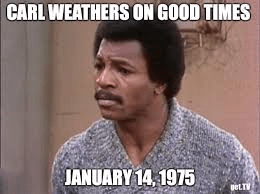
Weathers was seen on Good Times 50 years ago today, on his 27th birthday.
Today at “Ain’t We Lucky We Got ‘Em,” I’m paying tribute to actor Carl Weathers, who guested on “The Nude,” the 16th episode of Season 2. In this episode, J.J. is commissioned to paint a portrait of a resident of their housing complex, Charlene Brooks (Betty Bridges), also known as “The Wiggler.” As it turns out, Charlene wants J.J. to paint her in the nude (hence the episode’s title) as a birthday surprise for her husband, Calvin – played by Weathers – but a compromise is reached and J.J. paints her in a bathing suit. Nonetheless, when Calvin shows up at the Evans apartment, he misunderstands the situation and he’s not too happy, to say the least.
The episode, interestingly enough, first aired on January 14, 1975 – Carl Weathers’s 27th birthday – 50 years ago today.
During his days as an Oakland Raider. (courtesy of Marca.com)
A native of New Orleans, Lousiana, Weathers moved to California with his family when he was a high school student; as a teen, he demonstrated his interest in acting by performing in school plays, and he excelled in sports, including football, boxing, and wrestling. He attended San Diego State University, helping the football team win the 1969 Pasadena Bowl, and played professional football with the Oakland Raiders and the British Columbia Lions of the Canadian Football League. While he wasn’t busy on the football field, Weathers landed acting jobs as an extra and earned his Bachelor’s degree in drama from San Francisco State University.
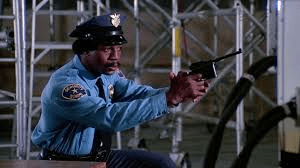
As a crooked cop in Friday Foster.
Weathers’s appearance on Good Times was his first acting credit, but he was a standout from the start and it didn’t take long for the handsome, muscular performer to begin racking up the gigs. His films included two 1975 blaxploitation films featuring Pam Grier and directed by Arthur Marks, Bucktown and Friday Foster. “My first love was acting,” Weathers said years later. “I went to Sidney Poitier films as a kid. I sat in the theater and dreamed of being an actor.”
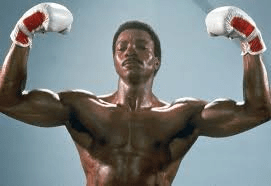
Weathers became an overnght star after appearing as Apollo Creed in Rocky.
The following year, he hit the jackpot when he was considered for the part of boxer Apollo Creed in Rocky (1976), written by and starring Sylvester Stallone. According to Weathers, he auditioned opposite Stallone, but after he finished, he said, “Wait a minute – if you can get me a real actor to read with, I can do this a lot better.” Amazingly, Weathers got the part, and he would go on to play Apollo Creed in Rocky as well as its three sequels.
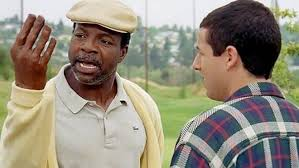
In later years, Weathers appeared in such well-known features as Predator (1987) with Arnold Schwarzenegger and Happy Gilmore (1996) starring Adam Sandler; in the latter, he played “Chubbs” Peterson, a golf pro who was forced to retire after his hand was bitten off by an alligator. He also starred in the title role of the action-comedy film, Action Jackson (1988), as an police detective in Detroit. His wide range of television roles over the years included appearances on shows from Kung Fu and Cannon, to Arrested Development and Chicago Justice, where he played the recurring role of State’s Attorney Mark Jefferies.
As “Chubbs” in Happy Gilmore.
In 2021, Weathers received an Emmy nomination for Guest Actor in a Drama Series for his role in the Star Wars series The Mandalorian (he lost to Courtney B. Vance in Lovecraft Country). He also did voiceover work on several video games including Mortal Kombat, and beginning in 1995, went behind the camera to serve as director on numerous television series such as Silk Stalkings, Chicago Med, Hawaii Five-O, and The Mandalorian.
Weathers died in his sleep on February 2, 2024, from atherosclerotic cardiovascular disease; he was 76 years old. After his death, his Happy Gilmore co-star Adam Sandler lauded him on Instagram, writing that Weathers was “a true great man. Great dad. Great actor. Great athlete. So much fun to be around always. Smart as hell. Loyal as hell. Funny as hell. Loved his sons more than anything. What a guy!! Everyone loved him.”
Later that year, in August of 2024, Weathers was posthumously honored with a star on the Hollywood Walk of Fame. His star was sponsored by his former football team, the Raiders (now housed in Las Vegas), and several family members were on hand, including his two sons, Matthew and Jason; his brother, Emanuel Weathers, III; and his longtime partner, Christine Kludjian. Other attendees included Bryce Dallas Howard, Ted Lange, and LeVar Burton, who told the crowd, “When you met Carl, you knew you were in the presence of somebody special.”
In honor of his birthday, we celebrate and honor Mr. Weathers today!
Michael – who J.J. once informed us “does most of the reading in the family” – opens the first episode of Season Two by asking Thelma, “Why do they call it ‘MEN-O-PAUSE’?” He’s certain that, because of the way his mother has been “yelling, screaming, and acting up the last few days,” she must have it. Although Thelma assures him that Florida is not experiencing menopause, she certainly has been in a fury lately – and Florida herself gives a demonstration when she slams the door to her bedroom, shouts at the children, and gets into an argument with James.
“Sleeping with Florida is like being in a phone booth with Joe Frazier.”
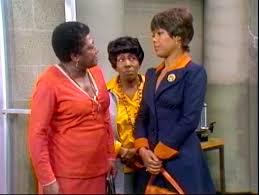
Encountering Florida in the hallway, Willona observes that her friend is “not satisfied with herself all of a sudden” and that her day-to-day life is an “empty existence” where she tries to stretch two hours of housework into one “great, big nothing of a day.” Willona suggests that Florida accompany her to what was known in the 1970s as a “consciousness-raising group,” where participants opened up to share thoughts and feelings they might not otherwise discuss in their daily lives. But Florida is reluctant to join in, and becomes offended when the women get a little too close to the truth: “My family depends on me,” she insists, “and I don’t need a bunch of cackling hens, with nothing else to do, except try to say what is bothering me, ‘cause nothing is bothering me. Nothing is bothering me!
James is delighted at Florida’s return. At first.
Relieved to return home to the comfort of her family, Florida is welcomed by her gratified children and husband, who’d been wondering where she was. James is kind and conciliatory – until he learns that she’s been to one of those “crazy ladies meetings.” After first insisting that she sit down and relax, he does an about-face, demanding that she start dinner and sharing a long-held family belief: “I’m going to tell you something my Uncle Ed used to say, and maybe he was right. There’s only two places a woman belongs – the kitchen and the bedroom, Florida, the kitchen and the bedroom!”
James’s outburst shows Florida that despite her unwillingness to admit it, Willona and the women from the group were “right on” about what has been keeping her so upset. There’s nothing wrong with being a wife and a mother, she explains, but she has nothing to talk about except her husband and her children. “There’s a whole world out there, and I’m not a part of it. I want to be somebody, too!” James and Florida reach an understanding about what she truly needs and wants for her life, and the episode concludes with Florida leafing through a catalog of courses for night school.
Washing clothes and making oatmeal is not as fulfilling as Florida would like it to be.
This episode is really quite astonishing, given its candid look at the very real issues faced by wives and mothers – not just Florida’s experience of feeling unfulfilled as a stay-at-home mom, but the problems of women from other walks of life as well. In the support group, for instance, one of the women complains that her husband “has his nose out of joint” because she has a higher salary than he does, and another openly discusses spousal abuse (it’s handled with humor, but it’s addressed nonetheless).
We also again get a glimpse of James’s inclination toward male chauvinism, obstinacy, and insensitivity. In talking with Willona, he insists that the “only trouble with [Florida] is she’s spoiled . . . I’m gonna put that lady in her place.” And during an argument with Florida, he is overly forceful, bordering on violent, as he tells her she should be counting her blessings instead of complaining: “Ain’t you got nice kids and an understanding husband? Damn right, so I don’t want to hear no more of your lip or I’ll button it, you hear?” But as we so often see with James, no matter how extreme his views, he’s never so far gone that he can’t listen to reason and modify his stance. And we see that in this episode as well, where, beneath the bluster, he shows his own vulnerability and uncertainties, and is more than willing to grow alongside his wife.
Pop Culture Connections
Joe Frazier
Frazier and Ali.
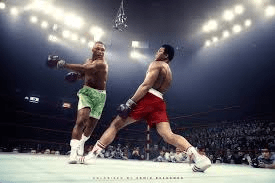
Near the episode’s opening, James complains that lately, sleeping with Florida is like “being in a phone booth with Joe Frazier.” Frazier was a heavyweight boxer whose most famous bouts were against Muhammad Ali. The two fought in three matches: The Fight of the Century in 1971, Super Fight II in January 1974 (about nine months before this episode first aired), and The Thrilla in Manila in October 1975. Frazier won the first fight, and Ali was victorious in the next two. Frazier only fought a few more times after his defeat in Manila and he later became a boxing trainer. He died of liver cancer in November 2011 at the age of 67, just a few months after he was diagnosed with the disease. After Frazier’s death, Ali said he would always remember him with respect and admiration, adding: “The world has lost a great champion.”
The Proud Bird With the Slow Tail
While talking to Willona in the hallway, Florida repeatedly presses the button for the elevator. When the door opens at last, she remarks, “Well, whaddya know? The proud bird with the slow tail finally rolled in.” This line is a reference to an advertising slogan by Continental Airlines which, in the 1960s, painted the tails of its airplanes gold and adapted the tagline, “The Proud Bird with the Golden Tail.” One of the company’s commercials be seen below, with employees singing the catchy jingle, “We really move our tails for you.”
“Mighty White of You”
Willona contends that Florida is upset and on edge because she doesn’t have enough to do. In response, James says that Florida has plenty to occupy her time, adding that he lets Florida do all the washing, cleaning, shopping, sewing, and so on, because he’s not “the kind of man that interferes with a woman’s pleasure.” To this, Willona rejoins, “That’s mighty white of you” – which, incidentally, elicits a rather shocked response from the studio audience. This phrase was historically used to indicate that a person was behaving in a manner that was especially generous, honorable, or compassionate. At its root, however, it espouses the racial stereotype that being “white” denotes something positive or virtuous. Willona’s use of the phrase to James was clearly meant in a facetious manner.
Guest Stars:
Cora: Rosanna Carter
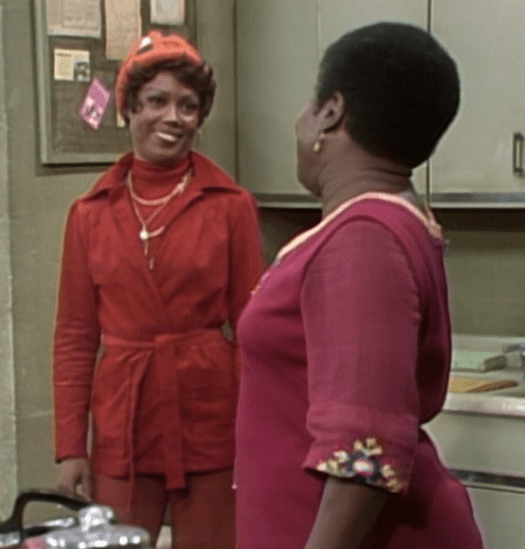
That’s Rosanna Carter in the purple.
The leader of the women’s support group is played by Rosanna Carter, who happens to be the older sister of Esther Rolle. She was born in the Bahamas on September 30, 1918, one of 18 children of Bahamian immigrants Jonathan Rolle, a vegetable farmer, and his homemaker wife, Elizabeth. Like her sister, she displayed a talent for acting and was a member of The Lafayette Players, a dramatic stock company comprised solely of Black performers. The members of the company included Charles Gilpin, who originated the title role of The Emperor Jones on Broadway, and Dooley Wilson, who would later gain fame as Humprhey Bogart’s piano-playing right-hand in Casablanca (1942). She was also a member of the Negro Ensemble Company and was seen in several Broadway productions.
Carter’s role as Cora on Good Times was one of her first appearances on television. That same year, she was injured when her automobile was hit from behind by a police car at an intersection and she, in turn, hit a parked bus. Seven years after the accident, she was awarded $1 million for the injuries she sustained, as well as for lost wages, medical expenses, and impairment of earning capacity. (“I suffered a great deal,” Carter said after the award was announced. “I’m just so appreciative of the support from my colleagues which helped to keep my spirits up.”) She would go to appear in television programs including I’ll Fly Away, for which she landed an Emmy nomination for Outstanding Guest Series in a Drama (she lost to Elaine Stritch), and in such films as Night of the Juggler (1980), The Brother From Another Planet (1984), and She-Devil (1989).
Carter died on December 30, 2016 (my birthday), in Pompano Beach, Florida. She was 96 years old.
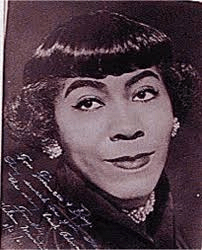
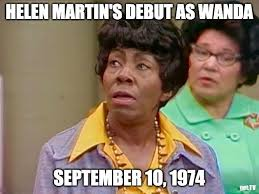
Wanda: Helen Martin
Martin started her career on the stage.
Born on July 23, 1909, Helen Martin was a native of St. Louis but was raised in Nashville; her parents hoped she’d become a concert pianist and she attended Fisk University (my mother’s alma mater!) for two years, but she left the school to pursue her own interests in acting. “Some people want to be doctors or psychiatrists,” she told Ebony magazine in 1988. “All I knew is that I wanted to be in show business. Always did.” Martin had a variety of experiences on the stage – she performed with troupes including the Rose McClendon Players and the American Negro Theater, and made her Broadway debut in 1937 in Orchids Preferred. A few years later, she appeared in Native Son, produced by Orson Welles and John Houseman; she portrayed the sister of the main character, Bigger Thomas, played by Canada Lee. She was also in the Broadway productions of Raisin, in a cast that also included Good Times’ Ralph Carter, and both Purlie Victorious, written by Ossie Davis, and its musical adaptation, Purlie.
Martin made her big screen debut in 1955 in Phenix City Story, a hard-hitting film noir about the real-life Alabama town that was known as Sin City, U.S.A. and was notorious for its proliferation of gambling, prostitution, and organized crime. She was also in a few more films, like Cotton Comes to Harlem (1970), before beginning her prolific television career. Her many credits included the popular 1977 mini-series Roots; Maude, on which Esther Rolle originated her role as Florida Evans; Baby, I’m Back, a short-lived sitcom starring Demond Wilson; and 227, where Martin had a recurring role as Pearl Shay. During the 1980s and 1990s, she could be seen in such films as Hollywood Shuffle (1987), where she played the grandmother of Robert Townsend, the writer, director, producer, and star of the film; Don’t Be a Menace to South Central While Drinking Your Juice in the Hood (1996), a spoof of the “hood” films of the 1990s; and Bulworth (1998), which starred Warren Beatty and Halle Berry.
Martin continued to work up until the end of her life; she died on March 25, 2000, at the age of 90. Her final screen appearance was in a TV movie called Something to Sing About, which aired a few months after her death.
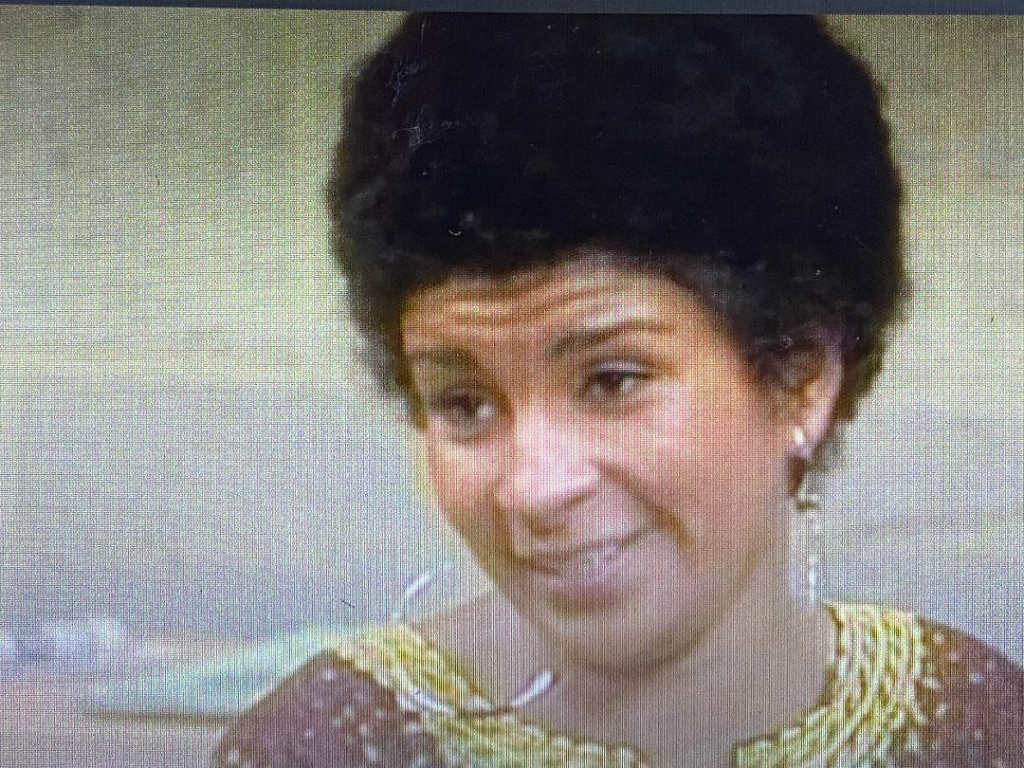
Sylvia Ann Soares: Bernadine
Soares plays Bernadine, a member of the women’s support group (she’s the one with the soft afro who complains that her husband “has his nose out of joint” because she has a higher salary than he does).mThe second generation of Cape Verdean immigrants, Soares was born on November 23, 1941, in Cranston, Rhode Island, and graduated from Hope High School in Providence (the same high school attended by Ben Powers, who would later join the Good Times cast as Thelma’s husband, Keith). For two years, she attended Lincoln University, an Historically Black College and University (HBCU) located in Jefferson City, Missouri.
Sylvia Soares as Bernandine.
After leaving Lincoln, Soares became one of the first members of the newly formed Trinity Repertory Company and went on to perform with a variety of regional theater companies. She played the Madame in Ed Bullins’s The Gentleman Caller, a one-act play in Woodie King, Jr.’s anthology, A Black Quartet; performed in the Negro Ensemble Company’s Works in Prorgress that included playing in Sonia Sanchez’s Sister Sonji; appeared in Richard Wesley’s Black Terror at the Public Theatre; and was featured as Lady Capulet in Romeo and Juliet at the L.A. Shakespeare Festival. National tours included the first Black Pulitzer Prize play, No Place to Be Somebody, and the first tour of NEC’s Tony Award-winning play, The River Niger. Her small screen debut was her appearance on the CBS-TV series, Kojak, followed by Good Times and guest spots on numerous other series, including Baretta, Police Story, and The Rookies.
A favorite role of Soares’s came on the 1985 American Playhouse historical drama, Three Sovereigns for Sarah, about three sisters who went on trial for witchcraft in Salem, Massachusetts. Soares played Tituba, the real-life Caribbean Indian slave who was one of the first to be accused of being a witch. Soares later earned her Bachelor of Arts degree in Theater Studies from Brown University in 1995.
In recent years, Soares has performed in a variety of productions in Rhode Island, where she resides, including an oral history on the Local ILA #1329 Longshoremen, of which her father served as president for 16 years. She also wrote, directed, and starred in Plantation Complex: A Harvesting of Souls, a play about slavery in Rhode Island; wrote A Coupla Miles of Hell, about racism and injustice in an 1950s Providence, Rhode Island, neighborhood not far from her present home; and presented RI Ambassador of Jazz — Deacon of Dixie, the story of her paternal uncle Eddie Soares, a 1920s jazz pianist. In addition, after extensive research, she performed numerous one-woman shows on Nancy Elizabeth Prophet, an African American Narragansett-Pequot sculptor who, in 1918, became the first graduate of color from the Rhode Island School of Design. A clip from one of her performances as Nancy Elizabeth Prophet can be found below:
As of this writing, the 83-year-old activist-artist continues to share her varied and multiple talents. Quoting the diary of Nancy Elizabeth Prophet, she says, “I stop only when I drop,” adding that her journey “is a testimony that neither ethnicity, gender, nor age are barriers to accomplishing artistic feats.”
Other Stuff:
One of my favorite laughs in the episode comes when Florida is squabbling with James, insisting that she’s “happy, very happy” as she aggressively sets the breakfast table. J.J. observes, “If she gets any happier, she’s gonna break every dish in the house.” Another line that’s good for a guaranteed laugh is served up by Wanda during the women’s support group session. It’s almost spoken as an aside, and I always wonder if it was part of the script. It comes after Wanda asks Florida how often she has “relations.” Florida responds that it’s none of her business, adding a second later, “And plenty!” Beneath the laughs of the studio audience, you can hear Wanda say, “Uppity, ain’t she?” Gets me every time.
“Uppity, ain’t she?”
This episode marked the first time Helen Martin appeared as Wanda; she would go on to make six more appearances on the show as this character. In this episode, she played one of the women in the support group visited by Willona and Florida.
Speaking of Wanda, she offers a stance during the women’s group scene that would be considered politically incorrect and would never appear on a television show today. With a laugh, she tells the other women, “If my husband didn’t beat me up on Friday, I wouldn’t know the next day was Saturday.” Yikes.
The next episode: J.J. Becomes a Man, Part I . . .
I was returning home after spending six glorious days in the Dominican Republic with a group of friends (who are like my family) that I’ve known since we met in the 1980s at Spelman College and Morehouse College. I was sitting at my gate at New York’s JFK airport, awaiting the boarding call and saving two seats for my travelling companions when I decided to pass the time on Twitter. The first post I saw was the announcement of the passing of John Amos at the age of 84.
You’d have thought, from my reaction, that it was my own father that I’d lost.
John Amos was known for such roles as Gordy on The Mary Tyler Moore Show, Admiral Percy Fitzwallace (how’s that for a name?) on The West Wing, Kunta Kinte on the 1970s mini-series Roots, and Cleo McDowell in Coming to America, but for me, he was and will always be James Evans on Good Times.
As I wrote when I first started this blog, I love Good Times. I own the series on DVD, I still watch the show daily, and I plan to eventually cover every episode on the pages of this blog. But I can’t deny that I generally focus my daily viewing on the first three seasons – and that’s solely because John Amos left the show at the end of season three. It goes without saying that Good Times wasn’t the same without him.
James Evans could be stubborn as a mule and inflexible as a wooden ruler, but he was a loving husband and a caring father who learned from his mistakes and wasn’t averse to admitting when he was wrong. He was compassionate and hardworking, sensitive and wise. He was affectionate, but he wouldn’t hestitate to go for his belt if the circumstance warranted it.
He was the kind of dad I wish I could have had.
As the actor who brought James to life and made him so beloved, John Amos was perfectly cast. He was equally adept at being funny, touching, and fearsome, and projected a natural authenticity that made him unforgettable as a father figure.
I am celebrating John Amos and James Evans today by watching my top five favorite Good Times episodes in which he’s featured. Here’s a bit about each of these, and why I love them so.
Sex and the Evans Family
As I wrote in a previous blog post, “Sex and the Evans Family” is my all-time favorite episode. It centers on the discovery of a book in the Evans household, titled “Sexual Behavior in the Ghetto.” Florida is appalled to find the publication in her home and blames J.J. for bringing it into the house; when he believes this contention, James is unconcerned and almost proud (“You dog, you,” he amusingly labels his son). But it’s a whole ‘nother story when James learns that Thelma is the responsible party.
John Amos’s abrupt transformation in this episode from delight to dismay is masterful. He also does a lovely job in conveying the special kind of love that fathers have for their daughters, injecting his performance with both poignancy and relatability.
The Check-Up
Because of his frequent headaches and hair-trigger temper, James’s family is concerned that he may be suffering from hypertension (“Or,” Florida translates, “as we plain folks say, ‘high blood pressure.'”). When James is finally convinced to get a check-up, he learns that he’s in good health, but he gets some important tips from the doctor.
Amos does a superb job in depicting James’s frustration and anger in this episode, especially in the scene where he insists that he’s not “nervous, sick, or upset.” He emphasizes this declaration by throwing a chair against the wall, demolishing it, then slamming the door to his bedroom with such force that it’s a wonder it stayed on the hinges. I’ve watched this scene countless times, and I still feel like I’m holding my breath, waiting for the worst to be over.
Thelma’s Young Man
Thelma has been receiving calls and going out on dates, but no one has met the young man who’s the object of her interest. When they finally do meet him, James is none too pleased to learn that Thelma’s “young man” is 42 years old.
Once again, Amos exhibits his versatility, showing his skill in comedy as well as dramatics. His reaction to learning the age of Thelma’s boyfriend is hilarious, as is his questioning Thelma about her reasons for wanting a quick wedding. And when he sits down with the boyfriend for a serious one-on-one, he makes us feel every bit of his combined vexation and concern.
J.J. and the Gang: Part 2
J.J. is reluctantly recruited into a gang run by a tough neighborhood dude by the name of “Mad Dog.” Although he tries everything to get out of participating in a rumble with a rival gang, J.J. is forced to go along and he’s shot by Mad Dog after the gang members encounter James and Florida in the street. The conclusion of the two-parter centers on James’s determination to see Mad Dog brought to justice for his crime.
Most of James’s actions and behaviors in this “very special episode” aren’t really played for laughs, although he does tote around a pocket full of prezels meant to represent Mad Dog’s trigger finger, and generates a giggle every time he snaps one in two. Instead, we’re treated to James’s struggle between his desire to avenge his son and his compassion for the fatherless young man who fired the gun. Amos himself considered this episode to be one of his most impactful.
The Weekend
To celebrate their 20-year wedding anniversary, James surprises Florida with a weekend in a mountain cabin. There’s not much of a plot; the action mainly deals with Florida’s worrying about leaving the children alone, and the sexy calendar girl, Gloria, who shows up at the cabin, having mistaken the date of her planned rendezvous with the owner.
Amos really shows his comedy chops here; he’s particularly funny after Gloria arrives – her seductive aura briefly throws him for a loop – and he’s even more nonplussed when Florida returns to the cabin after making a phone call, literally stuttering and stumbling over his words. And he balances this hilarity at the end of the episode, when his tender, romantic side emerges and we know, beyond question, what Florida sees in James.
It has always been a pleasure and a privilege to watch John Amos on Good Times. He brought so much to the show – so much humor, so much warmth, so much love. It’s no wonder that his absence was felt so acutely when he left the show. Fortunately for us, we can insert a DVD or turn on a cable channel, and see Amos’s James Evans whenever we want a laugh, or a cry, or even just an enthusiastic “right on!”
And for that, I’ll always be grateful.
What are some of your favorite John Amos episodes on Good Times? Let me know in the comments below!
The plot for this episode kicks off when J.J. delightedly informs his family that “Marcy Jones is crazy about [him],” and shares that she has asked him to paint her portrait. We learn that Marcy, a fellow student at J.J.’s high school, won the class beauty contest that year, and is the most popular girl in school – leading Thelma to question why she would be interested in J.J. “Simple,” J.J. explains. “When you’re on the top of the heap, all you notice is the top of the other heap.”
Despite his typical bravado, J.J. is bowled over when Marcy arrives at his apartment; he initially stares at her in stunned silence with his mouth literally hanging open, stammers over his words, and offers an inane introduction to his parents (“This one’s my mother, and this one’s my father”). He even absent-mindedly tries to follow Marcy into Thelma’s bedroom when she goes to change her clothes for the portrait.
“Hey, J.J.! You got on my perfume!”
As for Marcy, she’s uber-flattering to James, and claims to “talk in school all the time” to Thelma (when Thelma has already told her parents that Marcy never even speaks to her). James is impressed by Marcy’s “sweet, well-behaved, and respectful” nature, but both Florida and Thelma are spotting some very colorful red flags. It turns out that the women were correct to be suspicious; after J.J. finishes the portrait of Marcy, recites a poem he’s written especially for her, and prepares to ask her to go steady, Marcy reveals that she has a boyfriend and that the painting is intended as a graduation present for him. J.J. is understandably crushed, and vows that he’s “finished with women.” Seconds later, though, he gets a telephone call from another girl and before you know it, he’s reciting the poem he wrote “especially for her.”
This episode underscores the accuracy of Florida’s wisdom and intuition, demonstrating how easily the Evans men could be swayed by sweet talk and fawning. Marcy calls J.J. charming and compliments his “mighty sharp” outfit, and tells James that he looks too young to be J.J.’s father – and they’re both grinning like a couple of Cheshire cats, ready to hand her the world just for the asking. But Florida has Marcy’s number from the get-go.
“It’s not the end of the world.“
We also get to see a rare glimpse of sisterly support from Thelma. When J.J. learns that Marcy has a boyfriend, Thelma looks at her brother with sympathy, telling him “it’s not the end of the world.” She even gives him a loving – if brief – pat on the shoulder. It’s nice to see.
By the way, the episode also contains a couple of those (many) Good Times moments that make me laugh no matter how many times I see them. One is when J.J. wants his parents to leave the apartment so he can enjoy some “privacy” with Marcy. James is all for the idea, until he remembers the outcome of such a request when he and Florida were dating. John Amos’s comedic response is priceless. Another moment comes when J.J. recites his “How Do I Love Thee” poem to Marcy, as James, Florida, and Thelma listen from the kitchen table nearby. When J.J. reads the line that serves as the title for this post, about the “two sweet lips with teeth in between,” James is so overcome with mirth that he gets up from the table and collapses in laughter at the kitchen sink. It’s a hoot, and gets me every time.
Pop Culture Connections
The Flip Wilson Show
Flip Wilson with one of his show’s countless superstar guests, Lena Horne.
At the start of the episode, Thelma is certain that J.J. has taken her missing face cream, but she learns that the culprit was her father. James confesses that he ran out of plumber’s grease, so he used her face cream to connect two pipes under the kitchen sink. “Don’t worry, baby,” James assures her. “First thing in the morning, I’ll go down to the store and buy you a nice, big jar of plumber’s grease.” When Thelma questions her father’s statement, Florida tells her that James has recently heard that “Flip Wilson won’t be back next year, so he’s bucking for the job.”
Florida is referring to The Flip Wilson Show, a popular variety show headed by Black stand-up comedian and actor Flip Wilson. The show first aired on NBC-TV in September 1970 and was cancelled near the end of the 1973-74 season (reportedly due to a decline in ratings for variety shows, and because Wilson’s frequent requests for pay hikes caused the show to exceed its budget). The last episode of the series was in June 1974, about a month after this Good Times episode aired.
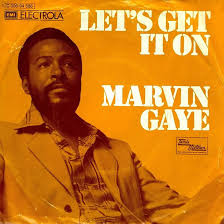
Let’s Get It On
Gaye’s song was a hit!
Willona pays a visit to the family and asks what is happening with J.J. – she shares that she spoke to him in the hallway, but J.J. just walked by her singing, “Let’s Get It On.” Willona is referencing the song by singer Marvin Gaye, which was released as a single in June 1973, and was the title track on the album of the same name that was released in August 1973. The sexually suggestive tune was one of Gaye’s most successful singles, reaching number one on the Billboard Pop Singles chart three months after its release.
“Thanks, I Needed That!”
In preparation for Diane’s arrival, J.J. shaves and puts on after-shave lotion, which he’s seen patting on his face as he emerges from the bathroom. He then briskly slaps his own cheek and says, “Thanks, I needed that!” This is a reference to a series of well-known commercials advertising Skin Bracer after-shave by Mennen which, according to the advertisements, “wakes you up like a cold slap in the face.” One of the commercials is below. (Incidentally, the narrator of the commercial is actor Adolph Caesar, who you might know from his Oscar-nominated performance in the 1984 film A Soldier’s Story.)
Wrigley Field
J.J. wants his family to vacate the apartment so he can be alone with Marcy; when they refuse, he gripes that he “might as well pop the question at Wrigley Field.” Wrigley Field is the baseball stadium on the north side of Chicago that is the home of the Chicago Cubs. It was opened on April 23, 1914.
Guest Star:
Marcy: Ta-Tanisha
Ta-Tanisha in her Room 222 days.
Born Shirley Cummings in the Bronx, New York, on January 15, 1953, Ta-Tanisha later moved with her family to Detroit, Michigan, and then to Los Angeles. In 1969, she made her television debut on an episode of The Mod Squad, and the following year, she appeared as a high school student in her first film, Halls of Anger, starring Calvin Lockhart. In the early 1970s, Ta-Tanisha studied theater at the Performing Arts Society of Los Angeles and performed in several plays, including A Raisin in the Sun. She also began appearing in a variety of television series, including Mission: Impossible (which earned her a nomination for an NAACP Image Award), Mannix, and The Partridge Family; had a small role in the popular 1973 film, The Sting; and was a cast member for two years on the television series Room 222. She continued to work steadily throughout the 1970s and 1980s, mostly guest spots on TV series or in made-for-TV movies.
Ta-Tanisha has been married since the early 1970s to actor Lee Weaver, who has appeared in a wide variety of television shows, from I Spy to Grace and Frankie, and in such films as Heaven Can Wait (1978) and The 40-Year-Old Virgin (2005).
Other Stuff:
This episode contains the first reference to the fact that James grew up on a farm in Mississippi.
Ja’Net Dubois in the Broadway production of Golden Boy, with Stammy Davis, Jr., and Johnny Brown.
In the scene where Willona tells Florida that J.J. walked by her singing the Marvin Gaye song, Ja’Net Dubois actually sings the song’s title, revealing that she had a lovely singing voice. Dubois began her career on the stage and appeared from 1964 to 1966 in the Broadway musical Golden Boy, starring Sammy Davis, Jr., and Lola Falana (as well as Johnny Brown, who would join the Good Times cast as Nathan Bookman in the second season of the series). Also, she released several albums, including Queen of the Highway in 1980, and she co-wrote and sang the theme song for the long-running sitcom The Jeffersons.
Another mention regarding the ages of the main characters comes up in this episode. In Episode Five, Michael Gets Suspended, it’s implied that Willona and Florida are not the same age, because Willona jokingly threatens to reveal Florida’s age to her children. But in this episode, Willona reminisces about a boyfriend Florida had when she and Florida were 17 years old. The age question will be completely blown apart in an early second-season episode, so stay tuned for that.
This episode marked the first of three appearances that Ta-Tanisha would make on the show.
I don’t know who painted this, but I don’t think it was Ernie Barnes. Anybody out there have a clue?
I wasn’t able to find out the name of the real-life artist who painted the portrait of Marcy, but it’s not likely that it was the painter of most of the artwork by J.J. on the series, Ernie Barnes.
Florida has a line where she tells Willona that J.J. is “gussying up” for Marcy. This term always stands out to me because who says – or has ever said – “gussying up” in the Black community???


















 Ain't We Lucky We Got 'Em?